
Episode 108 · 6 June 2023 · 00:13:32
A history degree, and a job forecasting battery metals
Battery Careers & Markets
Fastmarkets' battery raw materials analyst on why the Chinese read on lithium inventories clashes with the Western one, why India is the market nobody is analysing properly, and how a humanities graduate ended up forecasting the metals that go into cells.
Read the article: A history degree, and a job forecasting battery metals
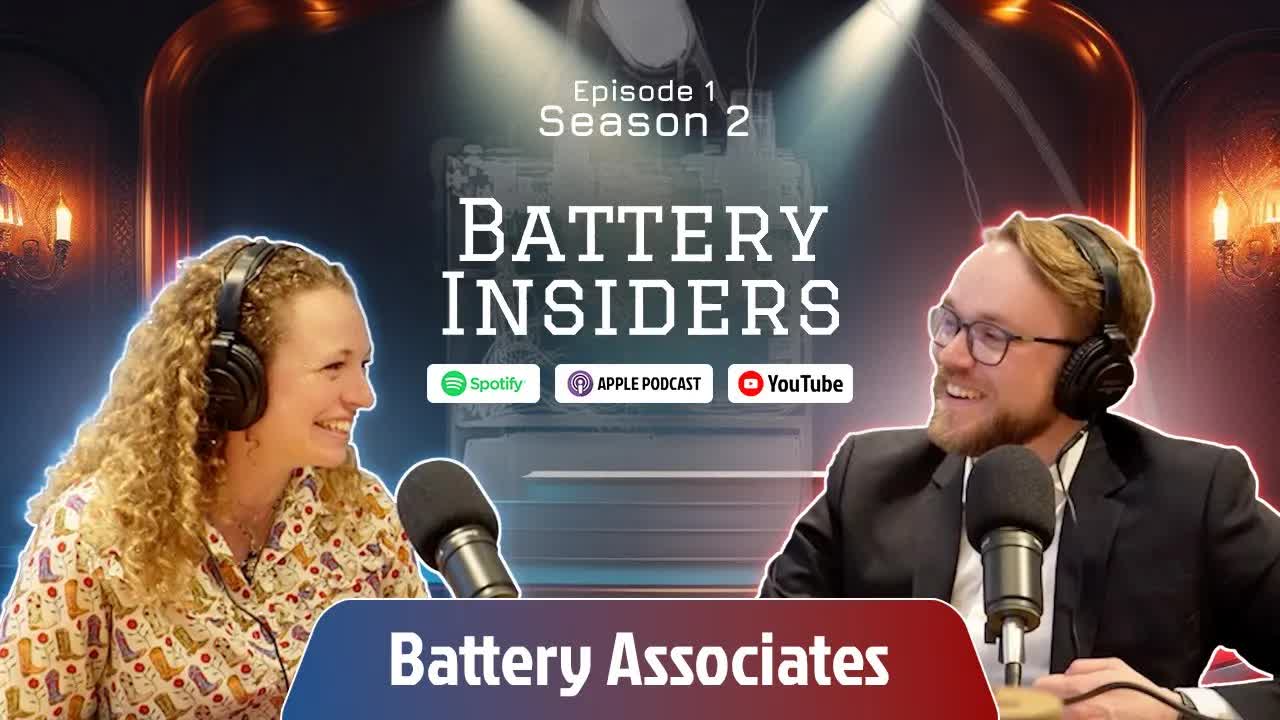
Phoebe O'Hara
Battery Raw Materials Analyst, Fastmarkets
Fastmarkets is first a price reporting agency, and also runs a battery research team producing long-term forecasts on the key metals used in cells. O'Hara covers the battery demand outlook, mostly EVs and energy storage, along with chemistry and R&D trends, and joined the company in December.
Recorded in London, at the FT Future of the Car Summit
What this episode covers
At Fastmarkets' conferences in Singapore, Phoebe O'Hara watched two people describe the lithium market in terms that could not both be right. An analyst from Traxys, a trading company, presented inventories as very high and expected that to hold prices down over the following months. An Australian miner came on afterwards and, with an expletive she declined to repeat, called it rubbish. Her interest is not in deciding who was correct. It is that the view from the upstream in China is completely different from the view of external partners, and a Western-centric European analysis can miss that entirely.
So the working problem, as she frames it, is mapping the information channels. Anyone who can hold both sets of information, East and West, has an advantage, because the two sides are reading the same market and reaching opposite conclusions. She is blunt about the wider point. You cannot sit outside Asia and expect to understand, report on or analyse the battery industry, because Asia is the centrepiece of the market. Three days of meetings there taught her more than her first months in the job, and the collective realisation across the value chain was that batteries are now fully entrenched rather than niche or emerging.
The panel she moderated on India left the strongest impression. Government policy is being rolled out across both energy storage and EVs, and one panellist agreed with her that storage will probably grow faster than the EV segment, partly because of that policy and partly because of how quickly grid extensions are going in. What frustrates her is how the market gets written off. Companies operating there told her nobody is really looking at them. India also has the fastest growing market in the world for electric two and three wheelers, which she reads as proof of appetite rather than the absence of it.
O'Hara has no science background at all, and says so on purpose when she speaks in schools. She did a humanities degree, then a master's in international relations at the LSE, was drawn to political risk, and started at Fitch Solutions as an autos analyst covering political and industry risk. The battery conversation reached her through procurement and metal pricing, where the volatility of the previous 24 months had been, in her word, insane. What kept her there was the novelty of a world she knew nothing about, and the fact that forecasting it is new ground: everyone is building on assumptions, and the useful conversations are about how each person bridges the gaps.
On representation she wants the honest version of the conversation rather than a tidy one. Balanced events matter because being able to see who you want to be has a real effect on the lives of young women, trans and non-binary people, and an industry this young can set that pattern early instead of correcting it later. She also wants people connected to allies of any gender at the start, and sees no reason for the gender conversation to sit off to the side of a battery event. Her own commitment is narrower and specific: stop parking countries in a rest of world category and start analysing them accurately.
Questions from this episode
- What does a battery raw materials analyst actually do?
- Fastmarkets is at the front a price reporting agency, but it also has a large battery research team that publishes long-term forecasts on the key metals going into batteries. O'Hara's own remit is the battery outlook, which is mostly demand: EVs and energy storage systems, plus the trends around them, so chemistries and what the latest R&D is showing. Much of it is territory nobody has mapped. Every forecaster is building on assumptions, and she says the most interesting exchanges happen when two of them compare the different problem-solving techniques they used to bridge those gaps.
- Can you work in the battery industry without a science background?
- O'Hara has zero background in science, was awful at it in school, and did a humanities degree followed by a master's in international relations at the LSE. She went into political and industry risk at Fitch Solutions as an autos analyst, and the battery question found her there. She raises it deliberately in schools, because education now pushes the idea that your degree should match your job, when the reality is that plenty of people do work that is separate from what they studied. Simon makes the same case in the episode: the sector needs profiles from every field.
- Why do Chinese and Western analysts disagree about lithium?
- Because they are looking through different channels. At the Singapore conferences an analyst from the trading company Traxys presented lithium inventories as very high, and expected that to keep prices low for months. An Australian miner then rejected it outright. O'Hara's takeaway is that the view from the upstream in China is totally different from the view held by external partners, and that Western-centric European analysis does not capture it. Mapping those information channels is now a live problem for the industry, and individuals who can move across both spaces will benefit.
- Why should the battery industry pay more attention to India?
- O'Hara moderated a panel on India and calls it a space almost nobody is talking about, in both energy storage and EVs. The breadth of government policy is drawing companies in, and she and one panellist agreed energy storage will probably grow faster than EVs there, helped by policy and by how easily grid extensions are being rolled out, alongside an accelerated renewable energy programme. Companies operating in the country told her nobody is looking at them. She points to electric two and three wheelers, the fastest growing market of their kind in the world, as evidence the demand is real.
- What would make the battery sector more diverse?
- Keeping events balanced, for a start, which she credits Simon with holding himself to. The research and her own experience both point the same way: if you can see who you want to be, it has a real impact on the lives of young women, trans and non-binary people. Because the industry is young and quite corporate, doing this early is far easier than fixing it later. She also wants people connected with allies of any gender early on, honesty rather than false narratives about how balanced the sector is, and events where those conversations happen in the room rather than at the sidelines.
- Is the battery industry still an emerging sector?
- O'Hara says no. The collective realisation at the Singapore conferences, with conversations running across the whole value chain, was that this is not a sidestream technology, not niche and not emerging. It is fully entrenched. That view came from meeting the big players in the region that sits at the centre of the market, which is also why she argues you cannot analyse or report on the industry from outside Asia. For young people entering it, she adds, the green transition gives the work a driving force that other industries may not have right now.
Listen to this episodeWatch on YouTube
Part of Raw materials and mining
Transcript
About this transcript. Generated automatically from the recording, then corrected against a glossary of company and guest names. It has not been checked line by line. Machine transcription mis-hears technical terms, numbers and names, so treat any figure here as a prompt to check the recording rather than a quotation of record. Spotted something wrong? Tell us.
0:00Introduction
Dr Simon Engelke
0:00This isn't a sidestream technology, this isn't something that's niche or something that's emerging, it's fully entrenched now. So I have zero background in science. We do a lot of panel women in different industry panel sessions as part of this organisation I run. A driving force that maybe people in other industries don't have right now, which is really cool.
Phoebe O'Hara
0:17I think it's, as you said, will be an evolving story. It will be an evolving story. Watch this space. Watch this space. Partnership in common. Exactly, no, there's a lot of excitement. Hi Phoebe, good to see you.
Dr Simon Engelke
0:35Hi, so lovely to see you, Simon, in person.
Phoebe O'Hara
0:38Absolutely. And yeah, maybe just a bit of context for our listeners. We're currently in London. There's the Financial Times Future of the Car Summit happening in the same building. We're just above. And yeah, very delighted to have Phoebe with me. We're going to have a bit of a conversation about, you know, maybe of battery careers, you know, battery markets, anything we fancy, you know, it's a new format. We're on the road now. Instead of, you know, being zoomed into all of our different homes. Now we're actually going to places. Very delighted to have Phoebe with us today. So Phoebe, you may want to introduce yourself a bit to our listeners.
Dr Simon Engelke
1:09Yeah, definitely. My name is Phoebe. I'm based in London. I currently work in Fastmarkets,
1:10What Fastmarkets covers, and what Phoebe forecasts
Dr Simon Engelke
1:15which is at the fore a price reporting agency, but we also have a huge battery research team. And we produce long-term forecasts on the key metals that go into batteries. But I also am in charge of kind of the outlook for batteries. So the demand in the majority. So EVs, energy storage systems, but then also the trends, right? So chemistries, what are we seeing with the latest R&D? And yeah, just come off the bat of our huge conferences in Singapore. So meeting all the big players, which was really inspiring and gave me a lot of food for thought along a lot of different, a lot of avenues we can probably discuss over the next couple of minutes. But yeah, just, it was really awe-inspiring because there's just so much conversations going on across the value chain, right? And I think everybody's realized now that this isn't a sidestream technology. This
1:58Batteries as an entrenched industry rather than a niche one
Dr Simon Engelke
2:05isn't something that's niche or something that's emerging. It's fully entrenched now. So I think that was the most interesting realization I think we collectively got to there, which was cool, which I'm sure that you're also contributing to that.
Phoebe O'Hara
2:18Yeah, that's fascinating. I think maybe the two topics I would love maybe to dive into a bit is one, like what got you excited about the battery industry, like yourself? Because I think, yeah, when you joined, maybe also a bit of your journey, how it went there. Yeah. And then maybe the second, we can talk about some of your, yeah, you know, takeaways maybe from the Singapore conference and
Dr Simon Engelke
2:34all that stuff. Yeah. I mean, so I have zero background in science and I think that's,
2:36No science background, and why she says so in schools
Dr Simon Engelke
2:38I always like to tell people that when I go to schools, we do a lot of panel, women in different industry panel sessions as part of this organization I run. And I think there's this importance now in education that your university degree is related to the job you do. And I actually think the reality of the world that we live in is that a lot of people do jobs that are very separate from what we studied. So I actually did a humanities oriented degree. I did a master's in international relations
3:03From international relations at the LSE to autos and political risk
Dr Simon Engelke
3:03at the LSE. And I was really drawn to political risk because I was very politically oriented. And I ended up starting off at Fitch Solutions as an autos analyst doing like political risk there, industry risk. And obviously the biggest conversation for me that I was really drawn to was this battery conversation. Initially I was drawn to it in a conversation of, you know, what risks are companies being exposed to? And this was mainly in the upstream, right? So the procurement of metals, metal pricings, the volatility that we experienced over the last 24 months has been insane. And I just got really fascinated by it all. There was a world that I didn't know anything about. And I think that novelty really drew me in initially. But I think it's this dual conversation between, yes, advancing the green transition and kind of the moral and ethical line that I personally am really drawn to it in that kind of area. But also the research
3:57Forecasting on new ground, and building off assumptions
Dr Simon Engelke
3:57and analytics I do on the day to day. This is very much new ground. And I think you can probably relate to that with your PhD, right? We're all doing work that we're venturing into avenues that people haven't really explored. And they're also avenues that are broadly unknown. So even when I put out forecasts and I meet with other people doing forecasts, we're all building off of assumptions. And I think it's most interesting when we have those conversations and we realize our different problem solving techniques to try and bridge those gaps. So yeah, it's just, it's a really new, exciting space to be in. And especially for young people. I think we have this added layer of the green transition conversation I was relating to earlier that I think for me individually provides a driving force that maybe people in other industries don't have right now, which is really cool.
Phoebe O'Hara
4:47Thanks for sharing that. And I think one thing we also have been covering right in the podcast is to
4:47Why the industry needs people from every field
Phoebe O'Hara
4:51exactly see all these different profiles. And I think one thing we also have been quite vocal about is that, you know, there's probably a space for everyone. It doesn't really matter. I think often people think to go into the better industry, you have been, you know, student in batteries or do whatever, you know, maybe tech field. But I think, as you say, there's so many different avenues. All of them are actually so needed to make transition happen. So just another invitation for the listeners, please, you know, consider this field because it's fascinating. You really can come in from any field.
Dr Simon Engelke
5:15A hundred percent. It's so fascinating. Like, I honestly, I hated science in school. I was awful at science. And so I could never imagine doing a job like this. And I go home to my partner as a mechanical engineer. And like, he's just, I'm coming home with all this discussion about the massive detail on battery chemistries and how they operate. And he's just like, this is mad that, you know, you're doing this and you did a history degree. So, yeah, I just, I think it's a really important conversation to have. And I think because we're a nascent industry, we're not really having it yet. I don't think that we're at the point yet where we're, I mean, you were talking about this earlier, going into schools, speaking to kids about the battery industry. You know, it's quite, it's quite opaque still. I think, I don't think it's very clear what that means. And so, yeah, I just think it's really important. And it's so, it's so interesting. The geopolitical conversation as well, I think, can draw people in. And that's what really probably got me drawn in.
Phoebe O'Hara
6:07Fascinating. Yeah. I think that's good, right? You have to find your angle. And maybe, like, what could be done to get more people? I mean, one thing was spoke about, right? Like, how to get more diversity into battery sector, get more women involved.
6:15Barriers to diversity in the battery sector
Phoebe O'Hara
6:18Like, maybe, what are some of the barriers, you know, we could, you know, break down or kind of make it more enticing or more, you know, inviting for, like, less represent backgrounds right now to actually join?
Dr Simon Engelke
6:29Yeah, really good point. And you and I were talking about it earlier because your group is doing this work in real time. And I think some of the stuff that you guys are doing is, has tangible impact. So, as me and you spoke about on the rule that you keep to yourself, you know, you don't make sure that events are balanced. I think there is research everywhere that shows and you've seen it in real life. If you have, if you can see who you want to be, that has a real impact for young women, trans and non-binary people's lives. And I think that that's really important in an industry right now that's very nascent and quite corporate. That we, if we can do that early on, I think that would be really, really advantageous. I think the other thing to be doing as well, and me and you are trying to have early stages conversations in this, but really early on, you know, connecting people in this space to provide them with allies, whether they be male, female or any other gender.
7:12Allies, honest conversations and balanced events
Dr Simon Engelke
7:26To be overt in our reflection that the space maybe isn't as balanced as it could be. I think just having that level of honest conversation is quite refreshing. There's no point in hiding behind false narratives. Like if we realise that it needs to be more balanced, then we can recognise those issues much early on and tackle them with the energy that we have to do so. So those would be my early stages and just having events and spaces where people can, you know, be joyful about what we're doing, be excited about what we're doing and, you know, have those conversations at the same time. It doesn't need to be at the sidelines and separate. We can have networking events and events, you know, like the FT, you know, speaking about really exciting events in the battery space, but also bring into that conversations on gender and balance and, you know, inclusivity. So those would be probably my few ways that we could probably get to doing that.
Phoebe O'Hara
8:19Brilliant. And I think it's, as you said, it will be an evolving story. It will be an evolving story. Watch this space. Watch this space. Partnership in coming. Exactly. No, there's a lot of excitement. Great. And I think, as you said, I think also Benson providing safe spaces and also battery and baby spoke about, right, to kind of bring people together and feel like they can actually open up and really share some experience. We shared some before, but we'll probably leave some of them to another day. And as you said, there's more to come. Maybe now just in the interest of time as well, maybe because you mentioned the conference, you were just in Asia. I haven't been in Asia until this year, didn't make it over, but I heard a lot of really fascinating stories already. So I'm just curious to get your take, your thoughts, your takeaways.
Dr Simon Engelke
8:56Honestly, I learned more in those three days than I had probably. I only started at Fastmarkets in December, but more, yeah, I learned more there in the last, than I have in the last four months.
9:01Takeaways from the Singapore conferences
Dr Simon Engelke
9:05It is, I mean, the biggest takeaway, obviously, and this is quite evident to everybody, is it is the centerpiece of the market. Like you can't, you can't not be in Asia and try and understand or report or analyze the battery industry. You just can't. Two biggest things that struck me, I think, first one was the view from the upstream in China is totally different from external partners.
9:28The Chinese view of lithium inventories against the Western one
Dr Simon Engelke
9:29So we had this very interesting situation where we had a presentation by an analyst at Traxys, which is a trading company. And they were saying that inventories for lithium are super high right now. And they're expecting that to extend over the next couple of months, which will keep prices low. We then had an Australian miner come on who said, inexplicative, I won't repeat, but said there's a load of rubbish. And that we're not saying that in our kind of Western centric European analysis.
9:56Mapping information channels between East and West
Dr Simon Engelke
9:57So I think, I think that's an issue that the industry is facing is trying to map the information channels. And it will really benefit individuals who can have that kind of spread of information across those two markets, two spaces, West and East, to be honest. So that was really interesting to me.
10:13India: energy storage, EVs and policy
Dr Simon Engelke
10:15The second thing was I moderated a panel on India, which is a super exciting space that I actually think nobody's really talking about, both in the energy storage system segment, but also in the EV segment. So the breadth of government policy that's being rolled out in those spaces is really enticing companies to grow. And I think actually one of the panel members and I were agreeing on the fact that energy storage there probably is going to grow quicker than the EV space, simply because of the policy, but also the amount, the ease at which companies are rolling out kind of grid extensions. And they have a really, really advantageous and accelerated renewable energy growth policy in the country. They're trying to reach 150 gigawatts by 2030. So, I mean, on that basis, it's a really cool space to be. But to marrying that conversation with something that I spoke to companies about operating there, they said, you know, no one's really talking about us. No one's really looking at us. And I think there is a lot of marginalization going on there. I think people look at the Indian market and think it's either not developed enough or it doesn't have the right infrastructure. And we're seeing, I don't know if you've seen the growth of electric two and three wheelers there, but it's the fastest growing market in the world.
11:23Electric two and three wheelers, and the rest of world problem
Dr Simon Engelke
11:29And that just shows that there is appetite there. There is demand. You know, we shouldn't be looking at markets that are, quote unquote, less developed and be saying, oh, there's less of an opportunity there for batteries or investment upstream. So for me, something that I took away as, yeah, something that I want to keep, something I want to hold myself accountable to doing is paying more attention to these markets that we group in this rest of world category. Because actually it's a disadvantage to us in the battery industry. We're ignoring opportunities and growth in these markets by saying, oh, they're just all this collective group versus China, Europe and US.
12:04Holding analysts to a wider view of the market
Dr Simon Engelke
12:08And I think as an analyst, yeah, the mark I want to hold myself to is diversifying that field and making sure that different spaces have voices and we analyze them accurately. So those are my two biggest takeaways from the conference. There's a lot more we could talk about. Yeah, sure.
Phoebe O'Hara
12:23No, but no, but I really appreciate saying it. And I think, to be honest, like I couldn't agree more because I think that's the same, you know, part of the philosophy we have, also by resources, but really thinking about exactly, right, that there's 190 countries more to, you know, to support, right? And I think actually what you mentioned about India, it's fascinating because we have a similar thought about it. And so there was some, we did some panel and also with KPMG and others, I know it's a lot of work in the space, but actually at this battery day also we have on the 21st of September, we have a panel on Asia Focus.
12:44Battery Day, and an Asia panel focused on India
Phoebe O'Hara
12:53This year actually on India. We already brought some big names there.
Dr Simon Engelke
12:56Oh, amazing.
Phoebe O'Hara
12:57So, yeah, there's a lot happening in the space. Yeah. And also in our team, there's a lot of excitement about it. And we have seen a lot of interest. So, yeah, so that's why I couldn't agree more. So hopefully we also hear some great insights there as well in September.
Dr Simon Engelke
13:09Yeah, cool. That's really exciting. Hopefully I'll be there. That was the two. Brilliant.
Phoebe O'Hara
13:12I think in interest of time.
Dr Simon Engelke
13:14In interest of time. There's so much going on. There's so much going on.
Phoebe O'Hara
13:17I'm sure it won't be the last conversation. And thanks so much.
Dr Simon Engelke
13:19Thank you so much. Thank you. It was great. Thank you.
Phoebe O'Hara
13:22And thanks also for my one last thing to the Financial Times and the FT Live to write the room.
Dr Simon Engelke
13:26Yes.
Phoebe O'Hara
13:27For the future of the car summit and, you know, giving us some nice setting here. Thank you.
Dr Simon Engelke
13:31Thank you, guys.