
Episode 109 · 4 July 2023 · 00:08:35
The year nobody at the summit mentioned hydrogen
Trends in Batteries - Finance Perspective
The Green Finance Institute's transport lead on why investors have stopped fearing stranded battery assets, what the Inflation Reduction Act is doing to UK projects, and the two financial products she wants piloted this year.
Read the article: The year nobody at the summit mentioned hydrogen
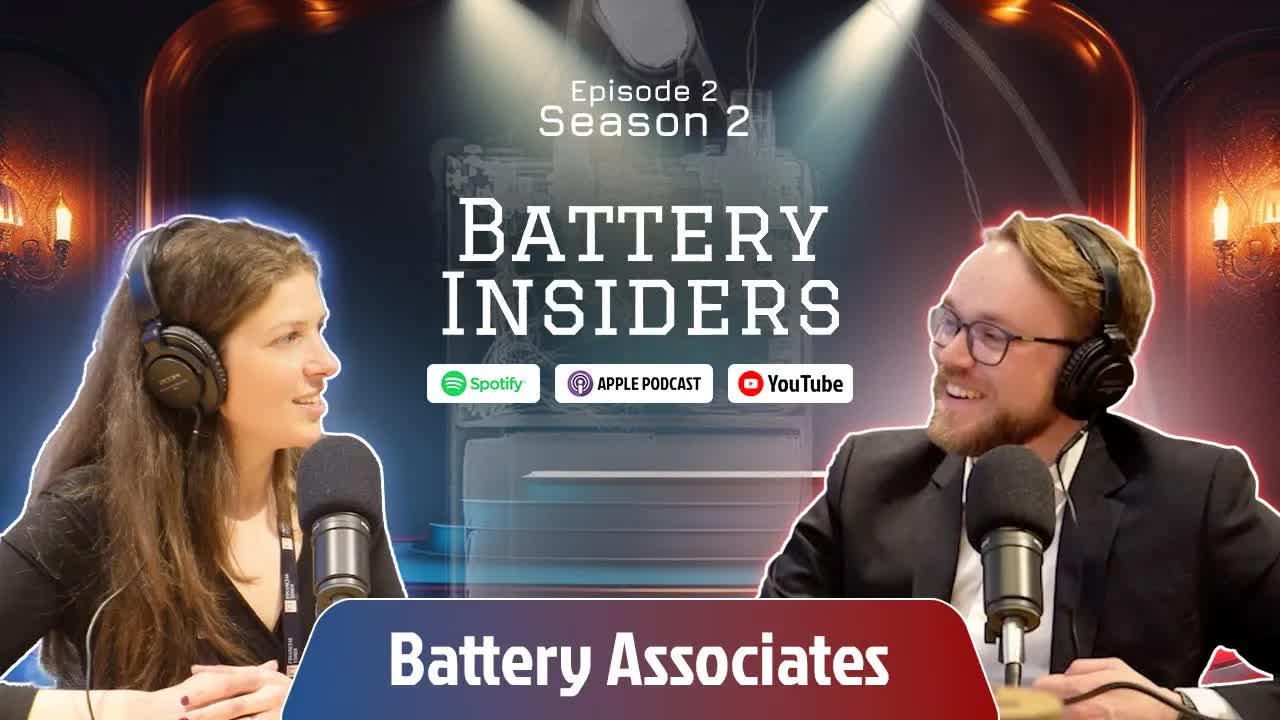
Lauren Pamma
Programme Director, Transport, Green Finance Institute
The Green Finance Institute works on financial products for decarbonisation, including charging infrastructure and battery supply chain investment in the UK. The show notes give the guest's first name only; the surname and title here come from the Green Finance Institute's own public listings and should be confirmed before publication.
Recorded in The Financial Times Future of the Car Summit
What this episode covers
A year earlier at the same summit, Pamma says, there was still a lot of talk about hydrogen or EVs. This time she had been in the building for around 24 hours and had not heard the word hydrogen once. E-fuels came up on a panel she missed, but the discussion she did hear was about electrification, and about which battery technology follows: solid state against sodium against lithium-ion. What surprised her was the tone. Investors were noticeably less nervous about the choice than they had been, which she took as the most useful signal of the event.
The reason is stranded assets, or rather the fading fear of them. The message she heard several times was that it does not matter which technology wins, because there will be a need for all of them and for investment in all of them. Solid-state cells are coming, but enough of the technology is transferable that money going into current production stays relevant. That has taken the edge off a hesitation she had seen before, where investors held back because nobody could name the winner. Her read is that the fear of being left holding obsolete assets has largely gone.
The Inflation Reduction Act is a harder problem. Pamma says it has made investment in the UK very challenging, and that UK-based companies are telling her it is easier to attract money overseas, with the US the obvious place to expand into instead. Unless the UK responds quickly, she sees a real risk to its automotive sector. Britain will never compete with China on scale in battery production, so the question is which capability it actually needs and how to build the supply chain that supports it, whether that is the wider automotive sector at around 800,000 jobs or the specialist automotive sector at roughly 20,000.
Investor appetite is not evenly spread. In the conversations the Green Finance Institute has been having, mining and raw materials at one end and recycling at the other draw the most interest, while cell assembly and the midstream processes are seen as more commoditised. The institute's argument is that opportunities exist across the whole supply chain, from SMEs to large companies, in chemicals, metals and much else, with different risk and return profiles attached. Britishvolt's collapse spooked people, but those who read into it concluded the problem was how that organisation was managed rather than a sector that cannot be invested in.
Two financial products are close to pilot stage. The first is a utilisation-linked loan for charging infrastructure, where repayments track how much a charger is used, designed to get chargers into places that are not commercially viable yet but should be later. The second is a battery investment facility. Existing UK grants have brought good companies out of universities and started them scaling, but they hit a valley of death when they try to commercialise, so the pitch to government is to deploy capital in a way that crowds in private investment. An investor roundtable will ask what shape that money needs to take: first loss, guarantees, or something else.
Questions from this episode
- Has hydrogen dropped out of the automotive conversation?
- At this summit, largely yes. Pamma had been there about 24 hours without hearing hydrogen mentioned once, where a year earlier the hydrogen or EV debate was still live. She allows that she may have been in the wrong panels, and notes there were e-fuels conversations the day before that she did not attend. Her overall read is that everyone is now talking about electrification, and that the open technology question has moved on to which battery chemistry comes next: solid state, sodium or lithium-ion. She calls that shift encouraging.
- Are investors worried about stranded assets if solid-state batteries arrive?
- Less than they were. Pamma says there is now recognition that solid-state batteries are coming while so much of the technology in current production is transferable that it stays relevant, so investors are not left holding stranded assets. The hesitation she used to encounter came from not knowing which technology would win. The message she heard repeatedly at the summit was that it does not matter which one wins, because all of them will be needed and all of them will need investment. Solid state remains the one everyone likes the sound of.
- How is the Inflation Reduction Act affecting UK battery investment?
- It has made investment in the UK very challenging. Pamma says UK-based companies are finding it easier to attract investment overseas and are looking at the US as the place to expand rather than at home. If the UK does not come out with a response quickly, she sees a real risk to its automotive sector. Her framing is not that Britain should try to match China on scale in battery production, which will not happen, but that it needs to work out which capability it does need and how to attract it.
- Which parts of the battery supply chain do investors prefer?
- From the Green Finance Institute's conversations, the upstream and the downstream. Mining and raw materials attract interest, and so does recycling. Cell assembly and the midstream processes are viewed as more commoditised and generate less. The institute is pushing back on that split, arguing that opportunities exist along the entire supply chain rather than at gigafactories alone, and that it takes SMEs through to large companies to build one. Chemicals, metals and a range of other segments are all in scope, each with its own risk and return profile for different kinds of investor.
- Did Britishvolt's collapse make the UK battery sector uninvestable?
- It made investors nervous, Pamma says, but the people who read into what happened came to a narrower conclusion. What went wrong looked like the organisation and the way it was managed rather than an absence of a product: when the institute spoke to people, the company had a battery that was apparently potentially going to be good, was being tested, and had some customers. So the failure is not read as proof that the industry as a whole cannot be invested in, though the initial reaction did spook the market.
- What is the Green Finance Institute building for the battery sector?
- Two products, both close to pilots. One is a utilisation-linked loan for charging infrastructure, tying repayments to how much the charge point is actually used, so that chargers go into locations that are not commercially viable today but should be in future. The other is a battery investment facility, aimed at companies that have come out of universities on grant funding and then hit a valley of death at commercialisation. Government said in its March green finance strategy that it wants to work on blended finance solutions, and Pamma hopes batteries become the pilot.
Listen to this episodeWatch on YouTube
Part of Europe: policy and money
Transcript
About this transcript. Generated automatically from the recording, then corrected against a glossary of company and guest names. It has not been checked line by line. Machine transcription mis-hears technical terms, numbers and names, so treat any figure here as a prompt to check the recording rather than a quotation of record. Spotted something wrong? Tell us.
0:00Introduction
Dr Simon Engelke
0:00Those interviews have been more enlightening and covered a wider range of topics than I was expecting them to do. Last year, I felt there was still quite a lot of talk about hydrogen. So that's encouraging. It's clear now that they're all talking about electrification. We don't know which technology is going to win. And that's going to be an issue if the UK doesn't come out with something in response to Aira quickly. Really important for bringing through that early stage technology and making that commercially viable.
Lauren Pamma
0:30Hi Lauren, how are you?
Dr Simon Engelke
0:36I'm good, thank you Simon.
Lauren Pamma
0:37Thanks so much for joining.
Dr Simon Engelke
0:39You're very welcome.
Lauren Pamma
0:40So we're here now with the Financial Times Future of the Car Summit.
Dr Simon Engelke
0:46It's been really good. I've really enjoyed actually hearing the CEOs of the OEMs. Those interviews have been more enlightening and covered a wider range of topics than I was expecting them to do. So that's actually been really insightful and useful to hear about their views on batteries, on charging infrastructure, on product design, on how consumers are going to use vehicles going forward. So yeah, it's been a good use of time so far.
Lauren Pamma
1:10Glad to hear that. And as for the Green Finds Institute, I think you have a quite specific view, I would assume, more on the financial lens potentially. So just wondering, is there any new thoughts and developments you have seen either here or in the past year?
Dr Simon Engelke
1:20I think, have we seen new developments? I think what it's good to see is that last year I felt there was still quite a lot of talk about hydrogen or EV.
1:31Hydrogen talk giving way to electrification
Dr Simon Engelke
1:33And actually this year, I've been here about 24 hours so far. I actually haven't heard the hydrogen word once yet. Maybe I've just been in the wrong panels. I think you might have. Okay. But I haven't heard that debate quite so much. So that's encouraging. It's clear now that they're all talking about electrification. I understand there was some e-fuels conversations yesterday, but I wasn't in on those.
1:55Solid state, sodium and lithium-ion, and the stranded asset fear
Dr Simon Engelke
1:56And actually now that obviously they're talking about different battery technologies, solid-state versus sodium versus lithium-ion. But there seems to be less nervousness about from an investor perspective, actually, does this mean that we shouldn't be investing in anything now? It is actually, there's recognition that, you know, solid-state batteries are coming, but actually still keep investing in what we are doing because there's so much of that transferable technology that's still going to be relevant. And therefore investors don't need to worry. They're left with stranded assets, which is good. And I think there's been a reason investors have been holding back or been nervous because they're like, well, we don't know which technology is going to win.
2:31Why the technology winner does not need picking
Dr Simon Engelke
2:32And the message I've heard a few times is it doesn't matter which one's going to win because there's going to be a need for all of them and a need for investment in all of them.
Lauren Pamma
2:40And how do you think, I mean, the current climate, right, is an interesting one in the financial markets and, but also new, you know, development such Inflation Reduction Act, which we didn't have on our radar last time. So just curious, like how has this influenced, do you think, the markets?
Dr Simon Engelke
2:55I think it's made investment in the UK very challenging.
2:57The Inflation Reduction Act and investment leaving the UK
Dr Simon Engelke
2:59And that's certainly something we've heard from UK based companies who are finding it easier to attract investment overseas. They're certainly looking at the US as somewhere to expand rather than the UK. And that's going to be an issue if the UK doesn't come out with something in response to Aira quickly.
Lauren Pamma
3:19I've definitely heard this in conversations here as well. And I think it's, yeah, it's going to be a bit of a sad awakening of some of the UK players when they announce their plans in the future.
3:26What capability the UK automotive sector actually needs
Dr Simon Engelke
3:28Yeah. And it's a real risk to the UK's automotive sector. You know, we're never going to compete with China in terms of scale and leading the market on battery production. But actually, I think we need some capability. So it's about saying, well, how do we attract the capability that we do need and build that supply chain that we do need to support the automotive sector and the jobs that that supports? Whether that's the whole of the UK's automotive sector, which is, you know, 800,000 jobs, or whether we should be looking at the sort of specialist automotive sector, which in itself is still 20,000 jobs. And actually, really important for bringing through that early stage technology and making that, you know, commercially viable, rolling it out to mass market in the future.
Lauren Pamma
4:06Where do you have seen, like, the most excitement about, like you mentioned, these different topics? Do you see, like, from investor perspective, do you think there's some, which are, you know, topics investors seem more open to? Or is it quite equally spread?
Dr Simon Engelke
4:18They all seem to love the sound of solid-state batteries.
4:20Where investor appetite sits: mining and recycling
Dr Simon Engelke
4:21It's like this mythical thing in the future, isn't it? I think actually battery, when we've been talking to investors, it seems that the sort of mining and raw materials part of it, and then the recycling is of most interest to them, rather than the, I guess, slightly more commoditized bit of the actual cell assembly and the sort of midstream processes. So that, the upstream and downstream seems to be where we're hearing more interest rather than the midstream. But what we're trying to do at the moment is say, actually, there's opportunities along that entire supply chain for investors.
4:48Opportunities across the supply chain, not gigafactories alone
Dr Simon Engelke
4:53It's not just about gigafactories. You know, you need to have an entire supply chain, and that's everything from SMEs up to large companies establishing. And there's, you know, there's different risk and return profiles from those investments. But there's, you know, there's a real range of opportunities, whether that's chemicals or metals or, you know, lots of different things that people can get involved with.
Lauren Pamma
5:17And I think, I mean, also since last year, right, we had to start with Britishvolt and things like this.
5:18What Britishvolt's collapse did to investor confidence
Lauren Pamma
5:21And maybe also, do you, have you seen like a lot of, you know, did this change things, do you think? Or is it kind of people understand there was one incident?
Dr Simon Engelke
5:28I think it definitely spooked people. But once I think people sort of read a little bit more about it and understood perhaps, you know, that's not reflective of an entire industry, but perhaps it's more the organization and the way in which that organization was managed rather than the organization itself and the, you know, the lack of a product. Because, you know, when we speak to people, they had a, they had a battery, apparently, that was, you know, potentially going to be good. It was being tested. They had some customers. Yeah. It definitely made some investors nervous. But I think those that sort of read a little bit more about it and have dug into it have realized that actually it's not, this doesn't mean as an entire industry is not investable.
Lauren Pamma
6:16So we met last year, again, at the similar event, at the same event. What else has happened since then? Do you have any thoughts for the coming year?
Dr Simon Engelke
6:23Thoughts for the coming year? Well, I mean, at the Green Finance Institute, what we're hoping to do over the coming year is actually start to get a couple of our financial products up and running and piloted.
6:27The year ahead at the Green Finance Institute
Dr Simon Engelke
6:35So there's two that we are sort of close to having pilots for.
6:39Utilisation-linked loans for charging infrastructure
Dr Simon Engelke
6:40One is on charging infrastructure, the concept of a utilization linked loan. So linking the repayments of financing for charging infrastructure to how much is used, which is really interesting. And the point of that is to try and incentivize the rollout of charging infrastructure in areas that perhaps aren't commercially viable right now, but should be in the future.
6:58A battery investment facility and the valley of death
Dr Simon Engelke
7:02And then we're also working on a battery investment facility. So trying to say to government, right, when, you know, we've got this existing grant landscape in the UK that's really good and has bought some great companies out of universities and sort of started their scale up journey. But we're finding that they've got this valley of death then to cross when they want to commercialize and really take it to the next level. So we're saying to government, let's use the capital that you've got available, not as grants, but in a way which crowds in private investment. And so they actually sort of said in the green finance strategy that they published in March this year that they want to work with us on developing blended finance solutions. And we're hoping that we use the battery sector as a sort of pilot for that. So watch this space and we'll hope that those conversations that we're having with them are fruitful.
7:50The investor roundtable, and asking government for a pilot
Dr Simon Engelke
7:52We've got an investor roundtable in a couple of weeks time to sort of say to private sector, right, what does the shape of government money need to look like for you to be more willing to invest in this sector? You know, is it that they take the first loss? Is it that they'll guarantee some of that investment? So we'll hopefully get some results from that, take that back into government and hopefully get permission to do a pilot.
Lauren Pamma
8:15Brilliant. Excited for that. And yeah, let's stay tuned and maybe listen in again in a year.
Dr Simon Engelke
8:21Thank you.
Lauren Pamma
8:22Thanks so much for being here.
Dr Simon Engelke
8:23It was a pleasure. Thank you very much for having me.
Lauren Pamma
8:25Thank you. Thank you.