
Episode 118 · 8 December 2023 · 00:26:45
Indonesia wants to set its own nickel price
Insights on the Indonesian Nickel Ecosystem: Present and Future Plans
The Secretary General of the Indonesia Nickel Miners Association on the domestic ore benchmark price, the 60 smelters built in under five years, and why she is now telling pyrometallurgy investors to stop.
Read the article: Indonesia wants to set its own nickel price
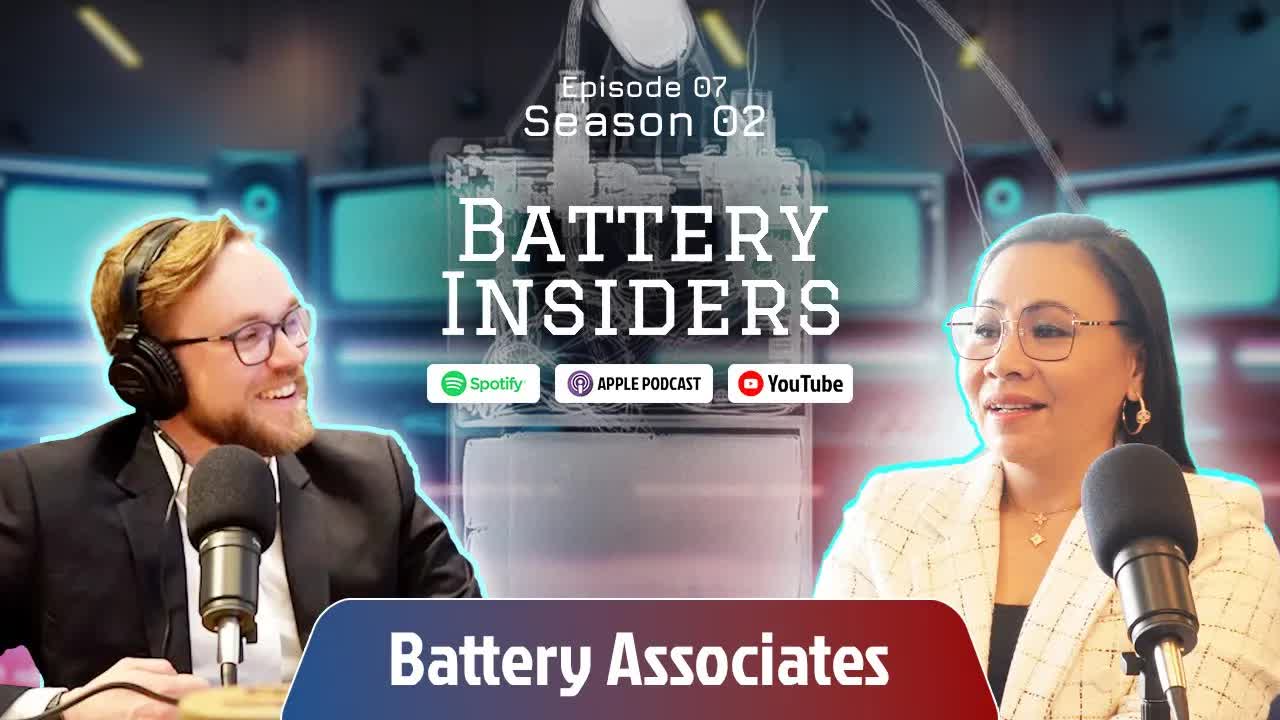
Meidy Katrin
Secretary General, Indonesia Nickel Miners Association
The association was founded on 6 March 2017 and has close to 100 member companies drawn from nickel mining, mining contracting, trading, smelting and processing. It sets the monthly nickel ore benchmark price that domestic transactions in Indonesia have to use.
Recorded in Budapest
What this episode covers
The association spent three years building a formula for a domestic nickel ore price, and in 2020 got it written into regulation. Every local transaction, from the mine to the smelter, now has to be based on it, and the association publishes a new price each month once the ministry has signed it off. Katrin thinks it may be the only mining association in the world that sets its own price, and she is direct about the point of it: miners keep more of the margin, which is what pays for community programmes, for the local society around the mine, and for the work that has to happen after mining ends.
The next step is an export price. Indonesian nickel sold into China or anywhere else is priced off the London Metal Exchange or off Shanghai Metals Market assessments, and that is what irritates her. Her words: come on, this is our product, why do we check another country's price for something that belongs to us. The association has been working on what she calls the Indonesia Nickel Index, with government approval, and she said it would launch early in 2024. She also described a smaller reform that landed the month before the recording, replacing an annual production permit application with one that runs for three years.
The downstream build-out is the reason any of this matters. Katrin counts 60 smelters already in operation making nickel pig iron, ferronickel and matte for stainless steel, plus five plants making battery materials including nickel sulphate. The two routes take different feed: the pyrometallurgical plants want higher grade saprolite ore, the hydrometallurgical plants take low grade limonite. Indonesia has both, and she says production costs are lower there than in countries working sulphide deposits. All of it happened inside five years, which she treats as the strongest argument that the downstream policy worked.
Investors came for two reasons. One is proximity: build in the source of the raw material and you start the competition ahead. The other is what the government put on the table after the ore export ban, which she describes, half joking, as too many things for free. Tax holidays, tax allowances, a super deduction tax, special economic zones. On top of that she claims the lowest land acquisition prices and the lowest labour cost of any comparable country. The strategy, as she reads it, is to let investors take profit through the early risk period and tax them at the second stage.
She is candid about what has not been solved. More than 130 companies are heading for downstream plants and she is not confident the ore resource covers them all. Oversupply from Indonesian product pushed prices down, and she spent an LME Week being asked why her country had crashed the market. Illegal mining is on the list too. On environmental performance she does not accept the framing behind the US Inflation Reduction Act shutting Indonesian nickel out. Her position is that Indonesia started five years ago while Europe and America have had 50 or 100 years, and that the answer is to teach rather than reject. She also says, plainly, thanks to China, whose capital made the downstream sector work.
Asked what a new investor should actually do, she gives three things in order. Find the raw material first, because without it you have nothing. Find a partner who knows the regulation, the location and how to deal with government, which she says is not easy. Then study the area, because cost, local government and local society differ across 17,000 islands and roughly 280 million people. And know the ownership rules: a foreign company can hold at most 49% of a mining business, but can own 100% of a factory, as long as the board and the operational leadership are local. Her closing advice is blunt. Pyrometallurgy is oversupplied, so stop. Hydrometallurgy for nickel sulphate is welcome.
Questions from this episode
- What is Indonesia's nickel ore benchmark price?
- It is a regulated domestic reference price for nickel ore, built by the Indonesia Nickel Miners Association. Before it existed there was no benchmark for local transactions. The association worked on the formula from 2017, and in 2020 it was adopted under regulation. Every domestic transaction between miners and smelters has to be based on it, and the association releases an updated price each month after the ministry signs. Katrin says the effect is that mining companies keep more margin, which funds community programmes and post-mining obligations.
- What is the Indonesia Nickel Index?
- A price index for Indonesian nickel product sold abroad, which Katrin said would launch early in 2024. Today Indonesian nickel shipped to China or elsewhere is priced off the London Metal Exchange or off Shanghai Metals Market assessments. Her argument is that the product comes from Indonesia, so the reference price should too. The association has government approval to develop it. It is the same logic as the domestic ore benchmark, applied to exports.
- How many nickel smelters does Indonesia have?
- Katrin counts 60 smelters in operation producing nickel pig iron, ferronickel and matte, mostly feeding stainless steel, plus five plants producing battery materials including nickel sulphate. The first group is pyrometallurgical and runs on higher grade saprolite ore. The second is hydrometallurgical and runs on low grade limonite. She notes that more than 130 companies in total are working towards downstream plants, and says she is concerned the ore resource will not cover all of them.
- What incentives does Indonesia offer nickel investors?
- Tax holidays, tax allowances, a super deduction tax and a network of special economic zones with additional benefits from the industrial parks. Katrin describes the package, half joking, as too many things for free, and explains the reasoning: let investors make money through the early risk period, then tax them at the second stage. She also claims Indonesia has the lowest land acquisition cost and the lowest labour cost among comparable countries, on top of having the raw material on site.
- Can a foreign company own an Indonesian nickel mine?
- Not outright. Katrin says the maximum shareholding a foreign company can hold in a mining business is 49%. For a factory or processing plant the rules are different: a foreign investor can own 100%, but the board of directors and the operational leadership have to be local. Her wider advice to new entrants is to secure the raw material first, find a partner who understands the regulation and the local government, and study the specific area, because costs and conditions vary widely.
- How does the association respond to criticism of Indonesian nickel's environmental record?
- Katrin does not dismiss it. She says the association is now concerned with ESG and the environment, that illegal mining exists in Indonesia as it does elsewhere, and that supply chain control is being built step by step. What she rejects is the tone. Indonesia has been doing this for five years, while European and American companies have had 50 or 100 years, so her response to the criticism behind the US Inflation Reduction Act shutting Indonesian nickel out is to ask to be taught rather than rejected. The association is working with companies that have established ESG systems and testing whether those systems fit Indonesian conditions.
Listen to this episodeWatch on YouTube
Part of Raw materials and mining
Transcript
About this transcript. Generated automatically from the recording, then corrected against a glossary of company and guest names. It has not been checked line by line. Machine transcription mis-hears technical terms, numbers and names, so treat any figure here as a prompt to check the recording rather than a quotation of record. Spotted something wrong? Tell us.
0:00Introduction
Dr Simon Engelke
0:00Hello everyone, thank you so much for joining. We are currently in Budapest at the lithium-ion battery Europe 203 hosted by SMM, the Shanghai Metals Market. My name is Simon Engelke, founder and chair of Battery Associates. I'm very fortunate to have Mehdi with me, who is the Secretary General of the Indonesia Nickel Miners Association. Welcome. Thank you. So, Nickel is top of news. People talk about it all the time. I'm sure it keeps you quite busy. Yeah, of course. And maybe if you could start introducing yourself and the Nickel Association, maybe how many members you have, and what this is all about. Thank you. Well, we are Indonesia
Meidy Katrin
0:52Nickel Miners Association. I can say that we are part of the government, of Indonesia government, and of course, from the industrial players of the nickel sectors, from upstream to downstream. And then, currently, we are established from six years ago, March 6, 2017. And in the last seven years, I can mention about the whole things we made it, especially to increase the value I did from the nickel sectors to the mining, and then to the nickel downstream. Well, Indonesian Nickel Miners Association, we aim to like a bridge coming from the players, from the industry to the government. So, we have almost 100 members coming from the company, not the personnel, but the company. They are in the nickel sectors, coming from the nickel mining company, the contractors company on the nickel mining, the trading company on the nickel one, and also from the smelt and all the processing plant. And then now, there's a lot of players who like to become our members because a lot of benefit as a member of the company.
2:03Setting a benchmark price for nickel ore
Meidy Katrin
2:04In the association, you know, of course, there's some priority to them. To generate the task. We try to encourage in terms of the how to become, to make the good mining practices. And also, well, for your information, maybe we are the only one association, I can say in the world, to make our own price, you know, for the local, for the domestic transaction. On the nickel industry, we don't have any benchmark price. So, since 2017, three years, to make the formula, to make the program. And finally, we did it on 2020, put it under regulation. We call it nickel ore benchmark price. You know, and that's what it makes it. It's what it makes it for the best transaction of local, yeah, from the mining to the smelt. So, any kind of the transaction should based on our price. So, you know how busy we are. We release every month this price after signing from the our ministry. So, the miners, the miners, the nickel mining company, they will get more profit because there's a lot of ability as miners, you know, for the CSR, for the local society, for the after mining, and then, well, and so on and so on.
4:07Three-year permits and 47 critical minerals
Meidy Katrin
4:08And then, after that, not only talking about the price we make it, and about the condition of transaction. And then, last month, we just make it a new regulation. Finally, we did it. And the government approved what we are like when we are applied it, some kind of document, you know. You know, in our country, in Indonesia, every mining, not only our nickel sectors, we have 47 critical minerals. How rich we are. And then coal, of course. Because every year, if you would like to make a production, getting oil, and selling your product, you must get some approval from the government, right? So, every year, you should apply. And then, last month, finally, we did it. We make a new one, at least not every year, not annually, to apply the permit. But every three years, we make it. So, everything just would like to make more simple. And then, how to attract the investment, the investors coming, and then more easily to the industrial, and then more easily to control by the government also. That's what we make it. And, currently, not only that, there's a big issue coming, in terms of the whole product coming from Indonesia. You know, in Indonesia, in my country, in my lovely country, we are the number one for the nickel resources. That's why everybody come, take a look of Indonesia, for the new energy. Yeah. Yeah. Especially the only one. Any kind of nickel product from Indonesia. You know, when we send it to another country, let's say to China, to Asia, whatever it is. We always use based on, let's say, London Metal Exchange price, or LMA price. Or, Shanghai Metals Market price, SMM price.
6:08Pricing exports off someone else's index
Meidy Katrin
6:09Yeah. So, I'm just curious. Come on, this is our product. Why another country? We must check the price, and then, based on their price, and send to another country. That's belong to us. So, since, since, uh, three months ago, like since, uh, I forget it, uh, early this year, we tried to make it some, our own price. So, it means, it will really, as the government approved to make it, uh, the reason is, not only for the price, but our own price, because the product coming from us. But, this is, looks like our price, not based on other country price. So, I call it, Indonesia Nickel Index. Yeah. It will release and launch early next year.
Dr Simon Engelke
7:02So, I look forward to that, and I'm sure a lot of other people are as well, to see that. And, I guess, maybe one quick word just on, because maybe, as you said, right? You know, Indonesia being the big player there, on the nickel side. Yeah. Like, how is it going to mine right now in, uh, in Indonesia? Maybe just for people who don't know anything about mining. Can you give a quick idea?
Meidy Katrin
7:20Oh, come on. If you're talking about Indonesia, as I mentioned, again, we have 47 critical minerals. Not only about nickel. Yeah, we are successful on nickel downstream. I can say, maybe, uh, if you compare with other country, uh, who have a resource like Indonesia. Yeah. We are the successful one. Because not more than five years, we success for the nickel downstream. Hmm. I can say, um, for the smelters, we make operation, we make a production for the nickel peak iron, ferro-nickel, nickel made, will be a stainless steel. Uh, it's already 60 smelters. Hmm. Can you imagine? That's a huge investment, you know? And then, for the battery material, uh, for the MSP, nickel sulfate, it's already five factories. Hmm.
8:06Sixty smelters, and two processing routes
Meidy Katrin
8:07They make it for the H-12 technology. So, there's a different typical coming from the pyro-metallurgy, uh, to make the MPI ferro-nickel, uh, and then, hydro-metallurgy, uh, to make a MSP and nickel sulfate on the battery material. Hmm. So, you see, there's a two typical coming from the output and input. Hmm. The input for the MPI, for the pyro-metallurgy, I can say, it's a hybrid one or superlite. Hmm. And then, for the MSP, coming from the, uh, uh, lemonite or low-gray. Hmm. You know, in Indonesia, because we have a use resources. And then, I can say, Indonesia, we have a large light. Not like, uh, Canada or Haseal. They have nickel also, but it's totally different. Exactly. And easy to make a production. And the point is a lower cost for the production in Indonesia. Hmm.
Dr Simon Engelke
9:01That's really interesting, right? Because, I mean, also how to attract investment, right, in Indonesia. And, I guess, cost is a big topic there as well. Hmm. And what are other things, maybe you mentioned, like, setting lithium, you know, with, say, nickel prices in Indonesia. Hmm. Like, what are other, you know, um, steps the government is taking to attract this investment?
Meidy Katrin
9:16Oh, you can imagine. You know, uh, when the export ban coming, uh, the point is how to increase the value added to the country. Not only selling the ore, the raw material, but at least, there is some product coming from Indonesia. First, for the job creation, and then to increase the value investment of Indonesia. Uh, so, uh, mention about value added, you know. But since the export ban, so many foreign direct investment comes to Indonesia. And then they put some investment and make some processing over there, uh, especially on the nickel one, for the nickel downstream. As I mentioned, there's so many company coming, and then, uh, now we're starting to stop it. Because I'm concerned for the all resources. It's not enough to cover all of them, you know.
10:02How much ore 130 plants would need
Meidy Katrin
10:03It will be more than 130 company. So, it means 130 factories for the nickel downstream. Can you imagine how much they needed for the nickel ore consumption? This year, 170 million ton. You know, last year, 101 million ton. And next two years, it will become more than 400 million ton. Wow. But the point is, why the whole investor try to make something in Indonesia? Of course, because we are the central and the source of the raw material. If you make some manufacture, some industry, in the source of the material, you will win the first. Right? For the competition. Okay. The second thing, from Indonesia government, give them a lot of facility. A lot of incentive. I can say quote and quote like a, too many free for them. Really. That's why I'm curious. So, where is the fan edit if everything's for free? You know, but, uh, that's a good idea honestly. How to attract the investors coming. And then let them give some profit first. And after that looks like a risk period. You know, let them make it. Let them get some profit first. And then after that, on the second stage, put them some tax. Okay. Yeah, I can say, if you would like to make some investment, investment in Indonesia, you will get like a facility on the tax holiday, on the tax allowance, and then I can say like a super deduction tax. And we have a lot of special economic zone. And there's a lot of benefit coming from the industrial part. So, this is it. There's a lot of benefit if you would like to invest in Indonesia.
12:00Land, labour and the cost of building in Indonesia
Meidy Katrin
12:01And also, if you compare with another country, we have the lowest cost for investment. As a capex, if you would like to calculate about capex and then the operational cost. First, for the land acquisition, we have the lowest one price. Second, talking about the labor cost, we are the lowest in the world. If you compare with another country. This is like our neighbor in China, in Singapore, in Australia, we are the lowest one. And the third thing is, yes, the source, the source in the raw material, and also a lot of facility from the government. So, this is it. Not only talking about the nickel industry, but in any industry, in any investment, if you would like to put it in Indonesia, well, you will get a lot of benefit. That's why I talk about the next friendly.
Dr Simon Engelke
12:55Yeah. And that's kind of also, you already touched on it before as well, right? Like when the ban, right? Like the nickel or export ban. I remember like in the media, right? People are like, oh, well, what's happening on this end? And I think, you know, of curiosity also about other countries and other regions. And, you know, maybe also some concern, you know, suddenly, is there enough nickel available? And what is going to do to the cost from other sources? So maybe, yeah, maybe what has been your, you know, how has your experience been also from industry? You already mentioned there's a lot of investment and a lot of support. But are there also any downsides you have seen in this? Or has it all been positive from your end?
Meidy Katrin
13:31Yeah. Yeah. You know, I can say like this, for the nickel downstream, we are the beginners, right? We are new players. Of course, we need to learn from the expert one, right? But if you compare from Indonesia and also with other countries, well, different cultures, different topography. And then a lot of things, a difference if you compare with another country. Okay.
14:00After the export ban, the ESG question
Meidy Katrin
14:01And the point is, we are success for the downstream program, for the nickel. And then next year, we are coming to the next mineral house for the, to copy about the success story of nickel downstream. But the point is, not only to make money, not only to make profit, not only to increase the value added, but now we are concerned about ESG, especially talking about environmental issue. Yes, of course, but again, just because we just started, we are the new players. We success to make the program, we success to make the system, we success to make, to attract the investment coming to Indonesia. And now, we are coming to the next stage, we must concern about the future. We must concern about the local society. We must concern about how to become the powerful country coming from our resources. But to create some relations, especially to put it into some industries, not easily. You know, Indonesia, 17,000 islands with almost 280 million people with, I can say, 718. Oh my gosh, you can imagine how to control it, right? 17,000 islands. Not like in Europe, you are in a mailing area like in China, but in Indonesia, not easily to connect. Each city, you know, so I can say that, and of course, next year, we become the election for the next president. Well, I can say, a next program coming, a new regulation coming, will change, but lucky to us, we have association. That's the point of association. That's the point of association. Become a bridge coming from the players, and to the government. What you needed, what the government needed, what the players needed from the government to support them.
15:57Oversupply and the price crash
Dr Simon Engelke
15:58And getting, getting the government support there as well. And, um, if there's anything you can share, for example, from an emission, you've already touched on ESGs, and of course, there's many topics, biodiversity, other topics, but also an emission standpoint right now, maybe a ton of nickel, um, you know, produced in Indonesia, and also, yeah, also nickel is used to involve other applications, not just batteries, even though we maybe sometimes think so. Yeah. At least on this podcast, but, um, um, also, of course, what's the percentage of battery grade nickel at this point, uh, which is getting produced in, in, in Indonesia?
Meidy Katrin
16:29Well, if you say about our production, Indonesia, oh my God, in the last, uh, I can say in the last three months, yeah, uh, we got some more good price. You know why? Because oversupply from the Indonesia product, from Indonesia nickel. Uh, last month, I just, I went to LMA Wix, and the whole week's talking about nickel, nickel, nickel, nickel, nickel, Indonesia, nickel, Indonesia. Hey, what happened in Indonesia? Why you crash the market? Why you crash the price? Because the oversupply coming. As I mentioned, 60 companies, 60 factories already make operation. They make the, many products coming. That's why, our side, we're concerned about sustainability, right, for the supply chains. So, step by step, we're trying to make, completed everything in our country. Like, how to control the supply chain. And then, uh, how to reduce, I can mention about illegal mining. Well, not only in Indonesia, there's illegal mining. Another country also. And, if you're talking about the ESG, sorry, uh, focus on the environmental issue. Again, we just, nuclear, we are nuclear, we just started. If you compare with European company, in the Europe, in America, they already started since maybe 50 years ago, 100 years ago, right?
17:55Mining in the villages, not the capital
Meidy Katrin
17:56But, in Indonesia, we still need some, we still need to learn, in another country, how to make a proper, under ESG, proper in the good mining practices, proper in the after mining, proper in the local society, to increase their life. Because, mining not in the big city, not in the capital city. But, I can say, mining in the jungle, you know, on the villages. They own the treasure, not us. But, how to increase their life? To change their life, become better and better. You know, before and after. Before, before mining, before the factory over there, before the smelter over there. And, now, after they are in there. What do they got it? You know. So, there's a lot of, uh, uh, things that should, we need to create. You know, uh, talking about the system. Uh, and your system will coming, uh, on my presentation here, that I mentioned about, who is the players? Uh, what we are, capacity? What is the product coming from Indonesia? And, what is the solution, uh, the solution for next? To support the whole industry, you know. And to support another company in another country. In terms of the raw material of battery. Like here, in Europe. There's a lot of European company also in Indonesia. Not only coming from China. Yeah. So, uh, maybe you heard about the IRR from America, from United States. Uh, uh, incentive, uh, incentive, tax. They reject Indonesian nickel. What is the issue? Why they reject from, uh, uh, uh, uh, Indonesian nickel? They mention about the environmental. They mention about China controlling us. But I can say, for me, myself, thanks to China. Because of them, we are successful to make the nickel downstream.
19:55The IRA, and thanks to China
Meidy Katrin
19:56If there is no China, no others would like to take a look of Indonesia. They are the first to make Indonesia more famous than before. Right? Uh, and also China, they not only invest in the nickel sectors. But in many sectors. Not only in Indonesia. They look like fighters in every country. Right? But, again, thanks to China. They make it. They make us success for the nickel downstream. So, this is it. A next step. What is the next step? What is the solutions? Yeah. Not only talking about, hey, come on, Indonesia. You're not concerned about the environmental issue. You're not concerned about the future. You're not concerned about the carbon footprint. Hello, sir. We just touched it. We're new players. Let us try to learn step by step about that. Of course, we are concerned about it. But, at least, come on, try to teach us. So, this is why we try to collaborate with another party. Uh, I can say, like, uh, some company, uh, about what they are already making, their success to make it on the ESC concept. And then, we try to put it on our system first. Is it proper to us or not? Because, as I mentioned, we are different.
Dr Simon Engelke
21:14What do you think, I mean, from a mission standpoint, as you said, right, like, there's been concerns and I see, right, it's a journey, right? Yes. You don't start from, you know, 100%. Um, what do you see? Like, you know, how quick maybe can Indonesia also catch up on some of these topics? It would be amazing to see maybe Indonesia become the leader, right? Like in, for example, green nickel or octoms.
Meidy Katrin
21:32I can say, now, we are the leaders one. If you compare with another country, we are the leaders. Because, what? Talking about the nickel resource, we are the number one. Yes. And talking about the nickel producer, you can imagine. From the 60 company, they already, I can say, from the top 10 company, the nickel producer in the world, we already have 8 company.
21:53Eight of the world's top ten nickel producers
Meidy Katrin
21:54From the top 10 company. From the nickel producer. And now, we starting to make our own price, right? So, I can say, you don't think we are already the leaders for the battery raw materials? For the stainless steel materials also. Because nickel for the stainless steel, nickel for the battery. So, we are already.
Dr Simon Engelke
22:15I agree. And then, I think the next step would be then, hopefully, becoming like ESG as well. Yes. I think as the next, there is always something you can always then to work on. But, I agree with you. I mean, you are.
Meidy Katrin
22:24And new players. Exactly. Looks like we are a kindergarten, you know. But, you know, a fast growing one. Yeah, that's right. But, at least, we try. That's why I am here. That's why I am in another country. That's why I try to engage with somebody else, with another company, who more expertise, more have experience than us. And then, try to grab their information, their knowledge, and then put on our system. But, we just take it piece by pieces. Because, you must compare with our condition. It's totally different. You know. And put it on the reputation, of course. But, again, this is talking about first, the cost. And second thing, is it acceptable for the whole industry in Indonesia? Especially, Nicole? Let's see.
Dr Simon Engelke
23:13Yeah. But, I am looking forward to see this journey. I guess, as a last question, if now people are enticed by, you know, they want to come to Indonesia, if we need to do good store here already. But, I am just wondering, yeah, if you, you know, if there is a company looking for investing, who maybe listens to this, or is interested, like what would be their best start? I guess, did they talk to you? Association, or what are the starting points to look into this further?
Meidy Katrin
23:34Well, it depends on what kind of manufacture or industry you would like to put it in Indonesia. You would like to put your investment in Indonesia. If you are talking about mining industry, yes. I can say, there is another mineral also coming. Not coming. It's already gone. Yeah.
23:51Advice for investors: raw material, then partners
Meidy Katrin
23:52From nickel, you are success. Make it all the same one. If they would like to come to Indonesia, first, my suggestion is, looking the raw material first. If there is no raw material, you are nothing. Okay. Second thing, who is your key person? He knows exactly about the regulation, the location, and then how to make some engagement with the government. That's not easy. And then, think about which area you would like to put it in. Because every area is different. Every area is different cost. Every area is different. A typical of the local society also. A local government also. Not all of them. In the same time. So, I think for me myself, if a new investor would like to invest in Indonesia, I think in any industry. First, please read it and study it about Indonesia. The point is about the regulation. About the tax maybe, about the conditions maybe, about the facility maybe, about the incentive, they will get it. And then, what kind of sector. The second thing, again, who is your partner in Indonesia? Okay, for your information, if you come into the mining industry, as a foreign company, the max share you can get only 49%. The maximum share for the foreign company. But, if you come into the industry, as a factory or whatever else it is, you can get 100% of the sales. But, the director of the BOD and the operational should be on the local one.
Dr Simon Engelke
25:35Thanks for sharing. Hopefully, as you mentioned, hopefully you see more factories also, you know, in cell production and hopefully Indonesia can be to become a powerhouse.
Meidy Katrin
25:43Depends on. Depends on. If you mention about pyrometallurgy, I said, please stop. You are oversupplied.
25:48Stop building pyrometallurgy
Meidy Katrin
25:49To make the NPI for the nickel made. You are oversupplied. Stop it. I'm concerned about the raw material. I'm not sure if it will be enough to cover all of the factories in Indonesia. But, if you are talking about you will have to invest in hydrometallurgy to make MSP, to make the nickels, please, you are welcome.
Dr Simon Engelke
26:08Great. I really appreciate your time, Mehdi. Thank you. We are sure all the best on this exciting journey. We are sure we are going to see in all the lectures, all these topics coming. Wis me la. Not easily. We are looking at it. Again, the battery wall needs nickel. So, you know, Indonesia nickel being a big part of that. Looking so forward to see also how it evolves. You know, if new standards and things are coming to place as well in the future. Thank you. Thank you so much. Thanks for coming. See you. Thank you.