
Episode 123 · 27 February 2024 · 00:10:41
Why battery startups should visit a Chinese plant first
Insights on Energy Transformation & Clean Tech Investments
A TDK Ventures investor on why clean tech money kept flowing through a hard year for the macro picture, how policy built China's 30% EV share, and the startups solving problems tier one cell makers finished years ago.
Read the article: Why battery startups should visit a Chinese plant first
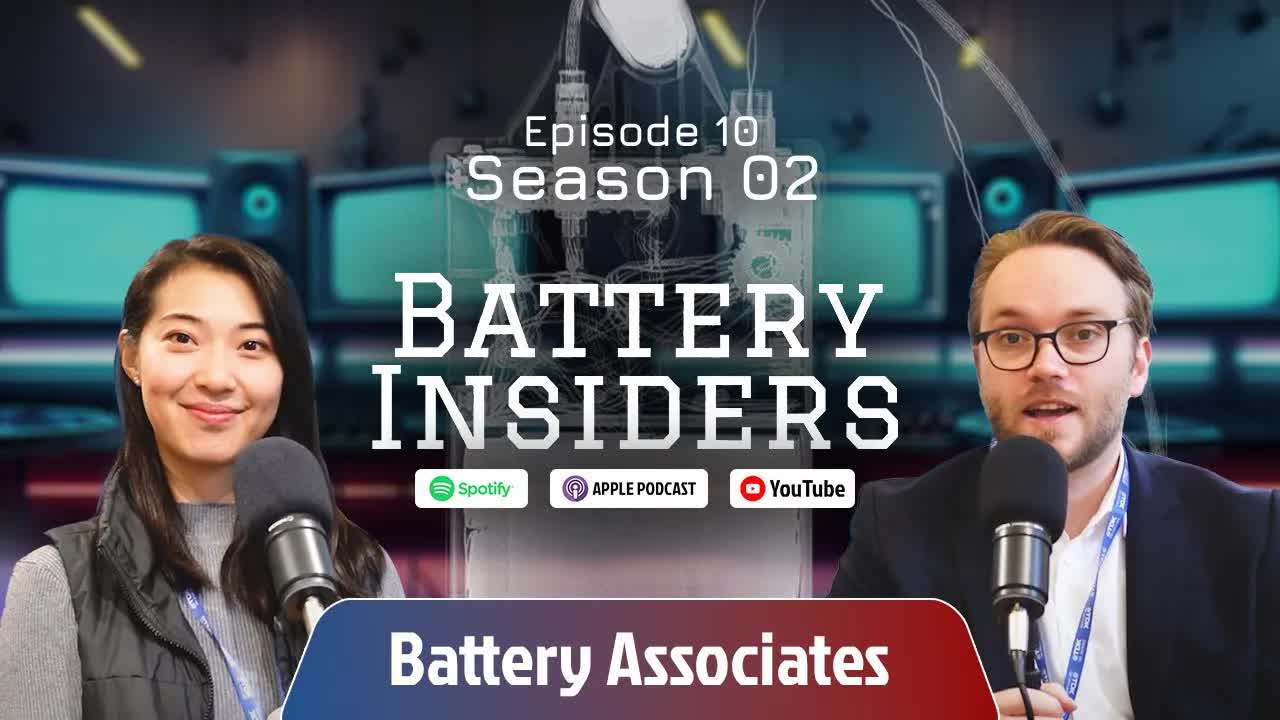
Qianran (Katherine)
Investment Associate, TDK Ventures
TDK Ventures invests in energy transformation and clean tech, and runs Energy Week, which had previously been held in Boston and San Francisco. The London edition was its first in Europe and its first hybrid in-person event, timed with a new fund, Fund EX1, and plans for a London office. The episode's on-screen credit gives her first name and the name she goes by, with no surname.
Recorded in London, at TDK Ventures' Energy Week
What this episode covers
A US startup told Katherine it could cut battery formation time from weeks to a few days. Then she visited a factory in China where formation takes thirty minutes. Another was building inline inspection and quality control on the assumption that the data collection still needed automating, at a point when tier one manufacturers already run it fully automated. Her advice to founders is to establish what the state of the art actually is before committing years to a problem, and where possible to walk through a top plant in the US or China and see it.
On the money, her read is that clean tech investment held up through a difficult macroeconomic year. She has been tracking megafunds, meaning funds above a billion dollars under management, and counts three new ones started in London in the past year or two, with several more in the US. Investors who were not in energy or clean tech before are putting money in and want to join. She puts it down to the energy transition being under way in every region at once, with going green and reaching net zero now treated as a common mission rather than a national one.
Her account of China's lead starts with policy rather than technology. Companies such as ATL, CATL and BYD were building early, and from around 2010 the Chinese government restricted procurement to batteries made in China and paired that with subsidies and incentives for people buying EVs. Production and demand were closed into a loop, and ten years of it shows: EVs are above 30% of the market. On a visit to Shenzhen in September she found the taxis, the small and large buses, the commercial vehicles and the heavy duty trucks all electrified, and counted ten or more EV brands she had never heard of making good cars.
The US comparison is less flattering on volume and more flattering on invention. Electrification there is still in single digits, around 6 or 7%, and much of the battery IP that matters originated in the US before being commercialised and scaled in China. What the country lacks is manufacturing, which is what the Inflation Reduction Act is meant to bring back to North America. Europe she describes as moving faster than the US on mandates and regulation, on green hydrogen, on electrification and on phasing out internal combustion engines. Europe is also more open on supply chain, with CATL already running several gigafactories there and others following.
The startup activity she is seeing spans the chain: new cathode, anode and electrolyte chemistries, upstream lithium mining and direct lithium extraction, refining, routes that skip the precursor step and go from raw material straight to cathode material, dry coating and other new manufacturing processes, and recycling to close the loop. The filter she applies is whether a founder understands the market and can say what value the work adds to an ecosystem that already exists. Understand the market and the value you bring, she says, and then start.
Questions from this episode
- Is clean tech investment slowing down?
- Not in the private markets, on Katherine's reading. She describes energy, battery and wider climate tech investment as a growing topic, and says that although the macroeconomic picture has been a little challenging, the money raised to invest in clean tech has continued going strong. Her own research on megafunds, meaning those with more than a billion dollars under management, found three new ones started in London in the past year or two and several more in the US. She also notes that investors with no previous exposure to energy or clean tech are now putting money in.
- Why is China ahead on electrification?
- Because production and demand were pushed at the same time. Katherine points to early movers such as ATL, CATL and BYD, then to the Chinese government from around 2010 restricting procurement to batteries made in China, followed by subsidies and incentives for consumers buying EVs. That combination closed the loop over the following decade. The result is an EV share above 30%, and in cities such as Shenzhen the commercial vehicles, taxis, small and large buses and heavy duty trucks are all electrified. She also counted ten or more Chinese EV brands she had not previously heard of, all making high quality cars.
- How far behind is the US on EV adoption?
- Electrification in the US is still in single digits, around 6 or 7%, against more than 30% in China. Katherine's view is that the US leads on invention rather than deployment: much of the battery IP that matters originated there, before being commercialised and scaled up in China. The missing piece is manufacturing, which is the gap the Inflation Reduction Act is trying to close by bringing production back to the US and North America. She describes the country as catching up rather than as being out of the race.
- What is Europe doing differently from the US?
- Two things, in Katherine's account. Europe is moving faster than the US on mandates and regulation, including requirements around green hydrogen, around electrification and around phasing out internal combustion engines. And Europe is more open on the supply chain side, which is why CATL has already built several gigafactories there and other manufacturers are following. She frames each region as having its own strategy, its own pace and its own electrification roadmap, rather than one model that everybody else should copy.
- What do investors want to see from hard tech battery startups?
- Evidence that the founders know the state of the art. Katherine's concern is startups that believe they are solving a big problem which top cell manufacturers solved some time ago. One pitched a process cutting formation time from weeks to several days, but the Chinese factory she visited completes formation in thirty minutes. Another was working on inline quality control and data collection for automation, at plants that are already fully automated with inline QC. Her recommendation is practical: if you get the chance, visit the leading plants in the US or China, since China is somewhat further ahead.
- Which parts of the battery supply chain are startups working on?
- More or less all of them. Katherine lists new cathode, anode and electrolyte materials, upstream lithium mining and direct lithium extraction, lithium refining, and routes that go from raw material to cathode material without the precursor step. On the manufacturing side she mentions dry coating and other new processes, and at the end of the chain, recycling to close the loop. She sees a lot of opportunity across that range, with the caveat that the work should address something the established manufacturers have not already handled.
Listen to this episodeWatch on YouTube
Part of Making cells at scale
Transcript
About this transcript. Generated automatically from the recording, then corrected against a glossary of company and guest names. It has not been checked line by line. Machine transcription mis-hears technical terms, numbers and names, so treat any figure here as a prompt to check the recording rather than a quotation of record. Spotted something wrong? Tell us.
0:00Introduction
Dr Simon Engelke
0:00And welcome everyone, thanks so much for joining us again on Battery Insiders here now in London. Super excited to be here together with Catherine, first time in person. Wonderful to see you and be here at the Energy Week, which is hosted by TDK Ventures, you can see from her West as well, and also climate investors. So that's really, really exciting. It's been a fantastic event. We're excited to have you here.
Qianran (Katherine)
0:32Thank you so much, Simon, and thank you so much for joining Energy Week. This is our first hybrid in-person events and also our first event in London. We used to have it in Boston, in San Francisco. This is the first time coming to Europe and aligned with our new fund, Fund EX1, that we hope to open an office in London to continue to explore energy transformation and also climate, clean-time investment in Europe.
Dr Simon Engelke
1:00Exactly. And we know each other for some time, which is really nice. Yeah. To finally get a chance. Finally in person. To finally get in person. And I think, I mean, yeah, I was, I think it's just a really fascinating world, right, of investing. I think we have quite a few listeners from all kinds of different subjects, you know, from technology, of course. We speak a lot about technology on this podcast, but also policies and all these kind of other connected topics. But of course, we also talk about how money is quite crucial, especially when we, you know, talk with startups, bring startups on this podcast. So I just would love to kind of, you know, pick your brain a bit on, you know, from an investing perspective, you as an investor, you know, what do you think is really exciting right now? And maybe also because what has happened the last year, maybe since last Energy Week? What are some of your observations, trends you might see?
Qianran (Katherine)
1:42Sure. I feel like energy investment or battery investment, or probably we can continue to expand to the climate tech, clean tech, is getting more and more hot topic.
1:55Megafunds, and why clean tech money held up
Qianran (Katherine)
1:56And then we're seeing, for example, I'm also doing some, like, research on the megafonds, meaning, like, more than 1 billion AUM big funds. Especially in London, especially in the last one and two years, we see another three new megafonds started in London. And then there's also several in U.S. as well. But we are seeing, even though the macroeconomic is not, is a little bit challenging, however, we're seeing the private segment, the money raised to investment, to invest in the clean tech area is continue going strong. So more and more people, even they are not in the clean tech or energy segment before, are putting their money in. They want to join the journey. They want to join the game. Because the energy, the whole story of energy transformation is happening everywhere, every country, every continent, U.S., China, Europe. And then the goal of driving the whole, the global economy to go green, to go net zero, is already a common mission. I would say a common mission for every, from every country. Yeah.
Dr Simon Engelke
3:07And maybe to follow up on that, because you mentioned these different countries, right, and I guess you're rather international and you're front there. And, I mean, you're quite present also in the U.S. And I'm just wondering, like, where do you think is, you know, who's leading, right, in this climate space? And also maybe from, you know, what do you get excited about? Is it a lot in the U.S. now, there's the Inflation Reduction Act? There's more Europe now, because you're moving on some facilities here. So I'm just curious to get your perspective. Or maybe it's in Asia, maybe China, Japan, et cetera.
Qianran (Katherine)
3:32Yeah. I would say, just like what we discussed these two days in Energy Week London, each different geographic areas has their own, like, advantage or the things that they are doing good at and then things that they need to catch up. For example, China, I would say, they are very first movers in this whole electrification process.
3:55How policy closed the loop in China
Qianran (Katherine)
3:55Back to 20 years ago, there's already the, like, very original, varied companies, like ATL, CATL, BYD, already emerging, started their business in China. And then, I think, around 2010, there's the Chinese government kind of wide list of, from the regulatory perspective for enforcing the procurement to only buy batteries made in China. And also followed with a lot of subsidies and also incentivized for people to buy EV. So both on the production side, demand side, and then close, really close the loop of what happened in China in the past 10 years on the electrification. So that's why we see China on the road. Right now, you already see more than 30% of EVs. In some cities like Shenzhen, I just go back to China in September, all the commercial vehicles, all the taxis, all the, like, small little buses, large buses, heavy-duty trucks, are all electrified. Very impressive. And there are, like, 10 more brands, new brands I've never heard about, are all making very high-quality EV in China. But in U.S. right now, our electrification rate is only, like, single-digit 6%, 7%. But U.S. is catching up. I think U.S. always have the very first, like, technology innovation. Even with the battery technology, we all know this, many of the IP originated, come from U.S., but being commercialized and scaled up in China. So U.S. is very good at innovation, like lab-scale innovation, but U.S. is lacking the piece of manufacturing. That's why you mentioned IRA, that U.S. is trying to bring manufacturing back to U.S. and North America.
5:53Europe's mandates and its open supply chain
Qianran (Katherine)
5:54Europe, I would say, is moving fast, much faster than U.S. on a lot of, like, mandate and also regulatory. Like, you have to convert a certain amount of green hydrogen to green hydrogen. You have to electrify. You have to, like, phase out a lot of internal combustion engines. And also, another different thing, I think, is Europe is more open to the supply chain-wise. For the most, CATL already built several gigafactories in Europe. And also, like, come, like, Gaussian. And then they're all, like, starting to move to Europe. So I think each continent have their own strategy, have their own pace, have their own, like, next focus goal to build, and have their own race, have their own kind of electrification roadmaps to go. So, yeah.
Dr Simon Engelke
6:53For sure. And I think that's their one commonality, right, is also, you mentioned, you know, a lot of IP developed. Maybe it was connected with London, right? Also, quite a lot of the battery IP was also developed here in the U.K. It was good enough. And others. So I think that's also exciting to see this link now with you, you know, expanding more to Europe. And another quick topic also would be, I think it's quite fascinating if we, you know, of course, a lot of the emerging markets, like India, et cetera, and the battery space, right? I think there's a lot of momentum there as well. I know we are limited on time, but one other last quick question I just would have is, because we have a lot of startups listening in, and I was wondering, like, you know, if they want to get investment, of course, there's also different approaches and grants, and, you know, people can do all kinds of ways, but we know, especially in the hard tech, and you're very strong, you know, in the hard tech and deep tech. So what are maybe the things you look out as an investor for a startup that you get excited about? What should startups have in mind if they want to go this journey and looking for funding?
Qianran (Katherine)
7:46Yeah, I think I would say we also see more and more startups.
7:49Formation in thirty minutes: knowing the state of the art
Qianran (Katherine)
7:49So our podcast, Battery Associates, will focus on battery. So we are seeing more and more startups working on different parts of the supply chain, new cathode, new anode, new electrolytes, even upward to the upstream lithium mining, direct lithium extraction, and also some of the lithium refinery process, or some of the things that says from directly from mine, or like your raw material without the precursor. So pecan-free process directly to the cathode material. So new since the process and also new manufacturing process like dry coating. So a lot of opportunities there, back to recycling to close the loop. I would say suggestion for the startup is that you want to know what is the state of the art, because some of the U.S. I haven't explored too much in the Europe yet. Some of the U.S. startup that what they are doing, they think they are solving a big problem, but they don't know that this problem has already been addressed in the top cell manufacturers. For example, there's a startup working out, okay, I have one unique process. I can reduce the formation time from like weeks long to only several days. But when I visit the factory in China, they can finish our formation process in 30 minutes. And then some U.S. startup, oh, we're like working on inline inspection, QC inline inspection that we can, you know, collect all the data. But when you want to do automation, but when you visit the tier one battery manufacturer, it's already fully automated with all the inline QC control. So many things that you think it's a problem, it's actually already no longer a problem. So make sure that you don't waste time on that. If you got the chance, go visit those top plants, either Gigafactory in U.S. or in China. In China, I would say, are moving ahead a little bit further.
9:48Understand the market, then start
Qianran (Katherine)
9:48Understand the market, understand the true point, understand the true value you can bring to the ecosystem. And then start. Yeah.
Dr Simon Engelke
9:59Fantastic. No, we really appreciate the insight. I think there's a really valuable insight. And we appreciate you sharing this. You know, I think you're really a true thought leader in the battery space. And, you know, especially on the finance perspective. And we really, you know, appreciate you taking the time to come on the podcast. And, yeah, looking forward to the conversation as well.
Qianran (Katherine)
10:16Thank you. Hope we can collaborate more and then together help the battery community.
Dr Simon Engelke
10:21Perfect. Thank you. And again, thank you so much for listening to Battery Insiders. My name is Dr. Simon Engelke, founder and chair of Battery Associates. And hopefully listening soon again. Thanks for now. Bye-bye.
Qianran (Katherine)
10:31Bye-bye. Bye-bye.