
Episode 133 · 15 July 2024 · 00:11:53
Four metals in one ore, four kilometres down
Insights on Deep Sea Mining by The Metal Company
The Metals Company's Kristin Hengstebeck on lifting polymetallic nodules from 4,500 metres, a nickel cost of negative $2.40 per pound, and why the rules for this industry are being written before it starts.
Read the article: Four metals in one ore, four kilometres down
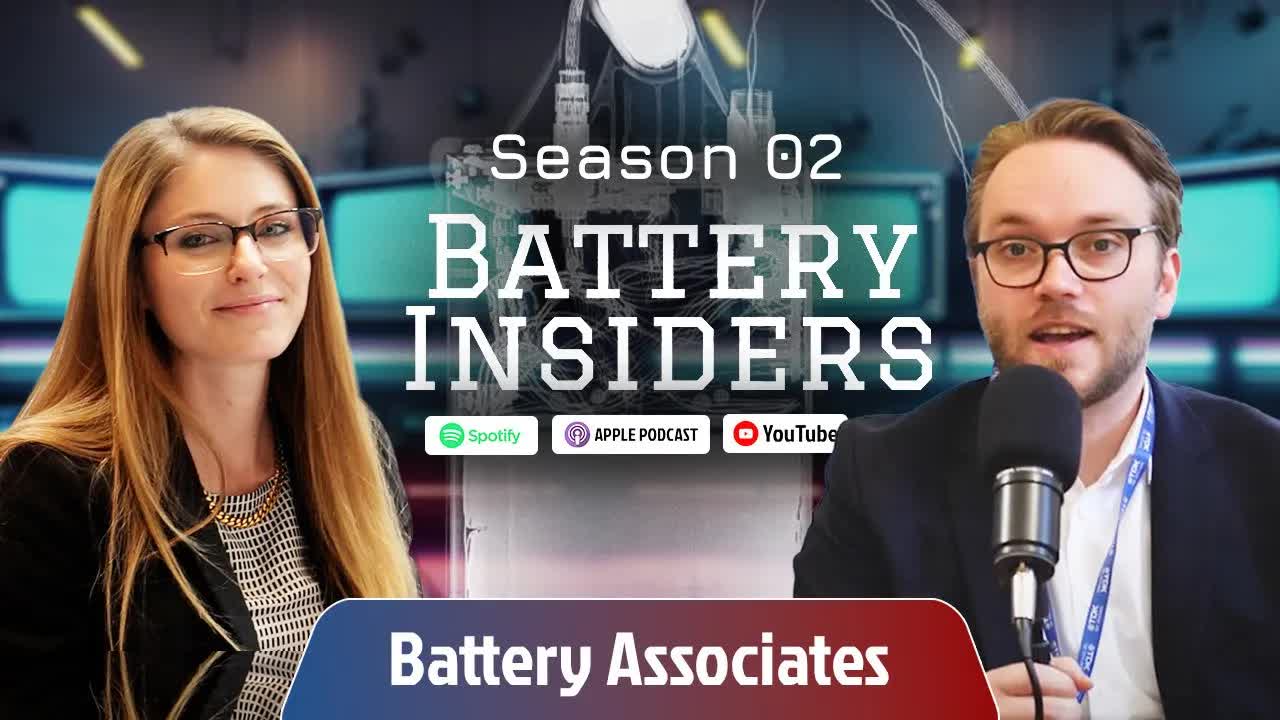
Kristin Hengstebeck
Director of Business Development and Market Research, The Metals Company
The Metals Company explores deep sea polymetallic nodules in the Pacific Ocean and is the only North American company developing the resource. It holds three exploration licences and has defined resources on two of them.
Recorded in Las Vegas, at SMM's lithium-ion battery conference
What this episode covers
Hengstebeck brought a nodule with her. Polymetallic nodules sit unattached on the seafloor, roughly 4,500 metres down in the Pacific Ocean off the coast of Mexico, which means no drilling and no blasting to get at them. A jet of water is fired at the seafloor, the nodule lifts into a robotic collector, and a vertical transport system carries it up the water column to a production vessel at the surface. Each nodule holds nickel, cobalt, copper and manganese, a combination Hengstebeck says you would not find together on land: three land based mines in one ore.
The cost figure she quotes is negative $2.40 per pound of nickel. Negative, because the cobalt, copper and manganese are all saleable byproducts at high grade, and revenue is led by nickel. On the nickel cash curve that would make The Metals Company the second lowest cost producer, behind only Norilsk in Russia, whose deposit carries platinum group metals. Capital cost is low for related reasons. The pilot production vessel is an ultra deep water drill ship converted for nodule collection, and the same system is intended to be the first commercial one. There is no fixed infrastructure to build around a mine site.
Her argument against the alternative is specific. Nickel growth today is in Indonesia, where the ore sits about a metre down but is spread across swathes of land, so what you get is deforestation, a carbon intensive footprint and large volumes of tailings with no good disposal route. Deep ocean disposal has been banned in the coral triangle, and dry stacking in a wet tropical climate with seismic activity carries its own risk. Add the effects on communities living around the mine sites. Two and a half miles down, as she puts it for an American audience, there are no human communities.
The regulatory path runs through the International Seabed Authority. There are 19 exploration licences for nodules, held across European and Asian countries and Pacific island states, and The Metals Company is sponsored by three Pacific island nations. It has done more than twelve years of environmental baselining and resource definition work, all of it set out in the exploration code with no way to leapfrog it, which builds in a three to five year lead before any application. The company completed an integrated pilot collection in 2022, lifting around 3,000 tonnes, and says it is the only contractor to have lifted nodules at that tonnage.
Nodules cannot go straight into a car, so processing was arranged separately. The company has an agreement with Pacific Metals in Japan to carry out primary smelting at that company's existing facility, keeping capital cost down, and is looking to locate a refinery in the United States. The commercial licence application was due to follow the baselining work, with a review at the ISA that takes about a year. Hengstebeck expects The Metals Company to reach market first, with other contractors following in a cadence behind it.
On the criticism, her explanation is about timing. Open pit and underground mining are broadly accepted because they already happen; here the regulation is being drafted ahead of commercial activity, the resource is legally a common heritage of mankind, and around a hundred intergovernmental and NGO bodies observe at the ISA, so everyone has a voice. Her counter is that the industry cannot be assessed in a vacuum. Mining is the largest producer of waste of any industry, comparative work including Benchmark Minerals puts nodules as the lowest impact route, and the whole mass of the nodule is used with near zero solid waste.
Questions from this episode
- How are deep sea polymetallic nodules collected?
- They sit unattached on the seafloor at about 4,500 metres, so no drilling or blasting is required. A jet of water is shot at the seafloor, which lifts the nodule into a robotic collector, and a vertical transport system moves it up the water column to a production vessel at the surface. The Metals Company's pilot vessel is an ultra deep water drill ship converted for the job, and that same system is planned to be its first commercial one. The lifting technology was refined in the 1970s and improved since, particularly in how it interacts with the seafloor.
- Why are nodules cheap to produce compared to land based nickel?
- Because one ore carries four metals at high grade. Nickel drives the revenue, and the cobalt, copper and manganese are saleable byproducts, which credits the nickel cost down to about negative $2.40 per pound. On the nickel cash curve that would put The Metals Company second lowest in the world, behind only Norilsk in Russia, whose deposit contains palladium and platinum. Capital cost is low as well: the collection vessel was converted rather than built new, there is no fixed infrastructure to put up around a mine site, and the company can choose where to process the material afterwards.
- How does nodule collection compare with nickel mining in Indonesia?
- Indonesia is where nickel growth sits today, and the ore is about a metre down, but it covers swathes of land. Hengstebeck lists what follows: deforestation, a carbon intensive footprint, large volumes of tailings with no good disposal route now that deep ocean disposal is banned in the coral triangle, dry stacking in a wet tropical climate with seismic activity, and the effects on communities and indigenous people near the sites. She also points to a lack of transparency in that market. At 4.5 kilometres down there are no human communities and no workforce or land use conflict.
- When could commercial nodule collection actually start?
- The Metals Company completed an integrated pilot collection in 2022, lifting around 3,000 tonnes, which Hengstebeck says makes it the only contractor to have lifted nodules at that tonnage. The application for a commercial licence was due later in the year this was recorded, after which the International Seabed Authority review takes about a year. Before any of that, the exploration code requires environmental baselining and resource definition that cannot be skipped, giving a set three to five year lead in. She expects her company to be first, with a cadence of others following.
- How would nodules be turned into battery materials?
- Not at sea. As Hengstebeck puts it, you cannot put these into an electric vehicle, so the processing route was arranged separately. The Metals Company has an agreement with Pacific Metals in Japan to do the primary smelting at that company's existing facility, which keeps capital cost low by using plant that already exists. It is also looking to locate a refinery in the United States. Because collection needs no fixed infrastructure at the site, the company has more freedom than a conventional miner over where the material is processed.
- Why is deep sea mining more contested than mining on land?
- Timing, in Hengstebeck's account. Open pit and underground mining already happen, so there is a baseline of acceptance. In this case the regulation is being developed ahead of any commercial activity, the resource is internationally governed as a common heritage of mankind, and around a hundred intergovernmental and NGO entities are observers at the International Seabed Authority, so every stakeholder has a voice. Her response is that it cannot be judged in a vacuum. Compared with existing land based ores and processing routes, she says comparative work finds nodules the lowest impact option, with near zero solid waste and no toxic tailings.
Listen to this episodeWatch on YouTube
Part of Raw materials and mining
Transcript
About this transcript. Generated automatically from the recording, then corrected against a glossary of company and guest names. It has not been checked line by line. Machine transcription mis-hears technical terms, numbers and names, so treat any figure here as a prompt to check the recording rather than a quotation of record. Spotted something wrong? Tell us.
0:00Introduction
Dr Simon Engelke
0:00And welcome everyone. Thank you so much for joining for the Battery Insiders podcast here live in Las Vegas at the lithium-ion battery conference organized by SMM Shanghai Metals Market. I'm very excited to have Kristin with us, Kristin Hengstebeck, who's the Director of Business Development and Market Research at The Metals Company. Thanks for joining us. Thanks for having me. Great, and you already have a bit of a prop there, so we're definitely going to go through that in a moment. And maybe if you could share a bit about, you know, The Metals Company, just quickly for people to know about it,
Kristin Hengstebeck
0:37and then we can go on a few questions. Sure. So The Metals Company is an explorer of deep-sea marine minerals. They're high nickel, cobalt, copper, and manganese ore. And so they're located in the Pacific Ocean, off the coast of Mexico, before you get to Hawaii. So we are the only North American company developing this resource, and we have three exploration licenses, two of which we've defined the resources, the Nori and Tamil ground, and essentially they are the number one and number two largest undeveloped nickel projects on the planet. So extremely timely from a perspective of building out clean energy transition technologies, primarily batteries. And then with our manganese product, we also serve steel markets.
Dr Simon Engelke
1:21Interesting. And maybe you already have a prop there. Is this, I guess, one of the nodules?
Kristin Hengstebeck
1:25It is, yeah. So as you can kind of see, you know, they sit unattached to the seafloor, which is quite unique from a mining perspective. We need to do no drilling or blasting to get at them. We actually shoot a jet of water at the seafloor, and it lifts the nodule into what's a robotic collector, and then we transport that up the water column to a production vessel at the surface. So what's unique about this is you essentially have three land-based mines in one ore, right? You have the nickel and the cobalt, you have copper and manganese, and you would not find
1:59Nodules against Indonesian laterite nickel
Kristin Hengstebeck
1:59that combination of metals on land. And so you have, right, primarily driven by nickel revenue, but you have extremely good economics, given that we don't have to build fixed infrastructure around the mine site, and we have the ability to select then where we process the material thereafter.
Dr Simon Engelke
2:19Very cool. And I'm just kind of curious, so here also, right, we had a presentation earlier also about nickel in Indonesia, right, and how easy it is to get it from the ground. I think she was mentioning, like, one meter down is sufficient. You already can, like, you know, get it up.
Kristin Hengstebeck
2:32Yeah.
Dr Simon Engelke
2:32So maybe what's a bit of the complexity? I mean, like, how deep in the ocean are we talking? Yes. Just from...
Kristin Hengstebeck
2:38So the depth is about 4,500 meters, so 4.5 kilometers, so quite deep. When you're speaking with, I guess, you know, like offshore oil and gas industry, this is not a net new phenomenon, right? When we talk about where is nickel growth markets today, it is in Indonesia. And as you say, you know, it's a one meter depth to get at it, but it's swaths of land. So what you're seeing is a lot of deforestation, right, or rainforest nickel. And so really there's no alternative to this on land. So laterites are, you know, one of the higher grade terrestrial reserves that we have left. And so that is where the growth is. If we don't look to alternative supply chains, that's where it'll continue to be. And so essentially you have, you know, destruction of rainforests, movement of indigenous people, an extremely carbon-intensive footprint. So what you saw is kind of highlighted as the challenges today was carbon, waste, lots of tailings generated from that, and no really great solution for, right, they have banned putting that into the deep ocean, ironically, in the coral triangle. So not a great place to put it. And dry stacking in a very, right, tropical wet climate that has seismic activity.
3:54Waste, communities and a converted drill ship
Kristin Hengstebeck
3:55So you have a lot of waste risk. And then you also have kind of the ancillary impacts to communities that live around the mining sites. And so, you know, as we talk about, you know, for Americans watching two and a half miles deep, there are no human communities. You take out really that whole workforce labor issue that we have with a lot of growth markets, developing nations that have, right, 4% of mining companies there report, have an annual report at all. So there's just a lack of transparency, unfortunately, in the largest growth market if we don't develop alternative supply chains.
Dr Simon Engelke
4:33Interesting. And I think there's now a conversation of, say, we go from a fossil fuel kind of age to like a metal age, right? Yeah. Like metals and, you know, also new oil, et cetera, right? And, I mean, I've seen with the oil and gas industry that have really gone, you know, all kinds of different directions, right, to kind of surface it. But you also would always take the easiest route, right, the most affordable route. And so, like, cost-wise, like, is there anything you can share on, like, where this stands?
Kristin Hengstebeck
4:58Yes. And so we get a lot of questions on the economics because, you know, it sounds extreme. It sounds deep. But this is, as you mentioned, one area where we can repurpose a lot of existing infrastructure. So the pilot production vessel that we have is an ultra-deep water drill ship that we converted to be a nodule collection vessel. So that pilot system will be our first commercial system as well. And then you have seafloor robotic collectors in a vertical transport system. And so a lot of the ability to lift this material up was proven out, you know, they did this in the 1800s, right? So the base level technology is there. Really was refined in the 70s and has been improved upon in terms of interaction with the seafloor since. And so you have, right, a lot of Western countries, Western companies that have that technical expertise to do this. And so what you'll see is that in this ecosystem of, right, there's 19 exploration licenses for nodules,
5:55Licences, the ISA timeline and the 2022 pilot collection
Kristin Hengstebeck
5:57a whole host of European and Asian countries, Pacific islands. We're sponsored by three Pacific island nations to do this work. but is really a primary industrial interest in this. We have done over 12 years of environmental baselining work, resource definition work, and that will culminate in our application for a commercial license later this year. So in terms of time to market, The Metals Company we anticipate to be first, and then you'll see kind of a cadence that follows after that. But I guess what's unique about it is that there's a very defined regulatory process around that. There's about a one-year review timeline with the International Seabed Authority. But those environmental baselining, this is all part of the exploration code, and so there's no ability to leapfrog that. So you have kind of a set three- to five-year lead in terms of completing that work. We've done the integrated pilot collection in 2022, and so we're the only contractor to have actually lifted nodules up at this tonnage, so about 3,000 tons. And then, of course, you can't put these into an electric vehicle. So we also have the processing outline. So we have an agreement with a company in Japan, Pacific Metals Co., to do the primary smelting at their existing facility. So again, low capital cost. And then we're looking to locate a refinery in the U.S.
Dr Simon Engelke
7:22Interesting. And I think, you know, you mentioned the permitting times. We also have seen it on some of the panels yesterday, or I listened to that, that, you know, we had 10 years, 15 years, etc. And now, for example, Canada is pushing from the government, right, to say it has to be more five years. And now there's always, you know, regulatory approaches there, which I think is a big part of it. So I see what you're saying. So you're saying it can be faster potentially, but all depending on the permitting, right? Yeah. So cost you're saying, I guess, higher?
Kristin Hengstebeck
7:48Yeah, from a cost perspective, we expect to be the second lowest cost producer.
7:51Cost position, and why the topic is contested
Kristin Hengstebeck
7:52And when you look at it for us, we look at the nickel cash curve, right? And so the reason is we have high grades of four metals. So the cobalt, copper, manganese are all saleable byproducts. And so from that perspective, it's about negative $2.40 per pound of nickel production. Negative being because we have those saleable byproducts. So the only lower cost producer today would be Norilsk in Russia, because they have platinum group, palladium and platinum in their deposit. Yeah. Interesting.
Dr Simon Engelke
8:25So, but I guess that's to be seen, right? The real cost. And I think, then one question would be about, because again, like one thing I also see, like on social media, is I love to say, right, I think around the topic, which is quite interesting. I don't, I haven't seen people debate as much about like open pit mining. Right. But I've seen a lot of debates also on LinkedIn and other platforms about, you know, your approach and other deep sea mining approaches in general.
Kristin Hengstebeck
8:46Yeah. I mean, it's very astute. There's not a huge debate around, you know, like you say, open pit or even underground mining, because it happens already. And so I think there's kind of a, there's a baseline like acceptance, because we're already doing it. Whereas in this space, all the regulation is being developed ahead of commercial activity. And so you have the ability to have, you know, multiple stakeholders, right? There's a hundred different intergovernmental and NGO entities that are observers at the International Seabed Authority. So it really is, right, being that it's internationally governed, it's a common heritage of mankind resource. Everyone has a voice in it. And so I think that's why one, you see a debate because, right, we've kind of seen the history of mining on land, right? It is the number one producer of waste globally for any industry. And so the fact that we can use the entire mass of this nodule with no toxic tailings, near zero solid waste, is unheard of. And so you have a lot of dialogue around it.
9:47Comparative impact and the circular economy argument
Kristin Hengstebeck
9:48And I think, right, because every country, every entity has their own voice in it, you can't talk about deep sea mining in a vacuum, right? We wouldn't do it. But if you look at where we're already mining for these materials today from a comparative view, and Benchmark Minerals have done this and others, looking at what is the real environmental impact of sourcing material from this or from existing land-based ores and processing methodologies. And what they find is that this is truly the lowest impact route. And you have to think about, right, from a biodiversity perspective, we're going into rainforests, we're going next to where people live to get this material. And that has real impact that there isn't a lot of dialogue about, unfortunately. And as you saw, you know, with some of the presentations this morning, they're doing it and then thinking about how can we be better, whereas we are setting a standard before we actually start. So that's the unique part of it. And I think it's become like this really polarized topic. But it's because you talk about that in a vacuum. When you look at the fundamentals of, you know, let's agree we need X amount more of critical minerals to facilitate the clean energy transition. If we can agree on that base topic, and we're going to degrow, reuse, recycle, we don't have the material to do that yet. And so this represents really a source that is lower impact that can provide that catalyst to actually achieve a circular economy in a timeline that matters in the climate change debate.
Dr Simon Engelke
11:28I really appreciate that. Definitely will follow it. And, you know, looking forward to it.
Kristin Hengstebeck
11:31Yeah, I think you'll see a lot more on it this year. Thank you, Chris.
Dr Simon Engelke
11:34Thanks so much for coming on. Really appreciate it. My name is Simon Engelke, founder and chair of Battery Associates. And yeah, hopefully tune in soon again. Speak soon. Thank you again.
Kristin Hengstebeck
11:42Thank you. Thank you.