
Episode 134 · 19 July 2024 · 00:34:27
Where Europe's 925 million euros of battery research money goes
A Conversation with BEPA: Advancing Europe's Battery Value Chain
The Secretary General of BEPA on allocating 925 million euros of Horizon Europe funding, what changed in the February 2024 research agenda, and why cutting research budgets is the wrong answer to technology risk.
Read the article: Where Europe's 925 million euros of battery research money goes
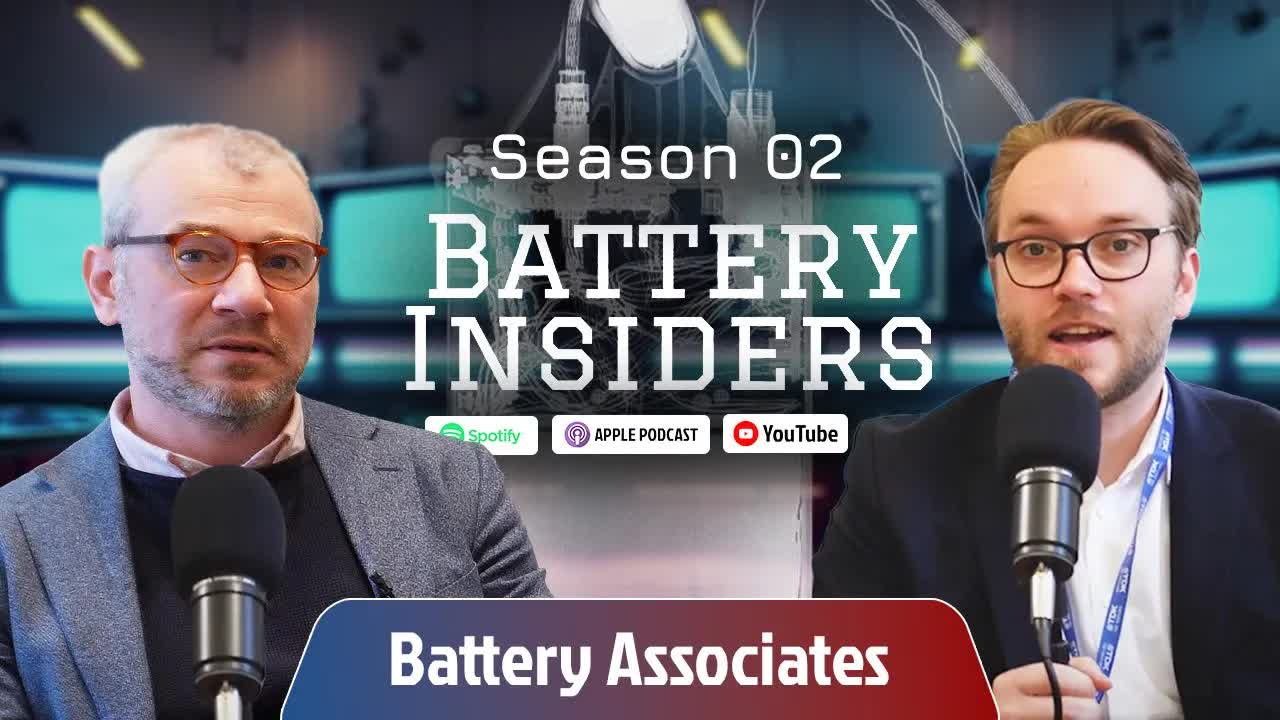
Fabrice Stassin
Secretary General, Batteries European Partnership Association (BEPA)
BEPA is the legal entity, created in June 2021 and based in Brussels, that co-manages the European battery partnership with the European Commission. Stassin is seconded to the role from Umicore for a three-year mandate covering 2024 to 2026.
Recorded in Brussels, Belgium
What this episode covers
Fabrice Stassin's job is to point 925 million euros at the right problems. That is the sum coming to the European battery partnership from Horizon Europe between 2021 and 2027, and BEPA exists to help decide which research priorities it funds. He starts by separating two things people routinely mix up. The partnership itself, Bat4EU, is the instrument the European Commission set up to channel money into the battery ecosystem. BEPA is the legal entity the Commission asked for so that somebody could co-manage that partnership alongside it. Two sides of the same coin, as he puts it, with the focus firmly on innovation rather than industrialisation.
The updated Strategic Research and Innovation Agenda, published in February 2024, is the clearest statement of where the money is heading. Set against the first version from September 2021, Stassin points to the arrival of design-to-cost chemistries, more attention on sodium-ion and LFP and a move towards integrating manganese, a continued push on solid state as a technology for 2030 and beyond, and recycling processes rewritten to meet the recovery targets in the battery regulation. The document was not written by five people in a room in Brussels. It came out of a consultation running to hundreds of people from industry, research organisations and universities, which he calls a balance of forces, the Belgian compromise.
He is careful about what BEPA does not do. Proposals go to the EU, not to BEPA, and BEPA has no say in which projects receive money. Independent expert groups score each proposal against a criteria list, then meet to agree a consensus note. If the note is high enough you have a chance of funding; if it is not, it works like school. CINEA, an agency of the Commission, then follows the funded projects and checks that the promised deliverables arrive. What frustrates him is how many genuinely excellent proposals miss out because competition is so strong. In a global race, he says, Europe cannot afford to leave good ideas on the side of the road.
The 3 billion euros earmarked for batteries under the Innovation Fund sits after the R&D track rather than alongside it. Research brings a technology to a certain readiness level, which he calls de-risking; the Innovation Fund demonstrates it at deployment scale and generates production capacity in Europe. Two options were still on the table at the time of recording: the regular approach, where funding follows the greenhouse gas emissions displaced, or an auction system along the lines of the hydrogen bank. A call was expected in September 2024. On whether 3 billion is enough, his answer is a shrug: you can only do as much as 3 billion does, which against what is available across the Atlantic is a start.
On the cuts to German research funding, his objection is structural. Start and stop, funding research, then industry, then research again, is the worst thing Europe can do if it wants to catch up with global players. The answer to high technology risk is more funding, not less, because every option you cannot afford to test is a candidate you never find. He uses solid state as the example: each year the promised date slips a little, precisely because so many technological combinations still have to be assessed. He expects German researchers and companies to turn to Brussels for the 2025 calls, and worries about PhDs that never start.
Talent, he suggests, is itself a critical raw material. You can be sitting on all the nickel, cobalt and lithium you want and still be stuck without the engineers and scientists, and unlike nickel you cannot order a tonne of it and have it arrive. Anything done today shows up around 2030. He also wants Europe working further out: South Korea has joined Horizon Europe, Canada is already in place, he hopes Japan follows, and while the US is not in the programme, joint activity does not require membership. His own route runs through industry, close to fifteen years at Umicore, roughly ten of them in government affairs, with a background in polymer science and organic chemistry.
Questions from this episode
- What is BEPA and how does it differ from the Bat4EU partnership?
- Bat4EU is the partnership itself, the instrument the European Commission set up to channel funding into the battery ecosystem. When the Commission creates an instrument of that kind, it asks for a legal entity to co-manage it, and BEPA is that entity. Stassin describes the two as sides of the same coin: BEPA is the association running the partnership, Bat4EU is the partnership being run. BEPA came into existence as a legal entity in June 2021.
- How much money does the European battery partnership have?
- 925 million euros, coming from the Horizon Europe programme and covering 2021 to 2027. Every two years the Commission publishes a work programme setting out the priorities BEPA and its members believe should be funded, and calls open against those priorities. Research organisations, industrial players and startups then team up and apply to work on a specific topic, sodium-ion or solid state for instance, and push it closer to market. BEPA's remit stops at innovation; it does not fund industrialisation.
- What changed in BEPA's 2024 Strategic Research and Innovation Agenda?
- The February 2024 agenda replaced the first version from September 2021, and Stassin says the differences are visible. Design-to-cost chemistries appear. There is more attention on sodium-ion and LFP, including variations that integrate manganese. Solid state stays on the list as something Europe still needs to do more on, positioned as a technology for 2030 and beyond. Recycling processes have to be adapted so they meet the recovery targets set by the battery regulation. He attributes the shifts to policy changes and to competitive pressure from the US, China, Japan and South Korea.
- Who decides which battery research proposals get funded?
- The EU does, not BEPA. Stassin is explicit that BEPA advises on where the priorities should sit and has no stand in choosing projects. Submitted proposals go to independent expert groups, who rate each one against a published criteria list and then meet to agree a consensus note. A high enough note gives you a chance of funding. Once projects are funded, CINEA, a Commission agency, tracks them and checks that the deliverables described in the work programme are actually delivered. He says the process is very well organised and rarely causes problems.
- What is the 3 billion euros earmarked for batteries in the Innovation Fund?
- It comes after the R&D track and has a different purpose. Research takes a technology to a certain readiness level, which Stassin frames as de-risking. The Innovation Fund demonstrates technologies at deployment scale and builds production capacity for European autonomy. The Innovation Fund itself is not new, but the battery earmark is, and two mechanisms were still under consideration at the time of recording: the regular approach based on emissions displaced, or an auction system similar to the hydrogen bank. A call was planned for September 2024.
- Why does Stassin oppose cutting research funding when budgets are tight?
- Because the answer to technology risk is to try more options, and each option costs money. With solid state, he points out, there are many technological combinations that have to be assessed before anyone arrives at the right product, which is why the promised date keeps moving. Limited funding means you cannot test everything, and the fewer options you test, the lower your chance of finding one that works. He also rejects the start and stop pattern of funding research, then industry, then research, and expects German groups to apply to Brussels instead.
Listen to this episodeWatch on YouTube
Part of Europe: policy and money
Transcript
About this transcript. Generated automatically from the recording, then corrected against a glossary of company and guest names. It has not been checked line by line. Machine transcription mis-hears technical terms, numbers and names, so treat any figure here as a prompt to check the recording rather than a quotation of record. Spotted something wrong? Tell us.
0:00Introduction
Dr Simon Engelke
0:00And welcome everyone. Thank you so much for joining us for the Battery Insiders podcast, currently live from Brussels and Belgium. Very delighted to have Fabrice with me today from BEPA to share some of the exciting work they're doing with the Batteries European Partnership Association. My name is Simon Engelke, founder and chair of Battery Associates, and super excited to have this conversation today. Thank you Simon, nice to have you. Thank you. Yeah, great, great building, wonderful to be here. And let's maybe start with the people who don't know about BEPA, right? So there's a lot of organizations, I think, in the battery space, which is super important and super exciting. But if you maybe could share about introducing BEPA and your vision
Fabrice Stassin
0:46and about the goals you're trying to achieve. Okay, before introducing BEPA, actually I think I should introduce the Battery Partnership because the Battery Partnership, this is the instrument that has been set up by the European Commission to channel funding to the ecosystem. And when you channel such an instrument, which is called a partnership, the European Commission is asking you to set up a legal entity that is going to co-manage if you want to cooperate the partnership with them. And the legal entity that was created is BEPA. So you have two acronyms to kind of remember and not mix up. It's BEPA, which is the legal entity running the partnership and Bat4EU or BAT for Europe, BAT for Europe, which is the partnership that BEPA is running. So they come, I could say there are two sides of the same coin, the legal entity and the partnership. Brilliant. And a bit about the vision, like what's the... Ah yes, in terms of vision, to put it very generally, it's to make sure that in Europe we can build up a strong European battery value chain from the raw materials down to the recycling through the advanced materials, the battery cells and the applications. And that can only be
1:58BEPA's research focus and the 925 million euros
Fabrice Stassin
1:58done if you actually build up as well a battery ecosystem of research organizations, industrial players, startups that are willing to work together on specific priorities that are decided by the
Dr Simon Engelke
2:12commission and by the members of BEPA. Brilliant. That's already what I think what kind of distinguishes it a bit, right? That you have this research focus compared to some other associations, which may be more concept of policy, for example, or industrial proposals. So yours is really on the
Fabrice Stassin
2:26research side. You cannot be completely isolated from other elements like industrial policy, because what we want to do is that with research, we are one part of the trajectory of a technology from the lab to the market. So we are not isolating ourselves from these signals. But it's true that the focus of BEPA is to channel the amount of funding that is made available by the commission to the right priorities to make sure that we are able to build a European battery value chain in Europe. And the resources may be something that I should quite focus on. It's 925 million euro of funding that is coming from the European horizon Europe program from 21 to 27. That's something you're helping organizations to apply? Yes, so basically every two years the European Commission is publishing a work program. They are going to publish this year the one for year 25, because as you know, 24 is a special year in Europe, it's election years. So this year we have a working program for 25, in which you will have a list of priorities that we believe should be funded. And then when this work program is actually published, there are dates for some calls and an association, research organizations, an industrial player and others can team up and say we want to work on, I don't know, sodium-ion batteries if there's a call for it, or solid-state batteries, and we want to move a
3:53The February 2024 research and innovation agenda
Fabrice Stassin
3:53bit the needle from the technology point of view to make it closer to the market. And this is really the philosophy of BEPA, allocating the funds to the right priorities to be able to make a difference, knowing that we are not focusing on industrialization, we only focus on the innovation part. Interesting. And then, kind of, yeah, I mean, you
Dr Simon Engelke
4:16mentioned already, right? But what can we share a bit more about this February 24 strategic research innovation agenda?
Fabrice Stassin
4:21Ah, yes. Well, we were quite excited actually to publish it because when we started BEPA, we started existing as a legal entity in June 21, and we published our first strategic research innovation agenda in September 21. So basically, between now and February, between then and February 24, I think the world has changed a bit, and technology field has changed a bit. So we are quite excited that we could publish the SRIA this year, because it's going to show you the directions that we want to take in the years to come. If you would compare the SRIA of today and the SRIA of 2021, you will see differences. By the way, you can actually either procure yourself a paper copy, but if you are more modern, you can simply download it from the association. But you see the arrival of design to cost chemistries, for example. Attention being paid to sodium-ion, LFP, and the variation towards integrating manganese. We still believe that we need to do more on solid-state batteries, because at some point, this will become a technology for 2020-2030 plus. We also have in mind that we need to adapt the recycling processes to make sure that they can be compliant with the provisions of the battery regulation that sets quite high recovery targets. So because of all these policies that have been published, because the world is changing, because
5:50How the agenda was built, and what comes after 2027
Fabrice Stassin
5:50the pressure from outside of Europe, technology speaking, is changing, because of the US, because of China, because of Japan, South Korea, all these things are taken into the thinking process, and the result is SRIA.
Dr Simon Engelke
6:05Interesting. As you say, right, because I think it's very difficult to predict the future, and I feel especially innovation, it's really difficult.
Fabrice Stassin
6:14It is difficult, but what is maybe helping us to some extent is that in order to produce this document, this is not the work of five people in a room somewhere in Brussels, this is the result of a long consultative process, that has been mobilizing more than hundreds of people from different organizations, from industry, from research organizations, from universities, from different parts of Europe, some quite supportive of one technology, some supportive of another, and so the result of this is a balance of forces, as I like to say, the Belgian compromise, that is actually making sure that I think we are not missing out on something, and we are reflecting quite well the current status, and what we think the future could be. But in technology, as you know, maybe in one or two years, I will be coming to you and I will say, we actually missed out on this and this and this and this because it's changing very fast.
Dr Simon Engelke
7:14Well, that makes sense. And I think, as you said, I already have seen some exciting developments and the technologies you mentioned with LFP and sodium mine, etc. So that makes a lot of sense. Great. So if we can maybe go to our next one, looking at funding and projects. So you already mentioned, you know, you have the partnership and you have BEPA, and you have the opportunity to get this as well. And now we'll be looking at the, in the future, again, like, you know, at the Horizon Europe program and the new version of it. Like, what are the possibilities there? What is potential future you see for that?
Fabrice Stassin
7:47I think that we are only going to receive more money, to be honest. This is what everyone is,
7:51A sprint and a marathon, and the proposals that miss out
Fabrice Stassin
7:51of course, asking for. No, but joke aside, what we want to be able to do in the next framework program, which starts after 2027. But as you know, it's a long democratic process. And so it starts early, if you kind of back engineer it. So already towards the end of this year, people are going to start making some guesses and moving some messages as to what should be funded in the future, and how, which kind of instruments. So what we want to be able to do in the future is to have actually a battery partnership that is functioning quite as well as what we have today. So we are not starting from scratch. And what I want to, of course, stress to the to the viewers is that this is the first time that we have a partnership. It's not like the second or the third edition of the partnership. So we put a lot of time into building something that seems to work quite well. So we have the basis on which we want to build for the future. Now, the issue is that I always say it's a sprint and the marathon. Sprint because technologies are developing very fast and marathon because we are just at the start of the electrification. And I don't think the finishing line is actually nowhere near. So we have to combine these two things. We have to be there for to be able to do more in terms of technology scope that we cover. We need to be able to also bring technologies closer to the market. And this takes quite a lot of money. So today with 925 million euro, we are very happy that we received this generous funding from the EU. But we have situation where for every call, there are excellent proposals that are really excellent that are not getting funded because the competition is very strong. And it's a pity that there are some nice proposals that are actually not funded because I don't think in the global race we can afford
9:47How proposals are evaluated and followed
Fabrice Stassin
9:47not to look at some ideas that were good. So what we would like to be able to do in the future is to have a partnership that is able to at least try to cover as many good proposals as possible just to make sure that we are not leaving anyone on the side of the road. Maybe you could share a bit more like how are
Dr Simon Engelke
10:06these proposals evaluated or like who's making the decision for these for funding? Yes, I'm not an
Fabrice Stassin
10:12expert of the evaluation process but it's a very well organized process. So whenever you submit a proposal
Dr Simon Engelke
10:20there's a criteria list. To the EU, right? Sorry, it's to the EU, not to me.
Fabrice Stassin
10:26We are just telling the EU where the priorities should be. We are not having a stand in choosing the projects that are receiving the funding. I think it's good that we actually mention this. But so the proposals once they are submitted on the electronic portal, they arrive into the mailbox of expert groups and these experts which are independent chosen experts, they have a list of criteria and on each proposal they need to rank the proposal and usually after each expert has provided their their rating, they have to meet with each other and they need to come up with a consensus note. And the consensus note, if it's high enough, it gives you a chance to be funded. If it's not high enough, it's like at school, you are not getting the funding. That's a little bit how it works. And usually there are no problems with that process. It's very well organized. And afterwards, when the calls, when the proposals are being funded, then they are still being followed by an agency of the commission which is called CINEA, which is then making sure that all the derivables that were supposed to be delivered in the work description are being delivered. There's also a financial element. But
11:45The 3 billion euros in the Innovation Fund
Fabrice Stassin
11:45everything is extremely well organized, I have to say. But that's why also you mentioned, right,
Dr Simon Engelke
11:50you see sometimes proposals where you maybe heard about them earlier, but they didn't get the funding in the end, right? And so you're talking about it would be good to get more support there. And there's also this thought on proposed additional three billion, right, from the EU? Yes. For the industry. So
Fabrice Stassin
12:04do you have some additional thoughts on that? Is this enough? Well, my standard answer is always it's enough. It's not enough. But no. So the Innovation Fund is coming after the R&D track. So they do not have the same purpose. The R&D partnership is really to bring the technology to a certain level of technology readiness. It's a bit like de-risking if you want to see it like that. While the Innovation Fund is really to actually demonstrate technologies to the deployment level, just to make sure that they also generate some production capacities for Europe autonomy. The Innovation Fund is not something new. It's been existing for a couple of years. What is new with the Innovation Fund for the batteries and the three billion euros that have been earmarked is that there are two options on the table. So the European Commission has not yet taken a stance on what will be the instrument to use. One could be that we are using the regular approach where actually you get funding based on the amount of green gas emissions that you will be displacing to make it very simplistic. While the other option which is on the table is more similar to what is already existing with the hydrogen bank, which is an auction system. It has its pros and its cons. The situation today is that it has not been decided yet which will be the option taken. And once the option will be taken, then the European Commission will have to define what are the criteria in order to actually have a proposal that is getting all the good points or not. And I think that they are planning to
13:45Cuts to German research funding
Fabrice Stassin
13:46release the call in September 24. So there's a lot of ambitions as to the timeline because we are not so far from September. Now with three billion, well you can only do as much as the three billion. So if you compare with the amount of funding which is available on the other side of the Atlantic Ocean, it's quite different in time in terms of scope. But it's a good start I would say. That's great. And also another thing and I
Dr Simon Engelke
14:15think you also have been quite vocal about I think personally but also BEPA and a few other organizations. I've seen also a lot of conferences is this German funding gap. Ah yes. Where there's a big cost you know cutting I think about 75 percent or so was has been announced. Also more on the research side right. So there has been quite a bit of support now manufacturing which of course also important topic to get things produced in Europe. And also being a big part of the vision of the EU. But funding for research has been cut a lot.
Fabrice Stassin
14:44So do you have any additional thoughts on that? The worst thing that we can do in Europe if we want to catch up with global players is to have a system of a start and stop you know. Like you fund research and then you fund industry and then you fund research. It's not an all game it's an end game. So this is a message that we want to bring to policy makers. It's research and industrialization. The bad news is that of course it means more resources are needed but we have to know what ambitions are. Now when it comes to the research in Germany it's actually whenever the people I talk to in Germany about this they don't they don't really know how they will be able to cope with that. Because it means that many PhDs will not be started. So the talent of tomorrow will not be trained in Germany maybe somewhere else if it is trained. There are some technology options that will not be assessed because there is no funding for that.
15:40Why technology risk calls for more funding, not less
Fabrice Stassin
15:41So it's not a good way to prepare for the future. Now how can the R&D community in Germany cope with that? Well either having less projects that you cannot create money or to actually look at money available in other pockets and we are pretty sure that in the next framework call 25 we will expect to see more German research organizations and companies becoming active in these calls. Because if they want to continue some work for example and they cannot tap into the German funding they have to go somewhere and
Dr Simon Engelke
16:20then the logical place to go is Brussels. And it's also really tricky I think right from a policy perspective because you want to you have a limited amount of money right the same as your organization any of these organizations where and you want to kind of get the best use for the money right and I think research is always a bit scary I think because you don't really know what the outcome going to be right if you support and also in the US you mentioned already support manufacturing you have at least you hope a bit of a correlation between mini money in and product out. With research you can put a lot of money in and there's never a result in theory right you might get people and talent and training that's one but it's also I think it's a tricky it's a challenging thing to support right. Yes
Fabrice Stassin
17:05I'm a researcher by trading so I don't find it scary but there's a big technology risk and the answer to the technology risk is never to cut down funding is actually to increase funding because if there's a high technology risk it means that in order to get there you need to try more options and each time you try an option there is a cost associated to that option so if you are in a very let's take the example of solid-state batteries there's a lot of research going on there are lots of promises
17:39Europe's research is strong, deployment is the gap
Fabrice Stassin
17:41every year we hear we hear about 2030 and then it's moving a bit you know it's because there are many technological combinations that need to be assessed to come to the right product if you have limited funding you cannot test everything what if you have generous funding you test you can test more options and the more options you test the higher the chance that at least one or two will actually be promising candidates to go further so I know it's scary I know there are risks I know that public finance is not in the best shape in every country in Europe I know that in Europe we also have to be careful with how much we spend the taxpayers money but the the only way forward is more innovation if we want to compete in today's world you cannot cut cost of energy you cannot cut cost of labor you can only be smart and in order to be smart you need to do innovation it was interesting I think one for me a bit of a
Dr Simon Engelke
18:35aha moment also was when we because we always I think wherever we are we keep talking about oh elsewhere they're more innovative they do more exciting things right so maybe here in Europe you would say but in Asia there's much more happening right and then we would for example interview lots of experts in Asia they would say oh look but you in Europe and Germany and all these places you do so much cool really interesting research we look at right so I think it's also always this perspective you look at each other and you think oh they're doing cooler things than us
Fabrice Stassin
19:01I think that's also yeah the garden of the neighbor is always greener but it's true that we do of course excellent research in Europe the problem that we have is more to go from the research to the to the deployment and so that's why I would be happy to have a very strong combination between a research innovation instrument and one comes after it can be the innovation fund if this is with European money but it can be the IPCEI so in important project of common European interest if this is with member state money in the member states that still have generous funding because it's not everywhere that
19:38Innovation bridges with South Korea, Canada and Japan
Fabrice Stassin
19:38you can get that but what we also believe we should do is to also work more with other parts of the world Europe closing itself on it's not going to make it so we have to work with other big innovation powerhouses of the of the of the world provided they are willing to work with you and so I don't know if you have seen but South Korea has decided to step into horizon Europe so horizon Europe is the program in which this battery partnership is actually located that means that in the future it will be possible to have a team working in Europe with a team working in South Korea and that's my dream has always been to create like this innovation bridges between countries that are willing to work together and I think this is a very good signal I'd like to see this happening with Japan at some point I think it will be happening but for example with Canada this is also in place and then the next question mark is potentially what are you going to do with the US where there's also very good excellent science happening so I think that we can always do better but the the signals that we see over the past months have been quite supportive of opening to the world
Dr Simon Engelke
20:55and that's interesting as someone who's quite international and with the organization I agree I think having international collaborations goes a long way and then another topic is more the training and talent side and we already touched on this a bit and also how important it is but if you maybe could share a bit more about the importance of training and talent you see for making innovation work
Fabrice Stassin
21:16you know about critical raw materials I think that talent is maybe at some point a critical raw material because you may be sitting on all the nickel cobalt lithium that you want if you are lacking the engineers and the scientists it's going to be difficult it's going to be difficult so talent is very difficult to get the issue that we see in Europe is that more and more people are looking for education that is not scientific so science is not having a good visibility or in Europe if you would compare for example with China the amount of engineers and PhDs in chemistry which are trained in China is really impressive
21:57Talent as a critical raw material
Fabrice Stassin
21:58I think it's not science I think science is not having a good visibility or in education as the place to actually be if you really want to be open and test different ideas so this the problem with talent is that it's not like cobalt nickel that you just call and you get your ton of nickel coming to you it takes time to train people so whatever we do today we will not have an impact maybe before 2030 so that's why it's very important to be able to educate talent and the best way to educate the talent is you can follow a course you can have a textbook but it's by doing so for example this again this cut of German funding that is going to avoid that some PhDs are funded I think it's a good example of things that we should not do if we are really careful about talent now it's not just of course the white color it's also the blue color and there is maybe easier because there's already a pool of blue colors that need to be redeployed to the same industry but from a dirty old engine to new clean engines if I may say and this is actually something that is not really the responsibility of the European level it's more a member state regional and local activity but it's important that something is happening indeed
Dr Simon Engelke
23:29yeah and as someone I mean also as you know I'm quite passionate about training education and talents and one thing I've seen though is I think that batteries actually are something which is attractive for a lot of different backgrounds right so I think which is quite nice and you mentioned that that maybe there's a bit less focus on some of the sciences but I've definitely seen that people from other sciences and regions would venture into batteries because they realize oh I can apply my physics knowledge my chemistry knowledge but also business and policy and all these other things yeah yeah I mean it's not just batteries the battery value chain so it can be somebody who is actually in electronics could be actually considered because of the connection with the BMS it could be something is actually in mining metallurgical science
24:12Silos in university education
Fabrice Stassin
24:13solid-state physics chemistry so it's actually a very broad field and maybe this is also a limit that you have in some countries as to the education system is that we like to put things in silos you know so you study chemistry or you study physics or you study engineering and maybe battery is actually a good example that you need to build bridges and this is maybe something where universities are still a bit struggling because you have the faculty system and so if you have the faculty system and so if you have the faculty system and so if we want to compete globally we also have to be a bit innovative in the way we structure education that's really not in the scope of what a BEPA is doing but I realize that sometimes universities are still a bit structured like when I did my PhD and so in order to be fit for the future maybe you have to create more bridges between the different disciplines yeah yeah I think it's a very valuable point and I think there is
Dr Simon Engelke
25:11as someone you know at least when I started my PhD they started doing these things etc so I think there is maybe momentum there but I'm with you I think it's a long journey and we cannot stand still anywhere right
Fabrice Stassin
25:22it's a sprint it's a sprint at the marathon as I said previously so a sprint means that we really have to accelerate and marathon is not a one-off it's going to be electrification is going to be for with us for as long as I can imagine I mean there's no way back
Dr Simon Engelke
25:38yeah then maybe for the final question and there's maybe a bonus question about your own background if you wish we can go there in the end but before that also we already hinted a bit on the IIA right and the VEA right and the Inflation Reduction Act and the impact right now we have heard lots of interesting you know statements in the EU and other regions what this means to them but maybe if you could share a bit like how have you seen impact the work you're doing with BEPA but also your perspective on that
Fabrice Stassin
26:05on the work of BEPA the Inflation Reduction Act basically had no real impact because Inflation Reduction Act is more about in attracting to the US
26:17What the Inflation Reduction Act changed
Fabrice Stassin
26:18industrial capacities rather than technological capabilities maybe it's a bit black and white but so basically for us it does not really impact it's the work of BEPA we are we are of course happy to see that the US is heavily supporting the industry because it means that we will be able to go faster towards electrification but if you look at it from an industrial point of view it's true that some investments that were supposed to be made here in Europe are moving to the US I don't think it changes the end goal because the European market will always be the European market it will have some point need to be supplied but maybe the order in which investments are being made has been a bit reshuffled because of that but basically it's good to see that many parts of the world are heavily supporting the industry now if there's an opportunity to work with the US in the US in the frame of the US in the frame of the US in the frame of the US I don't think it changes the end goal because the European market will always be the European market it will have some point need to be supplied but maybe the order in which investments are being made has been a bit reshuffled because of that basically it's good to see that many parts of the world are heavily supporting the industry now if there's an opportunity to work with the US in the frame of the partnership we are also very open to it US is not yet into the Horizon Europe agreement Canada is but you don't have to be inside of Horizon Europe to already start some joint activities it's possible to have joint activities so we would be of course open to work with the US on battery science
Dr Simon Engelke
27:42yeah that's interesting and as you say potentially more room to also for the companies and the innovation which is created in the BEPA framework and through the partnership maybe to scale up also the US you know I think could be one way and also but I think also it's definitely brought a lot of momentum also on the EU side that they have to do something I think it was a bit of an awakening that's been described by some in the EU policy
Fabrice Stassin
28:04Europe is always good when there's a crisis usually so any crisis is a motor of change in Europe so it's not so bad in a way I think it shows to Europe that indeed there needs to be a mechanism in Europe to also make sure that the investments are also made in Europe so I don't know if you are familiar but there has been the TCTF so this temporary crisis transition framework
28:31State aid, the TCTF and the single market
Fabrice Stassin
28:32that has enabled some member states to at least try to compensate or match some investments that would go to the US I think Northvolt has received this kind of funding to stay active here other companies have received also a lot of funding via state aid the only issue that we may have is that this is money coming from member states and we are in Europe so we are still lacking in Europe so we are still lacking in the EU layer of funding that would be available to companies that may not be lucky to be in the right country for example imagine you are a startup somewhere I don't know or maybe in an EU searching country where there is no framework there to help you if you were in Germany you would have more chances to flourish that's not fair because we are supposed to operate in a single market so we can't get it to them or So it's good that Member States can keep helping the industry, but what we would like to see, and I think this is something that starts with the innovation front, is that there is also at European level a system in place with ambitious resources to be able to kind of compete with the Inflation Reduction Act, even though the comparison is difficult to make because it would not be the same kind of incentive. The Inflation Reduction Act is a lot based on tax elements, at European level tax is not actually a competency, if I'm not wrong, so it has to be something else. But the auction system or regular grant on the innovation fund is a good way to start.
Dr Simon Engelke
30:10Interesting. And maybe one last question on a personal level as well, you know, I became Secretary General of BEPA, congratulations again. Thank you. And I think, because I think also one thing, people are quite curious in the podcast of the journey of people, right? And you mentioned your technical background with your PhD, going to policy and now leading
30:28From Umicore government affairs to Secretary General
Dr Simon Engelke
30:28an organization like BEPA. So maybe about your own story behind that and maybe some of your learners going through these different stages and maybe any takeaways for other people, curious for their cure and batteries.
Fabrice Stassin
30:38I will not start from the start because it's taking time. But I've been at Umicore for close to 15 years, I think, doing government affairs for close to 10 years. And in this position of Secretary General of BEPA, I'm not 100% as SecSeggen, so Umicore is making me available to the association for a mandate of three years. So 24, 25, 26 years, which comes at the right time to prepare for the next potential partnership. My background is in polymer science and organic chemistry, so it's not really close to the battery field, but it's an education in material science. And maybe I've lost what you wanted.
Dr Simon Engelke
31:26Maybe how, I mean, how did you end up going through this? Like, you know, because maybe it's changed for some people.
Fabrice Stassin
31:30Well, I've been very active in advocacy for technology at Umicore for ever since I started in government affairs. So I did what I call technology and innovation advocacy. It's making sure that the priorities of industry are ending up in these documents to make sure that money is well spent. And so, Umicore, since the start, we have supported the elaboration of the European Battery Alliance. That was in 2018. And then 2018, the strategic action plan of the European Commission was actually published. And in that action plan, there were a couple of lines, create a battery partnership, make sure there is enough funding going to R&D for batteries. And so for me, the blueprint was there. And we just wanted to make sure it was happening. So Umicore made me available all over these years to make sure that we are shaping an ecosystem
32:25Why big companies help build the ecosystem
Fabrice Stassin
32:26that is fit for the purpose. So as I always say, I don't think big companies are part of such a partnership for the money. Because if you look at the R&D budget of big companies, it's sometimes the size actually of a partnership. But we are there to make sure that the ecosystem is available on the doorstep in a way. So if you open the door and you are looking in Europe for a strong team doing, I don't know, research on SOJUM, then you know that there are lots of teams in Europe who do it. And if you did not spend time trying to create that ecosystem, one day you open the door and there's no one. And you have to look very far from you. So for us, it's really about creating the ecosystem. And the best way to create the ecosystem is by making sure that money is going to work on the right topics and that research organizations and companies work together. And afterwards, if you want to have your own battery program within the company, then of course you work in a bilateral way. But you know that you can work with university ABCD because they are the best. And they could not become the best if they had not received some public funding to help them get to that level. That's a little bit the philosophy of why we are so active in shaping the ecosystem in Europe. And I can tell you you're passionate about it, which is good to see. Yes, I am passionate about it.
Dr Simon Engelke
33:51We need people about these topics. I speak too much about it. Now, wonderful. Fabrice, really, really appreciate you taking your time today. Sure. That's a question.
Fabrice Stassin
33:58Thank you so much, Simon.
Dr Simon Engelke
33:59Thanks for coming on. Thank you all for listening or watching. And please tune in again soon. You can also go on Battery Insiders or go on Spotify, Apple Podcasts, YouTube, if you'd like to listen to your podcast, or you can also go on batteryinsiders.com to get a notification for the next release as well. Thank you and speak soon. Bye bye.