
Episode 136 · 27 July 2024 · 00:14:44
The standards stack, and why compliance is still local
Insights into ESS codes and standards
LG Energy Solution Vertech's compliance director on the stack from UL 1973 to NFPA 855, why two neighbouring counties can sit on different editions of the fire code, and how new chemistries get covered without rewriting anything.
Read the article: The standards stack, and why compliance is still local
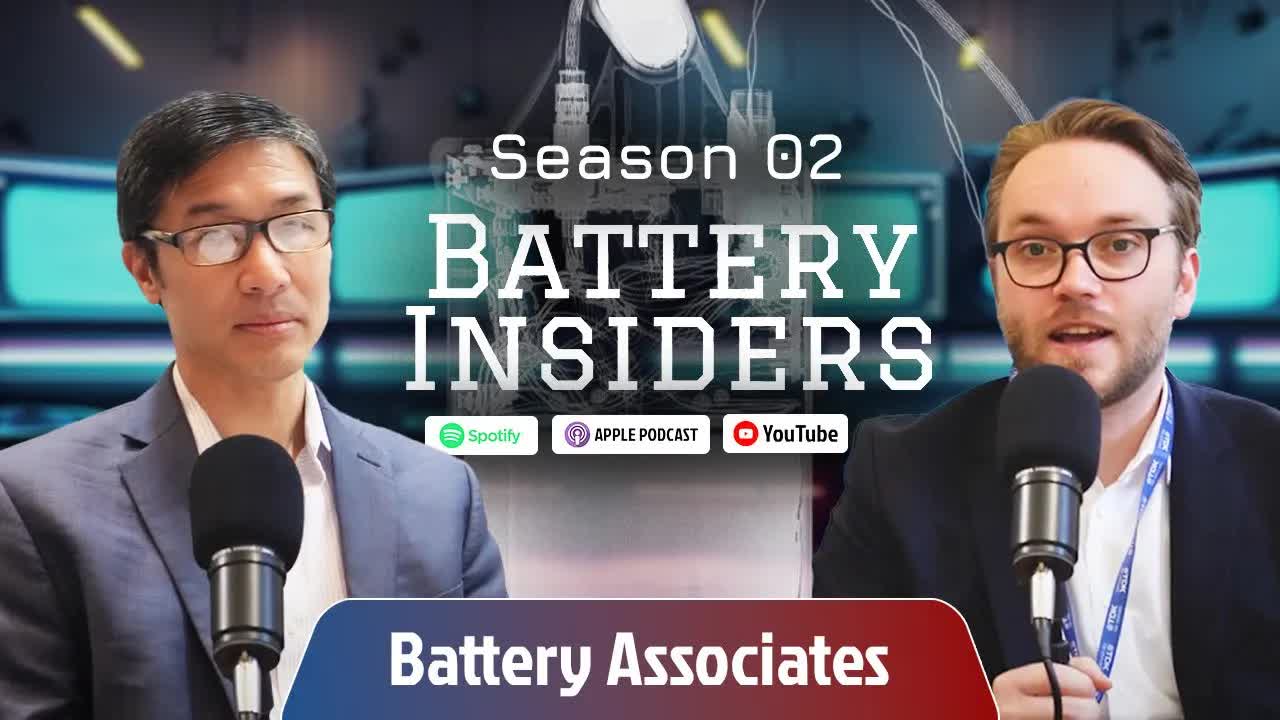
Kevin Fok
Director of Compliance, LG Energy Solution Vertech
LG Energy Solution Vertech is the energy storage systems business of LG Energy Solution. Fok has worked on codes and standards technical committees covering ESS installations.
Recorded in Las Vegas, United States
What this episode covers
Fok lays the standards out as a stack, in the order the hardware is built. The cell and the module are covered by UL 1973. Those roll up into the system, which is covered by UL 9540. Both are product-level standards. Above them sits the installation standard, NFPA 855, which he calls the key standard governing ESS installations in the US market. NFPA 855 is not a single document in practice either: it references a further set of standards that have to be met alongside it, covering areas such as fire alarm design and how system communications are configured.
Jurisdictions mostly start from the same place. The International Fire Code is a model code, meaning a standards development organisation writes and maintains it, and each individual government then adopts it into law and amends it for local requirements. Two things pull the requirements apart from there. Local amendments, where a city or county changes the text to suit its own needs. And timing, because the 2018, 2021 and 2024 editions all exist and cities and counties sit on different ones. Fok describes getting every stakeholder onto a common set of requirements as one of the industry's harder problems.
He is relaxed about the requirements themselves and much more concerned about when they arrive. If the system designers understand the requirements in advance, he says, it is straightforward: the system, the software and the whole package can be designed accordingly, and engineers would rather have that certainty than discover it later. The difficulty is that technology development runs faster than codes and standards development, so there is always some lag. Over the long run he argues codes make projects more economically viable and sustainable. Requirements that were unforeseen and have to be designed in late are what add cost and complexity.
New chemistries are handled through task groups rather than rewrites. Committees usually run one covering emerging technologies, and Fok describes cases where companies were invited to present their technology, the hazards it might carry and the mitigation approaches available, with that input then factored into the codes. The code text itself is largely chemistry-agnostic: a hazard mitigation analysis is prepared by the submitter for the specific product being installed, so LFP, NMC and newer chemistries such as sodium-ion are covered without revision each time. His own takeaway after years of committee work is how many stakeholders are involved, from integrators and site owners to insurers and investors.
Questions from this episode
- Which standards apply to an energy storage system in the US?
- Fok describes it as a stack that follows the hardware. The cell and the module are covered by UL 1973. Those roll up into the system, which is covered by UL 9540. Both are product-level standards. Sitting above them is the installation standard, NFPA 855, which he calls the key standard used for governing ESS installations. NFPA 855 also references a further set of standards that have to be met alongside it, covering areas such as fire alarm design and the way system communications are set up. The locally adopted fire code sits over the top of all of it.
- Why do ESS requirements differ from one jurisdiction to another?
- Because a model code is a starting point, not the final text. A standards development organisation writes and maintains something like the International Fire Code, and each government then adopts it into law and amends it for local requirements. Differences show up in two ways. Local amendments, where a city or county changes the code to meet its own needs. And version timing, because the 2018, 2021 and 2024 editions all exist and different cities and counties are on different ones. Fok says working with all the stakeholders towards a common set of requirements is difficult for exactly this reason.
- What does NFPA 855 require?
- Fok gives fire protection, explosion mitigation and enclosure spacing as the headline areas. Those feed straight into system design, because the manufacturer and the system designers have to make sure the design is compliant. The standard also brings in referenced standards, so meeting it in practice means meeting a set of documents rather than one. Fire alarm design and the way communications are configured are two examples he offers. His broader point is that none of this is hard if it is known up front: if the requirements are understood in advance, the system can be designed accordingly from the start.
- Do the codes change depending on the battery chemistry?
- No. Fok says the same codes and standards apply whether the system is LFP, NMC or a mix. What handles chemistry is the documentation rather than the code text. A hazard mitigation analysis is prepared for the specific product or system being installed, so it captures whatever technology is going in. That extends to newer chemistries including sodium-ion, because the submitter has to prepare the documents based on the technology being deployed. The practical benefit, as he puts it, is flexibility: the code does not have to be revised every time a new chemistry reaches the market.
- How do emerging technologies get written into codes and standards?
- Through task groups. Committees typically set one up to handle emerging technologies, and Fok describes cases where companies developing a new technology were invited to present it: what it does, what hazards it might carry, and what mitigation approaches exist. That input then gets factored into the codes and standards. He reads the willingness to hold those sessions as a positive sign, saying the committees recognise that emerging technologies exist and welcome input from the companies behind them. The underlying constraint does not go away: technology development moves faster than codes development, so some lag is built in.
- Do codes and standards make storage projects more expensive?
- Fok splits the answer by time horizon. Over the longer run he argues codes and standards make projects more economically viable and sustainable, because systems built to withstand disasters and the normal rigours of operation are safer for the community and better assets to own. In the short term the picture is different. New requirements that were unforeseen and have to be designed in late bring added cost and complexity that nobody envisioned. If the same requirements are known in advance, those features can be built in from the start, which is why he keeps returning to early clarity.
Listen to this episodeWatch on YouTube
Part of Storage and the grid
Transcript
About this transcript. Generated automatically from the recording, then corrected against a glossary of company and guest names. It has not been checked line by line. Machine transcription mis-hears technical terms, numbers and names, so treat any figure here as a prompt to check the recording rather than a quotation of record. Spotted something wrong? Tell us.
0:00Introduction
Dr Simon Engelke
0:00And welcome everyone. Thank you so much for joining us on the Battery Insiders podcast live here from the US, from Las Vegas, at the lithium-ion battery Americas 2024, which is hosted by SMM Shanghai Metals Market. I'm very delighted to have Kevin Fok with us, who is the Director of Compliance at LG Energy Solution, Vertech. So we're excited to have you. Great to be here today. Thank you. And my name is Simon Engelke, founder and chair of Battery Associates, and I'm really excited for this conversation. And to kick it off, because I think we want to talk a bit about ESS, we're going to talk about, you know, codes, standards, perspectives, and impacts. And maybe for the first question, can you provide a bit of an overview of what ESS codes and standards are, and why they're important in the context of energy storage systems?
Kevin Fok
0:55Sure. Yeah, to start, you know, the ESS, you know, it's, you know, constructed of different components, you know, starting with the cell, you know, going to battery modules, you know, going to racks, you know, and then enclosures. And, you know, for the cell and the module, you know, the main standard for that is UL 1973. And then the system then gets rolled into UL 9540. And then, you know, so that kind of covers the product level standards. And then you also have the, you know, the overall installation system standard, which is NFPA 855. And that's really the key standard that is used by ESS, you know, for governing installations.
Dr Simon Engelke
1:42That's here for the U.S. market, right? Right. Yeah. Okay. And yeah, that would be maybe next kind of question, like, how do they differ, right? The ESS codes and standards across regions or jurisdictions? And what are some of commonalities among them you have seen?
Kevin Fok
1:57Yeah. Yeah. With the, you know, the jurisdictions, usually they'll all be using something similar like the international fire code. So that actually is a model code that forms the basis for a lot of the local fire codes. You know, so a model code is something that a standards development organization, you know, will develop and maintain. And then each individual government will then adopt, you know, that model code and, you know, put it into law. Then amend it accordingly, you know, based on local requirements. You know, so while, you know, there's a common starting point with the model code, you know, like let's say the international fire code would be the basis. And then each, you know, city or county might, you know, adopt a version of that. But where you may get some differences are with the local amendments, because some areas will amend, you know, that code to meet its local needs. And you also have timing aspects where some counties and cities will be on different versions of the fire code. You know, so you'll have the international fire code with, you know, 2018, 2021, and 2024 additions. But cities and counties may be on different versions. And that's one of the challenges that the industry faces is, you know, trying to work with all of the stakeholders to, you know, be on, I guess, a kind of a common set of requirements. But sometimes it's difficult because the requirements are not always standardized. Totally.
Dr Simon Engelke
3:37Yeah, I think that can be quite challenging from a good perspective as well. Yes. And maybe then also, how do these standards and codes influence the design and installation and operation of energy storage projects?
Kevin Fok
3:50Sure. Yeah. Like with NFPA 855, you know, as an example, like there are requirements that, you know, for fire protection, explosion mitigation, you know, as well as for, you know, the enclosure spacing.
4:04What NFPA 855 asks of system design
Kevin Fok
4:05And, you know, these all actually play a role, you know, in the system design because, you know, the manufacturer and the system designers have to make sure that, you know, the designs are compliant, you know, with, you know, with the requirements. You know, and they're also, you know, within these standards, they're always also reference standards as well. You know, you know, so there will be, you know, almost like a set of standards that also need to be met in addition to NFPA 855. You know, so things like the, you know, the fire, you know, alarm design, you know, the way the communications are set up. All of those things are kind of governed by, you know, by these codes and standards. So it's really has quite a lot of implications there, right? It does. Now, you know, it is, you know, it's one of those things where if, you know, the system designers understand the requirements in advance, then it's straightforward. You know, if you know the requirements, then the system can be designed accordingly. And that's actually really the preference. You know, I think actually, you know, system designers and engineers, they would prefer to know what the requirements are so that, you know, then the system and, you know, the software, the whole, you know, the entire package can be designed accordingly. But one of the challenges is that often the technology development is much faster, you know, than the codes and standards development. So then, you know, there's always a little bit of lag when it comes to, you know, codes and standards.
Dr Simon Engelke
5:39This would be, I would now think about the U.S. market alone. So in the U.S. you already have these differences and you might have to do tailoring and designing for it. Yes. But of course, then even if you go internationally, right, I guess it gets even more complex.
Kevin Fok
5:51It does. Yeah. But I do think that in general, you know, I think once the, you know, stakeholders understand, you know, the, you know, what, you know, what the requirements are and why, you know, requirements are set up that way.
6:05Education, and the lag behind technology
Kevin Fok
6:06But then I think, you know, provides a basis for some commonality in terms of system design and, you know, trying to meet the same requirements. But I think a lot of times the situation you run into is that, you know, there's some education that's needed and, you know, communication among stakeholders. You know, so I think, you know, once those are, you know, set up and perform, you know, then it can help pave the way, you know, for more straightforward approach, you know, to system design, you know, to getting all of the approvals. But because there are some differences right now and some, you know, gaps in education, then, you know, there's a little bit of catch up that occurs.
Dr Simon Engelke
6:48And yeah, I mean, I've definitely seen the same also through the Battery MBA where we see a lot of different stakeholders coming together. Yes. And as you say, like, it's, yeah, I think that's been a big learning from each other to see, okay, what are, you know, how people operating in this legal framework. Yes. And as you say, right, like different regions have maybe more advanced requirements. So, and then, but often, as you say, these things tend to balance us out. Correct. Because then you see, you know, okay, over there, they're doing this. This seems to work well. We should implement something. I guess over time it gets more homogenized, but like over time, it takes the time to. Right. Yeah. Yeah.
Kevin Fok
7:22And we have seen a lot more involvement, you know, from, you know, from different stakeholders, especially in some of the, the code and standards committees, you know, where, you know, like in one case, you know, there, there's one committee that has, you know, like 120 or 130 people, mainly because, you know, you have a lot of different stakeholders, you know, different vantage points and you write different sets of input. You know, you know, you know, you know, you know, you know, you know, you know, you know, you know, there's a lot of dialogue that occurs, you know, among these technical committee members that otherwise wouldn't happen. You know, so I think having, you know, that kind of, you know, that kind of collaboration and that kind of, you know, that sort of communication just really helps quite a bit.
Dr Simon Engelke
8:09That makes sense. And then I guess one question also looking a bit more at emerging technologies, right? It's a very dynamic field. I think it is. Also today we had questions even on the panel moderated about what should we do with sulfur batteries and different things. And people are like, I'm a recycler. And suddenly people tell me about like, you know, there's a new chemistry maybe coming and what does it mean for me, right? And I think similar to you, what does it mean now if we have this emerging chemistries which are coming to the market and maybe some of the trends you see there?
Kevin Fok
8:36Sure. Yeah. I think from the, you know, how those emerging technologies are handled and with codes and standards, you know, there are different task groups often, you know, that will be set up on these committees. And usually there will be one that will handle emerging technologies. And there have been, you know, we have had cases where, you know, some of the emerging technology companies actually, you know, would be invited to provide a presentation about their technology, you know, what some of the hazards might be and, you know, what some mitigation approaches are. And then, you know, that kind of input then can get factored in, you know, to the codes and standards, you know, based on that. So I think, you know, one really positive thing is that the, you know, the committees do see and do recognize that, you know, there are emerging technologies and, you know, definitely welcome, you know, the input, you know, from, you know, from the different stakeholders for these technologies.
Dr Simon Engelke
9:32Interesting. And I think one common also today was interesting thing on a panel was about how essentially in China all the ESS is NFP. Yes. Which is also regulatory driven as well. Sure. Which was kind of, you know, safer things. You should use that. And I guess I'm wondering now, if you look at, you know, let's say US market and you have a system that saves LFP or was an NMC system or a mix.
Kevin Fok
9:54Yeah.
Dr Simon Engelke
9:55So does it like make differences, I guess, from a, from a standards and, you know, what kind of standards and codes you have to apply to it?
Kevin Fok
10:01The same codes and standards would apply, you know, so it's, it's one of those cases where some of the documents like, you know, let's say the hazard mitigation analysis document that's prepared.
10:11Chemistry-agnostic codes, and the cost of late requirements
Kevin Fok
10:12That, that would capture, you know, the, you know, the, the product or the system that's being installed, you know, regardless of the chemistry. Yeah. So I think that's something that's kind of, kind of built into the code that way, you know, that, you know, that kind of safety documents for emergency response as a mitigation, you know, already cover different technologies. That would also cover like new ones, like sodium-ion and others or is there? Yeah. Because the, the submitter would have to prepare the documents, you know, based on the technology, you know, so, you know, in that sense, you know, that it would be covered.
Dr Simon Engelke
10:51Which is good. So there's some flexibility there. Correct. And it doesn't have to be revised all the time. Right. And I guess also kind of would be interesting of your perspective also how codes and standards impacted cost effectiveness and over the ability of energy storage projects.
Kevin Fok
11:06Sure. You know, in the, you know, in the longer term, you know, the, you know, having codes and standards applied, you know, it's really beneficial because, you know, they help provide safety, you know, to the community. You know, having things that are built, you know, to, you know, withstand, you know, let's say disasters and, you know, being able to withstand the normal, you know, rigors of operation in a safe way. It's really important. And so I think in the longer run, the codes and standards do make, you know, the projects more economically viable and sustainable. But in the shorter term, you know, if there are new requirements that were unforeseen and suddenly have to get designed in, then it can be difficult because, you know, there will be added costs, you know, added complexity that were not originally envisioned, you know, but if the requirements are known in advance, then, you know, those kinds of features, you know, could be built in. And then, you know, you know, to be able to meet, you know, the, the requirements. Great.
12:08Who needs to be in the conversation
Dr Simon Engelke
12:08And then maybe also one of the final question would be, in your opinion, what were the most important considerations for policymakers, developers and other stakeholders regarding ESS codes and standards moving forward?
Kevin Fok
12:20I think the most important thing is to really collaborate and communicate because, you know, it's a case where, you know, these ESS systems have long gone past as being like a battery system, you know, just, you know, for battery manufacturers to be involved with, you know, really, you know, you have not only the battery manufacturers, but, you know, the system integrators, you know, the site owners, you know, the authorities having jurisdiction. You know, you also have, you know, insurance companies as well. You know, you know, you have investors, you know, in this, you know, the general community as well. You know, so I think, you know, a really important thing is really for everyone to be communicating and to really understand, you know, the different perspectives. Because, you know, by doing that, then you can really move forward in additional deployments, you know, and making sure that, you know, the systems can be built and operated in a safe way.
Dr Simon Engelke
13:17There may be like a final question. This one will be some of your takeaways or learnings, right, for being in this industry. Also, compliance side and interactions with all these different stakeholders. So, any things you took away, maybe also some surprises or any takeaways maybe you would just need to share with some others?
Kevin Fok
13:32You know, I think one, you know, one key takeaway from, you know, being involved with codes and standards is just, you know, how many stakeholders there are. I think that's the one thing that I, you know, really gain a better appreciation for. You know, when you're involved, you know, you may be looking at one aspect, but then you're going to have several people that will, you know, discuss points that weren't considered before, you know, by me. And then you get a better understanding of, you know, what some of the concerns and what some of the issues are so that you can then help address them and really move the industry forward.
14:08Closing thoughts
Dr Simon Engelke
14:09Great. Well, as someone also has been involved in some of these processes, I can very much agree to that. Sure. It's a fascinating world. And it requires people who are passionate about these topics to make sure that, you know, the different voices are communicated and all brought together and incorporated. Right. I really, really appreciate it, Kevin. Oh, sure. Thanks for this opportunity. I'm really glad to be here today. Thank you. And thank you all for listening to the Battery Insiders podcast. Hopefully tune in soon again. And yeah.