
Episode 137 · 3 August 2024 · 00:17:35
Nine products from a battery, and a Nevada claystone
Insights into Battery Materials Processing by American Battery Technology Company (ABTC)
ABTC's chief executive on the nine separate products his recycling plant sells, the central Nevada claystone he says can be refined on top of the resource, and the $20 million and $40 million tax credits behind his next plant.
Read the article: Nine products from a battery, and a Nevada claystone
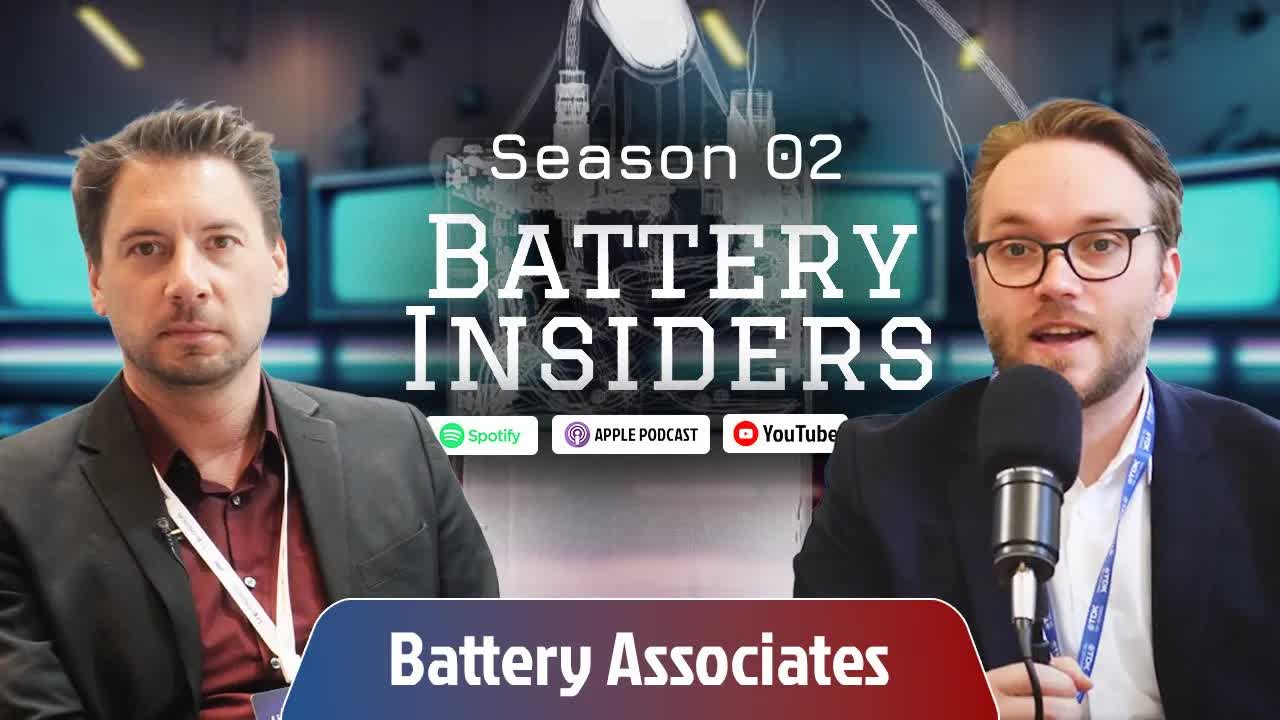
Ryan Melsert
Chief Executive Officer, Chief Technology Officer and Director, American Battery Technology Company (ABTC)
ABTC recycles lithium-ion batteries and is developing a primary lithium resource in central Nevada. Several of its founders, Melsert included, worked on the design and build of the first Tesla Gigafactory near Reno.
Recorded in Lithium Ion Battery Americas 2024, hosted by Shanghai Metals Market
What this episode covers
ABTC's recycling plant makes nine different products. Lithium is one of them; the others include nickel, cobalt, manganese, aluminium and copper. Ryan Melsert's reasoning for that spread is commercial as much as technical, because those metal prices tend to move up and down out of phase with each other, which protects the business unit when any one of them falls. He contrasts it with plants that were never meant for batteries. A lot of early recycling capacity was designed for general metal scrap, for aluminium and steel, and batteries were pushed through it afterwards. Those systems can recover nickel, cobalt and copper. Everything else is hard.
The company came out of manufacturing. Many of its founders spent years at domestic US battery manufacturers, and a number of them were on the initial team that helped design and build the first Tesla Gigafactory near Reno: process design, cell layouts, utility systems, commissioning, ramping lines. Melsert says doing that work is what showed them the gap. Recyclers at the time took whole batteries and dropped them into shredders or furnaces, mixing everything together. His team's approach was to work manufacturing backwards, disassembling packs, modules and cells to reach the high-value materials before anything gets blended. ABTC was formed about four years ago.
The second business is primary lithium. Central Nevada holds a claystone with a lot of lithium in it, and Melsert says no process to date has been able to get that lithium out economically. ABTC developed a technique to liberate it, purify it and turn it into battery-grade lithium hydroxide, proved it at bench scale two years ago, built a pilot plant last year and now runs a demonstration facility. He is clear about why both businesses sit in one company. Recycling alone cannot meet demand while the installed base grows this fast, and primary material without a closed loop does not work either. The skills, the operators, the specifications and the customers are the same on both sides.
Cost and environmental footprint turn out to be the same argument. On recycling, shipping material to Asia for refining and back again carries large transport costs, so a plant sitting close to its suppliers and customers can undercut that. On the primary side, claystone processing is much less energy intensive and much less reagent intensive than recovering lithium from hard rock spodumene or from brine, and the chemical agents drive both cost and emissions. ABTC plans to build its refinery directly on top of the resource, rather than mining in one part of the world and refining on another continent. The recycling plant runs with no high-temperature operations and no combustion on site, and generates little wastewater.
On process, Melsert resists the usual labels. The front end is automated disassembly that strips out support material and saleable byproducts. The back end sits within the hydrometallurgy family, but he pushes back on the assumption that hydromet means solvent extraction, saying ABTC designed a single circuit that reaches battery-grade purity across several products without conventional solvent extraction trains. Quality is the point of it. He notes that BASF is one of very few companies manufacturing high energy density cathode material inside the US, which makes it the natural customer, and ABTC has been sending it samples for years, starting small and moving to much larger batches.
Then there is the money. Most attention goes to the 30D credit, the $7,500 consumers can claim on an electric vehicle, but Melsert points at 48C, the investment tax credit administered through the Department of Energy and the IRS to defer capital cost on domestic facilities. ABTC applied last summer, went through the final rounds in the autumn, and was told a few weeks before the recording that it had won a $20 million credit against its current recycling plant and a $40 million credit towards its next one. Around 9% of requested funds were awarded, which gives a sense of how competitive it was.
Questions from this episode
- What does ABTC actually recover from a used battery?
- Nine different products from the recycling facility: lithium, nickel, cobalt, manganese, aluminium, copper and several others. Melsert argues the breadth is what makes the business durable, since those metal prices move out of phase with each other. It also reflects the design. Plants originally built for general metal scrap can physically process batteries and pull out nickel, cobalt and copper, but recovering the rest is difficult. ABTC designed its process from a blank sheet with batteries as the design feed, which is why it can recover a large share of the battery by mass rather than a few token elements.
- What is ABTC's claystone lithium process?
- Central Nevada has a claystone containing a lot of lithium, but Melsert says there has been no process to date that can access it economically, and no commercial-scale plants exist for it anywhere. ABTC spent around three years developing a way to liberate the lithium, purify it and produce a battery-grade lithium hydroxide. It was proved at bench scale two years ago, a pilot plant went up over the past year, and the company now has an operational demonstration facility. Compared with hard rock spodumene or brine, he describes the route as much less energy intensive and much less chemical reagent intensive.
- Why does one company do both recycling and primary lithium?
- Because Melsert does not think the industry can rely on either alone. Recycling cannot meet demand while the amount of batteries in the field is growing so quickly, and primary material at scale does not work without closing the loop at the end. Practically, the two businesses share almost everything: the engineers and scientists who develop the processes, the operators who run the plants, the product specifications, and the customers. When ABTC talks to automakers and cell manufacturers, recycled material is available now while the primary resource is built out, and customers do not have to choose.
- What is ABTC's partnership with BASF?
- ABTC won an early competition hosted by BASF, then another hosted by Ford, General Motors and Stellantis. BASF is one of the only companies currently manufacturing high energy density cathode material within the US, which makes it a natural customer for recycled metals. After several years of sending samples, starting small and moving to much larger batches made to BASF's input specifications, the two signed a partnership agreement last summer. ABTC focuses on collection and recycling in North America and sells its recycled metal products to BASF for cathode production, so an automaker can send end-of-life material in and buy recycled-content cathode back out.
- How has the Inflation Reduction Act affected ABTC?
- Beyond the 30D consumer credit of $7,500 on an electric vehicle, the programme that matters to Melsert is 48C, an investment tax credit run by the Department of Energy and the IRS to defer capital costs for domestic facilities. ABTC applied last summer with final rounds in the autumn, and the winners were announced at the end of March. The company received a $20 million credit for its current battery recycling facility and a $40 million credit towards its next plant, which is already in design and planning. Around 9% of requested funds were awarded. The credits come back once the facilities are built and shown to be operational.
- Where does ABTC get the batteries it recycles?
- All of the above, in Melsert's phrase: scrap from industry, a fair amount from strategic automakers and battery manufacturers, and a fair amount from brokers and aggregators. He expects the OEM share to grow as service centres start collecting end-of-life material and as manufacturers see the value of keeping control of these elements. That is why he treats relationships as the deciding factor in the sector. Plenty of companies are trying to enter it, but few can back things up with more than a PowerPoint deck: making material, delivering samples, building facilities and doing what they said they would do is what turns into partnerships.
Listen to this episodeWatch on YouTube
Part of Raw materials and mining
Transcript
About this transcript. Generated automatically from the recording, then corrected against a glossary of company and guest names. It has not been checked line by line. Machine transcription mis-hears technical terms, numbers and names, so treat any figure here as a prompt to check the recording rather than a quotation of record. Spotted something wrong? Tell us.
0:00Introduction
Dr Simon Engelke
0:00Thank you very much for joining us today for the Battery Insiders podcast here live from the lithium-ion battery Americas 2024 hosted by Shanghai Metals Market SMM. I'm very delighted to have Ryan Melsert with us today who is the CEO, CTO and Director of ABTC which is the American Battery Technology Company. Thanks for joining us. Yes, great to be here. Perfect, as right go into it, maybe if you could start by introducing a bit ABTC, your mission, your vision. Yes, of course,
Ryan Melsert
0:41so at American Battery Technology Company we're really working to address supplying domestic critical materials within the U.S. So many of us worked for many years at domestic U.S. battery manufacturers. A lot of our founders were part of the initial team that helped to design and build the first Tesla Gigafactory near Reno. So we spent many years designing manufacturing process and cell layouts and utility systems and commissioning and ramping cell manufacturing lines. And from spending many years doing that we really saw a void in the market for how to do essentially the reverse of that. So many recyclers we invented at the time take whole batteries and simply drop them in shredders or drop them in furnaces and really mix everything together. We saw there was an opportunity for a much more systematic and strategic method of backing out manufacturing processes to disassemble packs and modules and cells and really get access to the high value materials without simply mixing everything together. So about four years ago myself and much of my team, you know, we formed ABTC. We really were able to demonstrate this technology early on. We ended up winning a competition hosted by
1:55From Gigafactory build to running manufacturing backwards
Ryan Melsert
1:56BASF. We then won a competition hosted by the U.S. automakers by Ford and General Motors and Stellantis. And then since then we've really designed and built our first commercial scale battery recycling plant. We started it up last fall and we're now in commercial scale production, really helping to provide recycled materials to domestic market. And it's very important to be able to close the loop to really take those metals and once they're in the U.S. keep them in circulation. But because the amount of batteries in the field is growing so quickly, recycling on its own isn't enough. So in addition to our battery recycling business, we've also developed a set of technologies for how to manufacture a lithium product, from a U.S.-based resource. So within central Nevada we have a material called a claystone, which has a lot of lithium in it. But to date there's been no process that can access the lithium in it in an economic fashion. So again, about three years we developed a technique for how to liberate the lithium, how to purify it, and how to make a battery-grade lithium hydroxide. So we approved it at the bench scale two years ago. We built a pilot plant over this past year and we now have an operational demonstration facility that really shows how we can make this critical material from a U.S.-based
Dr Simon Engelke
3:13resource. Great, thanks for sharing that. I think that's a bit unique about you guys, right? So that you do both, like you know, you work with like the raw source of lithium in this case and then you also want to take recycled materials. And maybe if you can share a bit some of your lessons learned, maybe some of the synergies you see right between doing both, because it's a bit of a unique approach. Mostly we look at you know more the refiners or we look at the recycling companies and maybe some are both because they acquired both. But I mean it would be interesting to kind of learn a bit about this and also yeah your history there as well, like how you ended up doing both. Yes, I think the reason we do it is
Ryan Melsert
3:47just we see that the industry has to have both. You can't meet demands just through recycling and you
3:52Why recycling and primary lithium sit in one company
Ryan Melsert
3:53can't meet demands by large amounts of primary material if you're not closing up at the end. So we don't see how it's possible to do just one or the other. And the big thing is that it's the exact same skill sets you need of the engineers, the scientists to develop both processes, same skill sets of the operators for the plants. We make materials in both businesses, the same specifications, and we sell them to the same customers. So large amounts of synergies and overlap there. And when we speak to our potential customers, the big automakers and battery cell manufacturers, they see recycling as valuable and they know it needs to happen. But if you look at the entire recycling industry the next few years, it takes a while to grow. But when we show them the numbers of the lithium resource that we have, the technology for how to manufacture it, and the scale we can move at, that's what gets them excited. Because this primary lithium is what really moves the needle because of the magnitude of it. And it's just fortunate they don't have to choose one or the other. We have recycled material now we work with them on as we're constructing and developing this primary resource.
Dr Simon Engelke
4:59Thanks. Maybe what's also interesting about this two ideas, right? One is, you're probably aware, right in Europe that we have the EU battery regulation, which has a requirement to use recycled materials in fresh batteries. So it's become a requirement, right? Like a license to operate in the end of the day. And I think the second topic will be then, if you look, so you mentioned lithium a few times, right? So are you also looking at the other materials from the battery you can recycle? Because often lithium has been more material people haven't recycled as much. It becomes more relevant now with NFP because there's not much else in there really from value. But of course you also look at cobalt, nickel from the NMC, etc. So maybe if you could share a bit on that. And second, are you taking it from a like, say you're taking like, you know, a battery and you kind of take it apart? Or do you look more at like get black mass from another kind of supplier and take it out from there?
Ryan Melsert
5:47Right. So for a recycling facility, we actually make nine different products. So lithium is one of
5:53Nine products, and plants that were never designed for batteries
Ryan Melsert
5:53them. But like you mentioned, we also make nickel and cobalt and manganese and aluminum and copper and several other products, which really helps to diversify and de-risk that business. Because those metal prices tend to move up and down out of phase from each other, really helps protect the business unit. But it really does help to scale that up and be able to produce different technologies for
Dr Simon Engelke
6:15for different sets of customers. It's definitely fascinating with lithium because we spoke a lot about companies, right, to recycle everything apart from the lithium. They had like, you know, containers of material, right, where lithium is in there, but they haven't taken it out yet.
Ryan Melsert
6:30Well, I think that's part of doing a ground-up design for recycling as well. A lot of the early recycling plants were actually designed not for batteries, but were designed for general metal scrap, for aluminum, for steel. And people have tried to put batteries into those systems. And they can physically work and recover a few elements. They can recover the nickel, the cobalt, the copper. But if it's not purpose-built for batteries, it makes it difficult to recover the other elements. So again, we designed this from a blank piece of paper for batteries as the design feed. And because that, we can recover all nine of those products at high recovery rates and make it much more of a holistic system, we recover large amounts of the battery by mass and not just a few token elements.
Dr Simon Engelke
7:15And that's also another discussion we had a lot about, again, looking also from regulatory, but also other demands to actually get back to battery grade, right? Because a lot of, you know, companies maybe can recover some material, some elements you mentioned, but then it's not to the quality standard that you can actually use a new battery. So maybe if you could share a bit more
Ryan Melsert
7:31on that, also your journey maybe with BASF. Yes, of course. So I mentioned we won a competition for BASF early on. They're one of the only companies right now that actually manufactures high-energy density cathode material within the U.S. So for Recycler, they're the ideal partner. They're the perfect
7:48The BASF partnership and battery-grade quality
Ryan Melsert
7:49customer for the products that we make. So we've been sending them samples of our recycled products for several years. Initially small-scale samples, now much larger batches, really showing the quality of the product we make and that we make it specifically to the specifications that they need for the input to their plant. And after working for many years, last summer we actually signed a partnership agreement with them. Whereas we really are focusing on the collection, the recycling within North America, are we able to make our recycled metal products and sell those products to BASF for them to directly make into their cathode material. So us having this partnership means when we speak with customers, we speak with automotive OEMs, we can say, you know, we as a combined partnership can provide you a certain percentage of Catha with recycled content, with IRA compliant domestic content that's of low environmental impact and be able to provide more of a turnkey service. You know, you can provide your end-of-life material and then go all the way to purchasing recycled content Catha back out of it again.
Dr Simon Engelke
8:55Great. And maybe another topic is cost, right? Material cost. We had this today in the conference, right? We also heard about like, you know, the examples of half the cost in use in China compared maybe in the U.S., manufacturing, etc. Of course also from a raw material standpoint, is this something you can get to a price point similar to, like, you know, Asia or China from lithium if you source it from here compared to other sources? Or is it not needed because you have to IAA and it kind of protects you? It would be interesting to get your thoughts on that as well.
Ryan Melsert
9:23The IRA is definitely impactful, but for the recycling side, again, there would be such high costs with transporting those materials such long distances. If you really were to try to transport them back to Asia to refine and ship them back again, those are big cost disadvantages of doing it in Asia. So our recycling plant can really undercut those and by being close to our suppliers and
9:45Competing on cost against Asian refining
Ryan Melsert
9:45customers can be very cost competitive. And on the primary lithium side, you know, again, there really aren't any commercial scale plants that can access lithium from a claystone material. There are a handful of lithium claystone bearing deposits throughout the world, but it's a very different type of process than trying to recover lithium from a hard rock spodumene or to recover from a lithium-rich brine. Much less energy intensive, much less chemical reagent intensive. So competing on price based on the actual process as opposed to simply other areas is what we can do with our technique and the type of lithium hydroxide we make, we can deliver specifically to U.S. and North American-based cathode customers.
Dr Simon Engelke
10:29Great. And maybe another aspect also sustainability, right? So it would be interesting if you could share a bit more of that as well. You already mentioned shipping, right? Which is a concern, but also any other aspect, any other innovations in this space? Yes, for the primary lithium, again,
Ryan Melsert
10:43the way it's made today usually has very large amounts of chemical agent consumption, very large amounts of acid, different types of solvents and oxidizers needed to purify the material. That's what drives a lot of the costs, but it also drives a lot of the environmental footprint, especially when you can skitter, you know, scope two and three type emissions. So again, we don't have to use very large amounts of chemical agents. We actually have a refinery will be built directly on top of the resource itself. So many processes today have a mine and a concentration area in one spot of the world and then a refinery in a whole different continent. So having the refinery directly on top of the resource greatly reduces the amount of transportation and environmental impact. And the same thing on the recycling side, you know, we have no high temperature operations, no combustion on site anywhere. Very low amounts of chemical agents are used, which means not a lot of wastewater is generated. And we do that because it's a much more holistic process that really lets us recover
11:44Chemical intensity, transport and the refinery on the resource
Ryan Melsert
11:45more types of materials at higher recovery rates than at lower cost. Yeah, if you could maybe share a
Dr Simon Engelke
11:50bit more right on this recycling process you mentioned, is it more like hydro, I mean, I would assume not a pirate process if you're talking about temperature, but yeah, is there anything more you could share on that process?
Ryan Melsert
11:59Yes, those are pretty broad categories, you know, if you're pyrometallurgy, hydrometallurgy. So that the start of our process really is much more of an automated disassembly that removes a lot of the support material from the batteries, removes the byproducts that can be sold. And as we go to the back end, it's within the hydrometallurgy family. But unfortunately, a lot of people just think that hydrometallurgy means one specific technology of solvent extraction. But there are many different types of technologies within the hydromet family. And we've designed what we think is a much more holistic set of processing techniques that make a single circuit that let us recover different products at battery grade purity without just using solvent extraction trains, which is really the
Dr Simon Engelke
12:44conventional method. And maybe if you could talk a bit more about the IIA, right, and how it has affected it. We also had this today already in some of the discussions, how big of a difference it made, right, for the U.S. Yeah, if you maybe could share a bit more how this is impacting your business and
Ryan Melsert
12:58what some of the implications on that. Yes, IRA is important. I mean, a lot of people look at the 30D credit, which is really the $7,500 that consumers can get when they purchase electric vehicle. But there are many other programs within that system that really prioritize making these minerals in the U.S. Last summer, the Department of Energy in the IRS, you really put out this other program, you know, an investment tax credit through the 48C program, which is really meant to really defer a lot of capital costs to help ramp up domestic facilities. We put applications in last summer, you know, final rounds last fall. And just a few weeks ago, we actually were notified that,
13:4148C tax credits and what they are worth
Ryan Melsert
13:42you know, we'd want a $20 million credit for our current battery recycling facility. And we're already going through design and planning for our next battery recycling plant because of the amount of material we have under negotiations. And we also want a $40 million credit to be applied towards our next battery recycling plant. So that the subsidies received at the consumer level for vehicles is great. But we're also receiving these credits towards, you know, construction of new recycling facilities within the U.S.
Dr Simon Engelke
14:11Great. Maybe if you could share it for some people to know about it, right, with the tax credit, how this works, like, practically? It's a very competitive program that you have to apply to.
Ryan Melsert
14:21Large amounts of applications submitted over the past year. And just end of March, the DOE and IRS announced the winners. They said around, you know, 9% of requested funds were awarded. So very competitive. And now essentially for the $20 million and the $40 million awards, we have award letters from the federal government that we really can apply to these capital facilities. So as we build the plants out, as we order the equipment, as we turn on these facilities, we're essentially already awarded funds to be reimbursed for a lot of the costs that we spent
Dr Simon Engelke
14:57on those plants. And you get this back through a tax credit as well?
Ryan Melsert
15:00Or? Yes, it's a credit we receive back once we have, you know, constructed these facilities and show them operational. Cool. Perfect. And then, um,
Dr Simon Engelke
15:13I think maybe also another question would be like to run a company like this right now in the US, but maybe some of your learnings in there as well, also maybe perception of it, was any change over the couple of years you have been operating with it? Any things which surprised you?
Ryan Melsert
15:28Not about surprise, but I think there's a lot of dimensions to it. There's obviously technology development, there's building the business model and the case, there's the competitive landscape.
15:36Relationships, feedstock and who actually delivers
Ryan Melsert
15:37But I think as we move into a closed loop infrastructure in the US, the most important thing is, is the relationships built with companies and other sectors of the closed loop. So with the cathode manufacturers, the battery manufacturers, the vehicle OEMs, the most important thing is having those relationships. And, you know, I think there are a lot of people trying to enter this field, but very few who can actually back things up with more than a PowerPoint deck. You know, actually making material, delivering samples, building facilities, showing you're doing what you said you would do. That's how you formalize partnerships with companies and other spaces. And I think building those relationships is the most important factor for who will be successful going forward.
Dr Simon Engelke
16:21That makes a lot of sense. And I think, yeah, as you said, part of it was very crucial to where to get your material from. I guess you have your own, you know, source there, which is really helpful, but also from recycling, right? Like, you know, which, I guess, do you get it from scrap or would you get it from end of life vehicles? Maybe if you could share a bit on this as well.
Ryan Melsert
16:38All the above. I mean, Erland and industry, we get a fair amount from strategic automakers and battery manufacturers and a fair amount from brokers and aggregators. As we go forward, I think OEMs are seeing the importance of maintaining control over these critical elements. So a larger percentage comes from them going forward as their service center start collecting end of life material. And that's where I come back to again, having those relationships and partnerships lets you maintain access to your feed from your suppliers and then to sell your product back into their own supply chain.
Dr Simon Engelke
17:12Fantastic, Ryan. Really appreciate your time today and sharing insights also with our audience. My name is Simon Engelke, founder and chair of Battery Associates. I'm very excited to have you on the
Ryan Melsert
17:22Battery Insiders podcast. Of course. It's great to be here. Thank you.