
Episode 140 · 24 August 2024 · 00:36:34
The learning rate was always 20%
Michael Liebreich on the Evolution of Clean Energy and Green Finance
The co-founder of BloombergNEF on why his analysts kept underestimating battery cost curves, what ESG is actually for, and why he still has no battery investments.
Read the article: The learning rate was always 20%
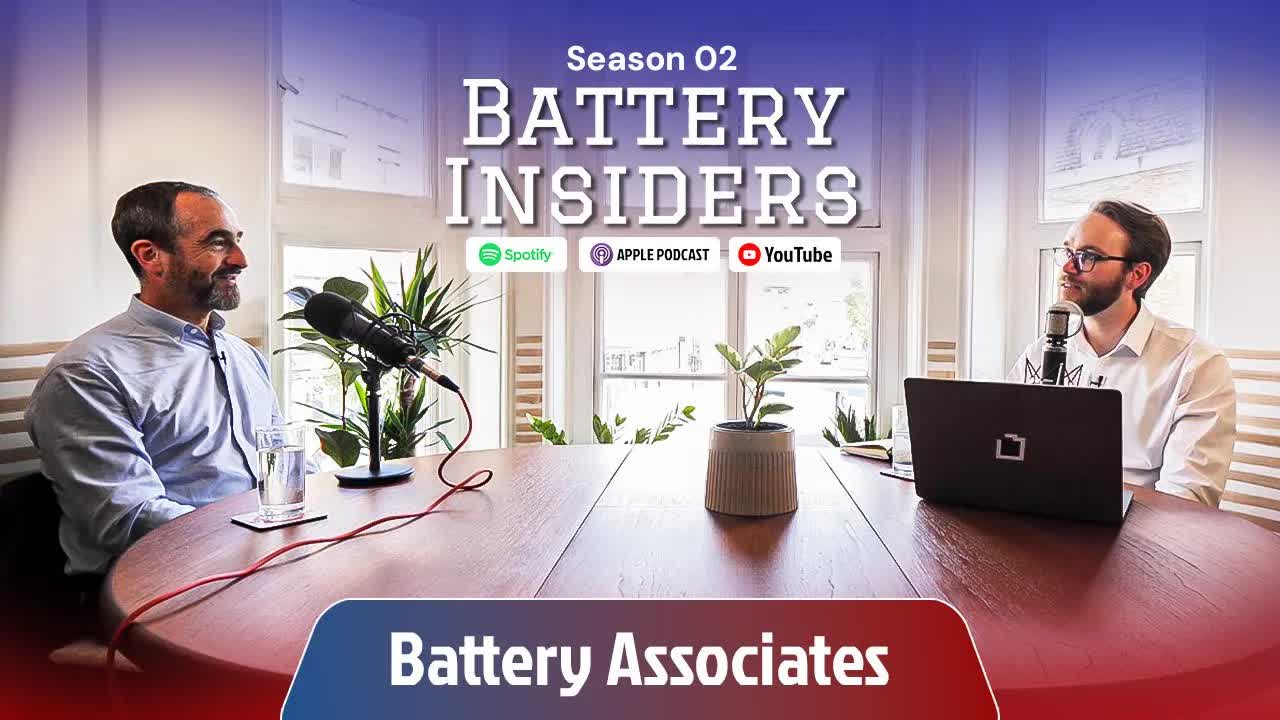
Michael Liebreich
Chief Executive and Principal, Liebreich Associates
Liebreich founded New Energy Finance in 2004 and sold it to Bloomberg in 2009. He is a managing partner at EcoPragma Capital, hosts the Cleaning Up podcast, and is the author of the Hydrogen Ladder.
Recorded in London
What this episode covers
Michael Liebreich started New Energy Finance in 2004, out of the wreckage of the dot-com years, on a bet that clean energy would become a real industry. At the time solar power cost around 50 euro cents per kilowatt hour against an electricity value of three or four cents, so the subsidy was effectively the whole business case. His business school friends thought he was throwing his career away. He points out that after the dot-com wipeout there was not much career left to throw.
One of his first campaigns was against the name. It was called alternative energy, and he could not see what was alternative about something that by 2015 was taking the majority of all investment in power generation, and now takes 80 to 90% globally.
The most quotable exchange is about forecasting. Liebreich's position, offered with what he calls the benefit of no modelling and no research, was that the battery learning rate is around 20%: every doubling of volume takes 20% off the cost. His analysts came back with 14%, arrived at by working through the bill of materials element by element with clients' chemists and materials people. He was right and they were wrong, and his explanation for why is the useful part. When you put that much talent, money, policy pressure and adjacent innovation into one place, the shocks come to the upside, and a bill-of-materials model cannot see them. His instruction to his own analysts in his last years at Bloomberg was to be braver and stop self-censoring because a large company had leaned on them.
He is candid that being close to clients makes this harder. Distinguishing continuous change from discontinuous change is not the difficult part. Saying when the discontinuity arrives is, and clients want a date.
On finance, his framing cuts through most of what is written about green investment. Green finance is finance, with a preference. Once private money is involved it needs a risk-appropriate return. The distinction that actually matters is not green against not-green, but matching the type of risk to an investor who understands it. Someone spinning a new anode material out of a university lab needs completely different money from someone building their third gigafactory. Selling technology risk to a private equity investor, or country risk to someone uncomfortable with that country, wastes everyone's time regardless of the label on it.
He also makes a confession: around twenty angel investments and not one of them in batteries. His reasoning is self-aware rather than dismissive. He was academically a strong engineer and is a good generalist, and not enough of an electrochemist to judge a new cathode material or electrolyte approach on his own. He has no diligence process around him that would let him borrow that judgement, so he has passed. His dry assessment of the outcome: he may be a very good battery investor, because he has avoided losing a lot of money.
Questions from this episode
- What is the battery learning rate, and why did analysts get it wrong?
- Around 20%: every doubling of cumulative volume takes roughly 20% off cost, plus or minus a couple of percent. Liebreich was saying this around 2015 while analysts were modelling 14%, because they built up from the bill of materials with input from clients' chemists. What that approach cannot capture is innovation from outside the model: finance, machine learning, adjacent technologies nobody had counted. When enough talent, capital and policy pressure converge on a sector, the surprises run to the upside.
- Is green finance different from ordinary finance?
- Less than people think. Once private money is involved it has to earn a risk-appropriate return, so green finance is finance with an additional preference attached, which arguably makes it the harder version. The distinction Liebreich thinks people should navigate instead is the type of risk. A university spin-out working on an anode material, a company building its third gigafactory and a NASDAQ IPO are three completely different propositions, and selling the wrong risk to the wrong investor is a recipe for disaster whatever label is on it.
- Why has he never made a battery investment?
- He does not trust his own technical judgement on cell chemistry, and says so plainly. He describes himself as a strong engineer and a good generalist who knows enough about electrochemistry to be dangerous. Without a diligence process that would let him lean on specialists, he has passed on every one. He also notes that battery investing differs from early wind and solar because large incumbents already existed, which is reassuring if you are building something to sell and constraining if you are trying to innovate around them.
- What is ESG actually for?
- Risk and fairness, and Liebreich argues both reduce to risk. Environmental exposure in your supply chain or your markets is risk. Governance is entirely risk management. Unfairness in recruiting, promotion or how a chief executive treats their assistant is also risk. His objection is to what it has become: box-ticking and methodology arguments about scope three. His alternative formulation is that he does not do ESG, he does 360-degree risk, justice and fairness, for the good of the business. His advice to anyone whose ESG job is purely box-ticking is to resign, because they are too talented to waste their time.
- What does ESG mean specifically in batteries?
- The supply chain. Far more minerals will be mined and refined, and that has to be done in a way that holds a social licence: consultation before a mine opens, processing that does not create environmental hazards, and respect for the agency of countries with fragile state institutions. Liebreich's sharpest point is about value capture. It is too easy to do a deal, take the minerals, refine them elsewhere and leave very little value in the country they came from. As the first major consumers of that output, he argues, we have a responsibility to help those countries develop their institutions.
- What does the Hydrogen Ladder actually say?
- It is an inevitability scale rather than a sequence. It does not tell you what order to do things in; it says that once the subsidies and hype have settled out, around 2035 to 2040, here is what clean hydrogen will genuinely be used for and here is what it will not. At the top sits what we already use hydrogen for: fertilisers and petrochemicals. At the bottom, what Liebreich calls the row of doom, sits domestic heating and most mobility. His summary of hydrogen's role: it will decarbonise the parts no other technology can reach, because it is expensive to produce, transport, store, distribute and use, so you need a very good reason. He also notes it was not originally his idea, and that he is now on version five having crowdsourced the criticism rather than argued with it.
Listen to this episodeWatch on YouTube
Part of Storage and the grid
Transcript
About this transcript. Generated automatically from the recording, then corrected against a glossary of company and guest names. It has not been checked line by line. Machine transcription mis-hears technical terms, numbers and names, so treat any figure here as a prompt to check the recording rather than a quotation of record. Spotted something wrong? Tell us.
0:00Introduction
Dr Simon Engelke
0:00Welcome everyone. Thank you so much for joining us for the Battery Insiders podcast today live from London. My name is Simon Engelke, founder and chair of Battery Associates, and I'm super delighted to have Michael Liebreich with me today, who has a really fascinating background and history. We want to go to many of these topics. He's currently the CEO and principal at Liebreich Associates, where he does a lot of media activities, also including the Cleaning Up podcast, which I can highly recommend to anybody who hasn't heard of it yet. But he's also the Manningham partner at EcoPragma Capital, as well as he's also the co-founder of Bloomberg New Energy Finance, where he's also still a contributor. And yeah, Michael, thanks for joining us today. Simon, it's a great pleasure to be here. Thank you. Probably many of you know you from the Hydrogen Ladder, many maybe know you from X, you know, you're very like an outspoken person, probably have many of you come across you there. But yeah, I think there's many fascinating topics we could talk about. And maybe we can just start because I'm personally also interested. What has changed? What has been a development since the early days of New Energy Finance to where we are now?
Michael Liebreich
1:13Well, I mean, it's hard to know how to deal with a question that's so big, so all encompassing, because, you know, if you go back, I started New Energy Finance in 2004. So we'd been through the whole kind of dot com boom bust years. And I, you know, it was extraordinary time, but I was left very sort of high and dry. And then started to think about what are the mega trends that I could then build a business on and kind of rebuild my career. And a lot of arrows sort of pointed, a lot of things pointed me towards energy and the fact that we needed to do clean energy. But it was so primitive. It was such early days. Looking back from now, you know, I was one of the first kind of, I would call it mainstream business people in that space. You know, there were all these kind of,
1:57Starting New Energy Finance in 2004, when solar was 50 cents
Michael Liebreich
1:58you know, hippies pretending to do business. And there was some obviously fantastic technologists. There were some policymakers, principally, by the way, in Germany, and some in Brussels, but not that many. And I came along with my, you know, fairly blue chip background, but I was one of the first. But it was, you know, none of these technologies were economically viable. There was all, you know, the kind of the subsidy piece versus the revenue, the real revenue piece was, you know, enormous. So you'd be talking about, you know, solar power at that time would be 50 euro cents per kilowatt hour. And so the subsidy was everything, because the value of the electricity was, was, was three cents or four cents or something like that. And so, you know, it was just a very, very, very different time. It was just very early. And I was just very lucky because I kind of spotted that that would flip and change and that it would become a real industry and scale and, you know, everything we see today. I would be honest, I don't think anybody saw how big and professional it would get, how fast. I kind of saw it, but I didn't
Dr Simon Engelke
3:06really believe it. And I think one comment I've heard, right, like about BNF as well, is like in the early days, the people were like, kind of, you know, you're the crazy ones. Like they'd be like, you're like, so on the edge and you're so optimistic on things. Maybe today people are like, oh, you know, you're the conservative ones now, compared to some others, kind of pushing, you know, other kind of stories out there. So any thoughts on that? Well, first of all, let me say that I don't have any
Michael Liebreich
3:28executive role at BloombergNEF, BNF anymore. I sold it in 2009. I continued to run it until 2014. And then I was sort of exec chair until about chair of the advisory board, it was called until 2017. So we're now talking fully seven years. I've not had any executive role. So when you say that, you know, we're seen as conservative, I mean, I still have very close relationships with a lot of
3:53Why calling it alternative energy was the wrong name
Michael Liebreich
3:54individuals and also institutionally, I still write for them. But yeah, you know, in the early days, first of all, remember, it was called alternative energy. And one of the first sort of campaigns, because I, you know, get on my hobby horse, one of my first hobby horses was, why are we calling it alternative? It's just energy. It's just energy. And of course, you know, by the time you get to about 2015, the majority of all investment going into power generation is going into solar and wind. And by now, it's whatever it is, 80, 90% globally. So why is it alternative? There's nothing alternative about it. But yes, and I, you know, when I started that business, my friends, my business school friends thought that I was throwing my career away. I said, well, there wasn't much of it. After the dot com, you know, kind of wipeout, there wasn't much of a career left. So it didn't feel that risky. But it was way out there. And, and yeah, I think in terms of the sort of forecasting, I think there is a danger for anybody who kind of, I hate to say it, but, you know, has lots of clients, and who's very embedded in an industry, because it's much easier to sort of say out outrageous, or to say what you really think. And a lot of these, there are two sorts of things that might happen in the future. There are continuous things and discontinuous things. So linear and, you know, linear and nonlinear. And a lot of what we're looking at is saying, there's a nonlinear thing, either, you know, the prices get to a certain point where a whole new market opens up, and then weird stuff happens. That's, it's sort of easy to say, it's very difficult to say when, and when your clients say, well, that's not good enough, I need to know when this thing's going to pop. It's very easy to kind of become more conservative, because it's sort of uncomfortable. And, you know, an example, and I'll give the example from the battery world, not the renewables world. You know, talking about what is the learning rate
5:51The 20% learning rate, and why the analysts said 14%
Michael Liebreich
5:51for batteries. And, you know, with the benefit of no modeling and no research, I can tell you that it's around 20%. So for every doubling of volume, you get a 20% reduction in costs, plus or minus a few percent. Oh, no, we can't say that. Because, you know, it's a it our clients have gone through the bill of goods, element by element, and, you know, their chemists and their materials, when they know, and they say 14%, and we can't really disagree with this. Well, I'm just telling you, it's 20%. This was, you know, and, and of course, you know, that was back in 2015 time. And now we start to see that, of course, the learning rate is 20%, plus or minus a couple of percent, because there was other innovation, there was stuff happened that stuff happened around finance, stuff happened around, you know, technologies that we didn't think were relevant, like machine learning. And there's sort of unknown, I don't know what you would call it kind of, I'm not sure if it's the known unknowns, or the unknown unknowns. But there are when you get that much talent and money and pressure and policymaker push and so on, the shocks are to the upside. And so when you're not too closely connected, it's much easier to say, Oh, you know, we're going to see this tremendous development. So I was doing a lot of that in the early days. But and then I was, even my last few years with BloombergNEF, I was having to push the analysts, like be braver, be braver, go out there, say if you really think that, say it, don't self censor just because you know, some big company comes and bounces on
Dr Simon Engelke
7:25you. Fascinating. And then I mean, again, you know, I have a technical background, right? So I think, but I definitely can appreciate the importance of finance, because again, without money, things are not working out and not working there. But maybe if you could share a bit more on like, what's the difference between traditional financing and green financing? And you might also argue that will be only financing, but if you could
Michael Liebreich
7:46maybe share a bit on that. Yeah, I think that the difference is much less than people think between finance and
7:52What green finance actually is
Michael Liebreich
7:52green finance. In that, at the end of the day, but if it's private money coming in, most of it needs to earn a risk appropriate return. And, you know, you could say, well, you know, people might compromise a little bit, or there might be a bit more money coming from the multilateral development banks, or there might be a larger involvement from some, you know, national venture capital or national, you know, sort of state sources of funding. But as soon as you get private money, basically, what green finance is, it's like, it's finance, in other words, we need to make a return that's appropriate for the risk, but we'd like you to be green as well. So it's kind of the difficult bit of finance in some ways, to be honest. But it's also very important that there are different sorts of finance, it's not green versus not green is not actually the most important sort of distinction to navigate for the sort of people who might be listening to this. It's actually to really understand financing technological change requires, you know, many, many different buckets of finance, somebody who's, you know, working on a new anode material in a university lab and wants to spin it out, is looking for really different sorts of finance from somebody who wants to build their third gigafactory, or do an IPO on the NASDAQ, and really understanding exactly what is your value proposition, what is the risk, and finding investors that are comfortable sort of managing the risk to the extent you can, but then finding the investors that really understand the risk that's left and not trying to sell the wrong risk to the wrong person. That's a recipe for disaster, you can put any green label you want on something. But if you try and sell, you know, technology risk to a private equity investor, or some country risk to an investor who's not comfortable with that country, you're wasting your time, you're wasting everybody's
Dr Simon Engelke
9:46time. Fascinating. And maybe also kind of a bit of an idea of like an important of investing also in a
9:53Twenty angel investments and no batteries
Dr Simon Engelke
9:53finance in the battery world, right, to kind of understand, I mean, maybe with your finance lens, how have you seen the battery ecosystem evolve? Yeah, so I think I'm, first of all, I have a
Michael Liebreich
10:04confession to make, I've got about 20 angel investments of various sorts, none of them are battery investments, right? Now, that either suggests that I don't, I haven't met the right one yet, you know, I was, I was late to start a family as well, these things happen. But also, I'm nervous, because battery investing, at least on the technology side, seems pretty specialized to me, in that I'm, I'm a, I'm a decent, and I was, you know, academically, a very strong engineer, and I'm a decent engineer. I'm decent at science, I'm a good generalist. But I'm not enough of an electrochemist to know, you know, I'm enough, I know enough to be dangerous, and I'm aware of my weaknesses. And so somebody comes along and says, well, I've got this fantastic new, you know, cathode material or an electrolyte approach, or a flow battery, a way of sealing this or doing whatever, you know, I don't trust myself to make the technology calls. And I haven't got a business process around me, where I could say, well, that's fine, because I can get this professor or that professor, I get somebody else to do due diligence, I kind of need to do my own due diligence. So, so that's my, that's my, my, my confession is, I'm a bad, well, I may be a very good battery investor, because I've avoided losing lots of money. But you know, these things go through, they go through life cycles. And, you know, you'll see things go, wind, solar, they went from venture type investments, and they go all the way through to kind of until the point where they become, you know, much less risky, they become project finance type investments. So I think the battery manufacturing or battery or the technology side, it'll go through the same. And I suppose it's
11:48Why batteries differ from early wind and solar
Michael Liebreich
11:49a little bit different, there are, because there always were some quite big battery company, I mean, always, always, by the way, sort of before I founded NEF, you know, go back to 1990, 2000, there were already big back, they were, there were no big solar companies, no real, I mean, there was Vestas, but there was no really big wind companies that all had to be constructed from scratch. So I think batteries, in a sense, will be interesting, because there are, there are the startups, but there are also the big incumbents. And there'll be a bit of a dance between, you know, between the two, and to see the big companies are quite reassuring, because it means that you've got somebody to sell to, if you can build a technology company, that's a, that's a, that's a nice presence to have in the market. But I, I suspect they also smother somewhat in terms of the ability for a small company to innovate and assemble capital and, and, you know, have a sort
Dr Simon Engelke
12:45of five, seven year crack at the whip. Absolutely. And I think also, I mean, in the battery space, you have all kinds of different, right, you mentioned cathodes and electrolytes. Of course, there's also much more engineering focused companies as well, which don't do anything with chemistries, as well as software. So if
Michael Liebreich
12:59ever I have any questions. Yeah, no, I think that's very interesting, because you set this, this segment up by saying, you know, about talking about yourself as a technologist and about, the difference between technology and finance, you, you can't really separate. The boundaries are very, very fluid. So there is no, there's no, there's no hardware anymore. Every piece of hardware is also software, because what else is new back from in 2004, five, six, when I started New Energy Finance, there was no big data, there was no machine learning, there certainly weren't large language models, there was no blockchain, there was lots of pieces that you can really use as kind of force multipliers now. But they're all so you know, every, every, every component of a
13:45Every piece of hardware is also software
Michael Liebreich
13:46battery also has a stream of data, how it was made, how it's performing, how, you know, how close it might be to failure when it, you know, those sorts of all of that data has to sort of accompany the hardware through the journey. And then you can kind of blend over into, you know, we think of finance, as somebody invests, and then some years later, they sell and they make their money. No, what about insurance and risk management, and, you know, batteries as a service, or power as a service, or, you know, that maybe it might be a battery material as a service where you, you know, where you, where you lease an expensive material, but at the end of the battery life, you still, there's all sorts of blending of these different models. So when you talk about battery investing, I think you've got to cast a really wide net over all of the above. And then there'll be plenty of whether it's software, battery management systems, software optimization, tracking systems, if you have battery as a service, then somebody else has to have another can have another business saying, where are your batteries? Which vehicle are they in? And where is that? And so, so there's all sorts of nuances. And in the end, the good news is there'll be this huge ecosystem, which will have absorbed trillions, frankly, of dollars, that will have all these niches and businesses that you can't today imagine that will, you know, that will be big businesses in 5, 10, 15 years, because they find their, their slot, their, their ecological niche within that ecosystem of battery. And by the way, it ain't just battery. I mean, you've got battery, then you've got flow battery, then you've got thermal battery. And suddenly, it's like, well, hang on a second, no, no, we don't do thermal, but you do because they interact. And you'll have hybrids and all that sort of. So the industry will be huge with many, many, many ecological niches. Trust me.
Dr Simon Engelke
15:40I like the saying to that. And I think, as you said, right, it's a very complex field. And I think
15:44Optionality against ruthless focus
Dr Simon Engelke
15:45in an ever evolving one as well, we spoke a bit about there's also other companies trying different approaches, some of them more successful than others. Are there any kind of you have been a kind of seeing, you know, which you thought maybe there could be an interesting direction to take, and then it
Michael Liebreich
15:59could really been converted into a success? It's very hard, as I say, I'm not the expert on particular battery chemistries, a bit more on business models. But when you've got this kind of pre-Cambrian explosion, that ecosystem is now all kind of self assembling. And you, you have relatively low visibility about technological outcomes, you know, solid-state battery, yes or no. And if yes, then which segments will they go into? And aviation, is that really a thing? Will it become a market big enough to actually sustain a supply chain? And there's lots of questions. So what I would suggest is, you know, optionality is, you know, whenever you're building a business, you have an interplay between ruthless focus, which by the way, I was very good at with NEF, New Energy Finance, you know, before I sold it, we were prepaid subscription information services, that was it. We tried not to do, you know, consulting and get distracted, we tried not to do, we did an event, but we did one a year, you know, not get distracted, ruthless focus. But if things are really fluid, you do need a certain amount of optionality. So if you build a gigafactory, it should be robust to different chemistries. Or in fact, if you even if you have an anode or a cathode or this or that, how do you because you can only control your own about you have a you have a control boundary within which you can operate as a brilliant CEO or whatever, or financier. But if you require lots of other things to go, you know, right, that's very dangerous, if they all have to go right. And if you have options, that, you know,
Dr Simon Engelke
17:38that's helpful. Absolutely. Another topic, it may be more on the ESG side, you know, ethical,
17:46ESG as risk and fairness, not box-ticking
Dr Simon Engelke
17:47social governance. How does this play into like, especially in the green finance world? Because I know a couple of my friends personally in the finance world, it's a big debate about ESGs and it goes on this way and this way, I feel. Do you have any thoughts on that? Sure. So, you know, ESG is,
Michael Liebreich
18:01you know, I don't want to say I'm sort of old enough now to have seen it come and now I'm seeing it go. So, but I have seen a bit of there is a bit of a cycle, right? In fact, it predates me and it'll and it'll survive. But there's definitely a cycle underway. And I think it's important to remember, what was it for? What was it for? What is the what is the job you're trying? Because it's, you know, it's, it's gotten very close to box ticking exercises, and methodology arguments about, you know, how do you count scope three for this part of the business and whatever. It's fundamentally about two things, I think. One is risk, and the other is fairness. You know, if you look at it through that lens, and in fact, in a way, both of them are related to risk. So the E, it's really about do invest, are investors best served by ignoring a whole bunch of environmental issues, either within their own supply chain, or within the markets that you know, that they sell into, and so on. The G governance, governance is all about risk. It's all about risk management. And even the the S, the social, you can say, well, that's about fairness, and see it through but, but unfairness is a risk. You know, if you are unfair in your recruiting, or in your promotion, or in the way that the way that your CEO treats his personal assistant is, you know, gross, these are unfairness issues. And they're also about risk. I personally like to go beyond just avoiding risk on those things. I think we should be leaning in and trying to sort of be, you know, go out of our way to be to be fair. But, but I think, so there's something, you know, the ESG, that in America,
19:48The specific ESG lens on battery supply chains
Michael Liebreich
19:49some, you know, states, and some people are pushing back and saying that they're going to sue people who employ ESG, I would just say, do you know what, I don't do ESG, what I do is 360 degrees, risk, and justice and fairness. That's all I want. And I'm doing it for the good of the business, to build the business as quickly as possible, taking as low risk as possible, whether that's a fund manager or a company. I do think in the battery space, there's a very specific lens. That's my kind of general point about ESG. Don't box tick. If you're, if all you're doing is box, if you're, those friends of yours, if they're doing ESG, and all they're doing is box ticking, tell them they should, they should resign tomorrow or today, because they're wasting their lives. If they're not really eliminating real risks, they should just go and find a different job, because they're too talented to waste their time. Now, on batteries, a lot of it is around the supply chain, where, you know, we are going to be mining a lot more stuff, well, not as much coal, but a lot more minerals, critical minerals. We are also going to be refining it. And that has to be done in a way that gets that has a social license. And that's everything from how we go about consulting before we open a mine, to how do we process the resulting minerals so that they don't create environmental hazards, to also, how do we deal with the nations? How do we respect the nations and the decision making, and give agency to countries who are much less powerful, in many cases than, you know, US, European countries, Canada, Japan, Korea, or China, you know, you have these small countries that are desperate for their own development, but they're very often have very poor, very fragile state apparatus. What is our role as basically the first major consumers of those, that output, we have a responsibility to also help them in their development and developing their
21:48Leaving value in the countries the minerals come from
Michael Liebreich
21:49institutions. It is too easy to kind of do a deal, bring back the minerals, process them, either in China, where nobody cares about the environmental condition, or they don't care as much as we do, or even if we do it, you know, in the West, but to leave very little of the value add in the countries where those minerals come from. And there's, again, then you're into the justice question.
Dr Simon Engelke
22:14No, I very much agree on that. Another kind of topic, right? I mean, again, you already mentioned, there's a lot of innovation happening in lots of fields, you know, batteries, one, you mentioned learning curves, but also AI, machine learning, all kinds of things. Do you have any kind of thoughts on how does this impact as well, these clean tech industry, like the synergies potentially between these different technology developments?
Michael Liebreich
22:37Definitely. And I've talked about it as an ecosystem. And so, you know, I think this is one of the kind of fun things in what I've been doing the last 20 years, that classical economists are completely wrong footed by all this stuff. Because so much of it is sort of co evolution of technologies that are playing on each other. So you've got Paul Romer, endogenous growth theory, sort of gets towards it, and then some of the kind of more evolutionary economics approaches. But if you think that you can kind of answer these questions by doing a supply, demand, you know, curve and watching, look at where they cross and say, well, that's how much, you know, lithium will be used in batteries and some kind of static picture. It's absolutely wrong. I've just written a piece, and I did it for my podcast on cleaning up as well, on why, why I'm optimistic that the trend towards the transition will, will, I did a piece on how it's going to be harder than we think, which was five villains, five supervillains, or five horsemen of the transition. But the five superheroes, one of them was, I call it exponential growth, not because it's really exponential,
23:48Why technologies accelerate each other
Michael Liebreich
23:49but because these different technologies essentially feed off each other. And they accelerate, and they accelerate, and they grow far beyond what the kind of initial market size looks like. You know, volume drives cost, cost drives volume, you open up a new market, that then drives more volume, you get to a new cost point. But at the same time, other industries, other sectors. So the first, first, the first superhero of the transition is those trends towards sort of growth cost dynamics. But the second one is the system, the fact that, you know, you may be working incredibly hard on batteries, but at the same time, somebody else is working on machine learning, or they're working on, it might be on heat pumps, or it might be on heat pumps for cars, for instance, which give it more range, make the battery last longer. So it's not a battery, but it acts like a battery extension. And then the cars get into a whole new market, because they've got more range. So these kind of synergies that they are, you know, again, you can sort of just trust me that they exist, because, you know, you don't have time to go and map them all. And it's not predictable, always, which one is the one that will help. But they are there. And so it's kind of nice being the right side of history where, you know, we've got all these synergies coming together, wind, solar, batteries, interconnections, you know, tech, for weather forecasting, satellites, all sorts of things that are happening, that are accelerating, you know, the kind of the good stuff, which is why I end up at the end of the day, being more optimistic than pessimistic.
Dr Simon Engelke
25:30Which I highly appreciate. I think it's a good way to look at it. And I think, if you talk about technologies, again, I mentioned earlier, the hydrogen ladder, right? So that's something probably, probably almost everyone has kind of come across at this point, which I highly personally appreciate, because it helps me when I get asked, I usually tend to just first send this
25:46Where the Hydrogen Ladder came from
Dr Simon Engelke
25:47first and be like, let's have a conversation once you read that. Maybe a bit of a backstory there, how this kind of came to be, and kind of, I know you have done a couple of revisions, so maybe what has been the process?
Michael Liebreich
25:56Yeah, so the hydrogen ladder is quite funny, because you know, when you in the introduction, you said, I'm sure everybody's heard of the hydrogen ladder, or most famous for or something, I'm not sure the words you used. And it's kind of, you know, strange, because, first of all, it's not my idea. There's, it was somebody who works for the Clean Cities, Adrian Heal, who came up with it, posted a version. And I, I said, Oh, you know, what a fantastic idea. But I disagree, or I, it's not, it was very sketchy. There weren't that many categories, there was only five or six categories. So I then fleshed it out and did my version. And then I got incoming criticism. And I kind of made a choice not to push back on the criticism, because I, you know, I was learning so much. And I thought, you know what, I'll kind of crowdsource it, I'll just do more versions. As I learn, I do more versions. We're now on version five. What it does, for those who may not have seen it, is, it's really the inevitability scale for hydrogen, in that it doesn't tell you what order to do things in. But what it does is it says, by the time the kind of transients have all settled down, let's call it 2040, whatever 2035, 2040, by the time, you know, stupid subsidies have gone away, and a few things have scaled. So the experience curve has pushed down the curves and done a few things. What will we actually be doing with clean hydrogen? And what will we not be doing? So at the top, the things we will be doing is stuff we use hydrogen for today, fertilizers, petrochemicals. And down at the bottom, is the stuff that I call it the row of doom stuff that it absolutely makes no sense to do with hydrogen. So domestic heating or space heating of any sort. But also a lot of things in competition with batteries. So the mobility use cases, you know, it's extraordinary when you see people who are
27:47The row of doom, and the hydrogen scooter
Michael Liebreich
27:47trying to make a hydrogen scooter. And you're like, no, it's a battery scooter. It exists. Hundreds of millions of people drive them. They're really convenient. They're cheap. They're just, why would, why would you do, why would you make a worse scooter and try and sell it? It's a stupid idea to do a hydrogen scooter. But the same goes for taxis, goes for buses, goes for trains, goes for, you know, lots of, maybe, you know, it's possible there might be some long distance freight that goes to hydrogen. But, you know, frankly, it's so small. Once you take out all the freight that's easy to do, you get a bit, a small bit that's difficult to do electrically. But then it's really easy to do with biofuels, which, you know, you could do it with biogas. You could use compressed biogas today. So why, again, why go to, you know, a worse, more complicated, more difficult, inefficient, et cetera, et cetera, solution? You know, and anyway, so I suppose, so that's what the hydrogen ladder is. I don't know, is it the inverse of a battery ladder? No, not quite, because hydrogen competes with other things. So, you know, for instance, with, you know, natural gas or with heating, heating with heat pumps and electrification of heat. So it's not quite the same. But a lot of the, a lot of the use cases are battery. There's another very interesting, long distance freight is one where there's an open competition where I don't know the answer. Another would be off-road mobile machinery. So forestry trucks or road graders out and, you know, building roads across, you know, deserts and things. Places where there's no plug. If there's no plug, then there's probably not a good use case for a battery. But there may not be a good use case for hydrogen either. And so those are kind of more open, more open questions.
Dr Simon Engelke
29:39I think it comes along the saying, right, of electrify everything. And what you cannot electrify, you might want to use hydrogen for. And then...
29:44Decarbonising the parts nothing else can reach
Dr Simon Engelke
29:44Yeah, that's right. I mean, that's a good rule of thumb is, well, the way I, yes,
Michael Liebreich
29:50so you can, you know, hydrogen, there's this old Heineken ads, which, you know, my generation will all know, yours might not, which was Heineken refreshes the parts other beers cannot reach. And hydrogen, you know, will decarbonize the parts that frankly, no other technology can reach. Because it's so difficult to handle. So just, you know, it's a, it's a difficult thing to handle, it's expensive to produce, expensive to transport, expensive to store, expensive to distribute, expensive to use. So you have to have a really good reason to use it. And, and its use will be a lot less than the current sort of zeitgeist would suggest.
Dr Simon Engelke
30:32Brilliant. I know in the podcast, we also have quite a few people who are curious about, you know, getting involved sometime into clean tech revolution, right? So I think that's also has been part actually of the Battery Insiders podcast in the early days, to really provide a platform for people to get inspiration. You know, some people are already deep in the industry, some are very new and just enthusiastic about it. Maybe you have quite a, you know, quite a career there. You kind of created, maybe what are some of the things you could, you know, just like share with maybe some of the listeners, if they're curious to get involved, either if they're from more, maybe like you engineering, and then maybe went into more finance or purely finance, what's something you feel that's a good point, you know, a good topic to spend your time on, if you're curious about getting into it?
Michael Liebreich
31:10Yeah, so that's a really interesting question. And I haven't seen any kind of good research or good, you know, accounts of how these sectors absorb talent, how people get involved. I do know that it happens, of course, because when I started New Energy Finance, nobody was in the sector, very few. And, you know, and I was regarded as this kind of odd, you know, it was an oddity. And my friends, my friends from business school thought that I was throwing my career away. Now, one of them is my partner in EcoPragma Capital. And, you know, so I and a lot of people from,
31:43Getting into the sector: spend a year networking first
Michael Liebreich
31:43you know, Harvard class of 1990, from my section of 90, probably 10 or 15 or two, even more, are doing things that are broadly related to the net zero transition. So it has absorbed talent. I think, I mean, what can I say, your audience is probably very diverse, think about what you're good at, and, and talk about find where your skills or your knowledge or your capacities match this, because the industry is going to grow, and it's going to absorb people. You know, so that there's, there's, you're all welcome, whether it's in batteries, or the rest of the transition, there are roles. But do, do spend six months, you know, or a year, networking and understanding, because there are, you know, you can also make a misstep, and you can waste a year or two. And by the way, you know, on hydrogen, I just feel sorry, because a lot of people have sort of dived in, there's all this hype, all this talk, all this policy that, you know, makers, all these huge targets, and people are diving in. And, and I'm, I'm sorry for their careers. I'm genuinely sorry. And some people will spend 10, 15, 20 years, and not find the way back out, they won't find the exit. And there will be hydrogen businesses built, don't get me wrong, but there will be far fewer than the current height. I think the battery space feels like it's a safer bet, career wise, I just can't see it going away. But yeah, I think navigate this issue that I mentioned about the big companies and the startups carefully, really knowing, you know, if you're a big company person, go and work for a big company. Because startup world is harsh, it's easy to get into, and it's hard to survive. And it's very difficult to get out after a few years, you know, because your resume starts to look sort of different.
33:41Big company or startup, and knowing which you are
Michael Liebreich
33:42So, you know, just a really good self knowledge, six months to a year of networking, don't dive into the first thing. But, but welcome aboard, because it's going to be huge. And it's going to be a it's going to be very fulfilling, you know, there's a very good career space. And that's the, you know, whether you're financing, or whether you're a technologist, or whether you're a business builder, I mean, the space is going to need all the whether you, you know, and, and it could, by the way, you could also be, you know, integrating batteries into other sectors or other technologies, you know, the battery space is the, as I said, the boundary is huge, because it blends across into so many other areas.
Dr Simon Engelke
34:21I think that's brilliant advice. And also what I've seen now is the BatteryMBA, right, this program we run, we have more than 450 people who took it. And you've seen also in the early days, we had quite a lot of interest and still have from oil and gas, people oil and gas, cursed to venture in, or even think about how can they use, you know, the technologies and decarbonizing their approaches they're doing, or moving fully over. So I think, you know, there's many kind of avenues now of self thought and, you know, learning. And again, I think, unfortunately, we have to wrap it up because of time, even though I know we could talk probably for another few hours. But I mean, another great resource is the Clean Up podcast. I just want to plug it one more time and really encourage also people to come.
Michael Liebreich
34:55And there's some episodes of that in particular for your audience that might resonate. There's Mark Cutifani, former CEO of Anglo American talking about the minerals and extraction, Donald Sadoway, inventor of the liquid metal battery, Ambri, not such good news this week, but an extraordinary kind of thinker about electrochemistry. There was Mateo Jaramillo, Form Energy. There's a number of people from the electric vehicle space. So, you know, there's, we've got 160 episodes, and there's a lot for the battery world to enjoy there.
Dr Simon Engelke
35:30Brilliant. I can highly encourage our audience to do that as well. I think, you know, our listeners are big fans of podcasts usually. So I think there's another one if you haven't seen yet to check out. So with this, Mike, I want to really thank you for coming on today. A really true pleasure. And again, fascinating also to follow your journey. And I'm sure we'll stay in touch and we'll see more progression as well. Maybe one day you have a battery investment. If you do, please let me know. Just like I'll be happy to hear. I hope it still happens one day. And I think there are other exciting opportunities.
Michael Liebreich
35:56Very good. Thank you for having me on the podcast. And yes, I'd love to, you know, if you see that one, if you see the one investment I should be making in this space, then absolutely pick up the phone.
Dr Simon Engelke
36:05For sure. And then, yeah, really good. Thank you everyone for joining us for the Battery Insiders podcast. Again, if you're curious to listen to more of them, you can go on YouTube, but also Apple Podcasts, Spotify, or anywhere else. Listen to your podcasts. And you can also subscribe actually on batteryinsiders.com so you don't miss any of the new episodes. With this, thank you again for listening and talk to you soon. Bye-bye. Bye-bye.