
Episode 141 · 31 August 2024 · 00:14:04
Everything up to battery grade, inside Zimbabwe
Unlocking Zimbabwe’s Lithium Potential: A Conversation with Eric from the Lithium Association
The Lithium Association of Zimbabwe on the rule that mining licences now come with processing plans, why most lithium buyers are traders rather than consumers, and why 80% of the market sits with small miners.
Read the article: Everything up to battery grade, inside Zimbabwe
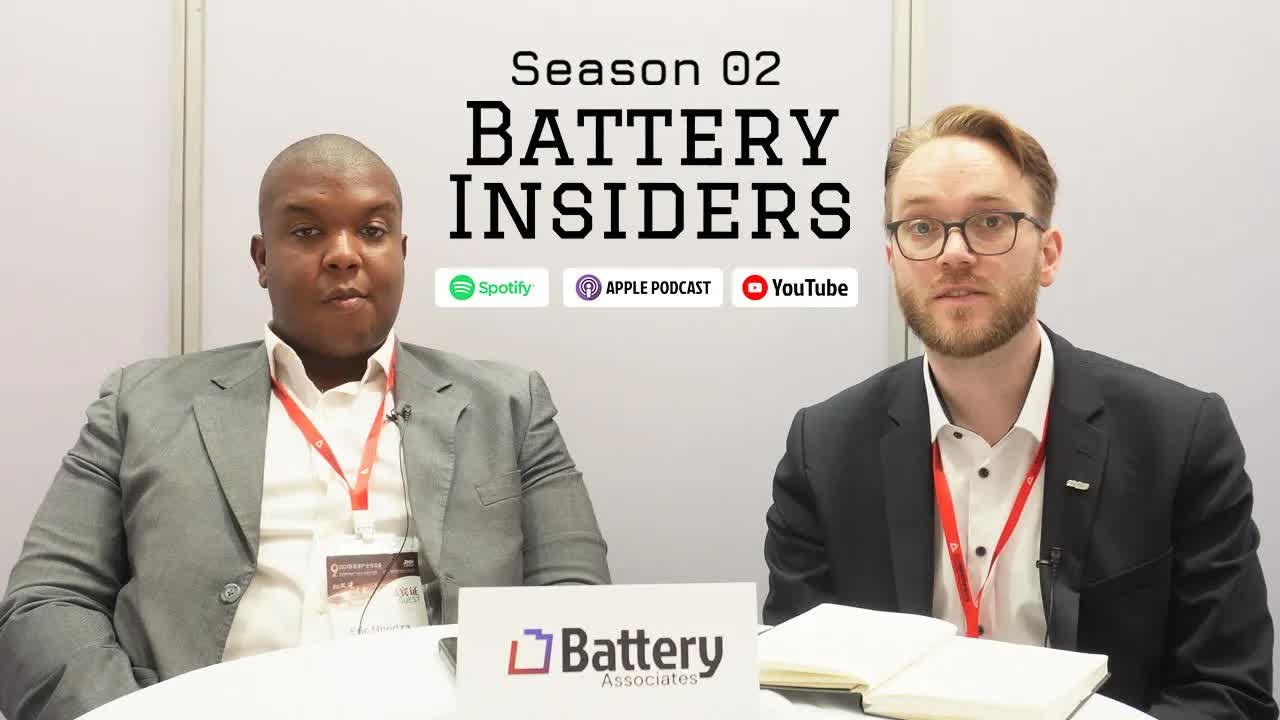
Eric Nhodza
Secretary-General, Lithium Association of Zimbabwe
The Lithium Association of Zimbabwe represents lithium producers in the country and connects investors with mines and processing sites.
Recorded in China, at the CLNB conference hosted by Shanghai Metals Market
What this episode covers
The rule Eric keeps returning to is simple: anyone who wants to mine lithium in Zimbabwe now has to submit plans for a processing plant capable of taking material up to battery grade. The call came from the Minister of Finance towards the end of last year, and he says enforcement began in March. It sits alongside an export ban on unprocessed material, with an allowance for producers to export a set portion of ore or concentrate within a defined window once their plant plans are in. The response from the major players, most of them Chinese companies, has been positive so far.
Behind the policy is a deliberate reading of other resource economies. Eric says the government has looked at Chile and Australia and drawn a lesson from them, and that the mission is to make sure Zimbabweans are the ultimate beneficiaries of the lithium found in the country. That means internalising as much of the chain as possible, from production through processing to battery grade material. On the incentive side he lists tax incentives, rebates and rules on money remittances, all published and available on government websites, with the association able to help compile the information for anyone who asks.
The market picture he gives is unusual. Zimbabwe holds the sixth largest lithium reserves in the world and the largest in Africa, and if they were fully exploited he says the country could supply 20% of current business-as-usual global demand. Locally the market splits in two: around 13 or 14 major mining conglomerates, with a fifteenth expected, holding roughly 20% of the market, and small to medium scale miners holding the other 80%. The deposits are hard rock, mainly spodumene and lepidolite, arranged in a U-shaped belt with occurrences running east to west.
Mining conditions are easier than the alternatives elsewhere. Most operations are open cast and shallow, five to eight metres down to granitic bedrock, with the lithium seam just beneath it running for hundreds of metres and typically five to eight metres wide. Two or three machines, he says, and you are good to go. Processing has been thinner: with the old export threshold at 3% and most product between 1% and 2.8%, the work was sorting, crushing and bagging. Two or three players now make concentrate at 4% and up to 6% or 7%, and a new plant is going up 60 to 70 kilometres from Harare, sourcing from miners within a 50 to 60 kilometre radius.
His main frustration is who is actually buying. Eric estimates 60% to 70% of people purchasing Zimbabwean lithium are not end consumers but traders, and often not even traders so much as speculators. That leaves small and medium miners, and some of the majors, struggling to export while manufacturers who genuinely need the material sit at the other end of a disconnect. He thinks the fix is information and direct contact rather than more policy, and says the same problem shows up in Nigeria, Mozambique and the DRC.
He closes with an invitation and a correction. Most of the calls he takes come from someone in an office in New York asking about the lithium ban in Zimbabwe, and his answer is that there is no lithium ban in Zimbabwe. What is needed now, on his account, is willingness from investors to get on a flight, meet local people and look at the ground. The association can host visitors, take them round the major mines and the better small and medium operations, and help identify either mine investments or sites for a processing plant.
Questions from this episode
- What is Zimbabwe's lithium policy?
- Anyone applying to mine lithium must also submit plans for a processing plant that can take material up to battery grade. Eric says the call came from the Minister of Finance towards the end of last year and enforcement started in March. It works alongside an export ban on unprocessed lithium, softened by an allowance to export a certain portion of ore or concentrate within a defined period once plant plans have been submitted. The aim, in his words, is to internalise everything from production to battery grade so that Zimbabweans are the ultimate beneficiaries of the resource.
- How large are Zimbabwe's lithium reserves?
- Zimbabwe holds the sixth largest lithium reserves in the world and the largest in Africa. Eric says that if they were fully exploited, the country could supply 20% of current business-as-usual global demand. The resource is hard rock rather than brine, mainly spodumene and lepidolite, laid out in what he describes as a U-shaped lithium belt with occurrences running from east to west across the country. Domestically the market divides between roughly 13 or 14 major mining conglomerates and a much larger number of small to medium scale miners.
- Who actually controls lithium production in Zimbabwe?
- By volume the small operators do. Eric splits the market into majors and miners: the majors are the well documented conglomerates, about 13 or 14 of them with a fifteenth expected, and they hold the big mines and roughly 20% of the market. The remaining 80% sits with small to medium scale miners. That distribution matters for anyone trying to buy, because it means most of the available material comes from operators who are harder to find, harder to reach and less likely to appear in published market coverage.
- Why is it hard for Zimbabwean miners to sell their lithium?
- Because the buyers are mostly intermediaries. Eric estimates that 60% to 70% of people coming to purchase lithium in Zimbabwe are not the end consumer: they are traders, and much of the time speculators rather than traders. Small and medium miners, and some of the majors, have found it difficult to export because their main customers were traders rather than the manufacturers who actually need the material. He describes it as a disconnect that better information and more direct connections would solve, and says Nigeria, Mozambique and the DRC face the same problem.
- What does lithium mining in Zimbabwe look like on the ground?
- Shallow and mostly open cast. Eric describes digging five to eight metres down to granitic bedrock, with the lithium seam sitting just underneath it. Those seams can run for hundreds of metres and are usually five to eight metres wide, and the geometry is much the same for spodumene and lepidolite. He says mining lithium in Zimbabwe is fairly straightforward as a result: two or three pieces of machinery and you are good to go. Historically the work done on site was sorting, crushing and bagging rather than any real processing.
- Is anyone processing lithium inside Zimbabwe?
- It is starting. Under the old rules producers needed a minimum of 3% to export, while most product ran between 1% and 2.8%, so on-site work was limited to sorting, crushing and bagging. Eric says two or three players have now come online making concentrate at 4% and up to 6% or 7%, with new entrants following. One new plant is going up 60 to 70 kilometres from Harare and will source from local miners within a 50 to 60 kilometre radius, supporting the surrounding economy by helping those miners reach capacity. He describes the climate for setting up a plant as very favourable.
Listen to this episodeWatch on YouTube
Part of Raw materials and mining
Transcript
About this transcript. Generated automatically from the recording, then corrected against a glossary of company and guest names. It has not been checked line by line. Machine transcription mis-hears technical terms, numbers and names, so treat any figure here as a prompt to check the recording rather than a quotation of record. Spotted something wrong? Tell us.
0:00Introduction
Dr Simon Engelke
0:00And welcome everyone. Thank you so much for joining us for the Battery Insiders podcast here live from China, from Chuzhu, at the CLNB from SMM Shanghai Metals Markets. I'm very excited of Eric with us today. I was also presenting earlier. Eric is from the Lithium Association of Zimbabwe. We appreciate you being here. Thank you. Thank you for having me. So let's say we start on a bit like, what's the vision and mission of Zimbabwe related to batteries?
Eric Nhodza
0:35Well, the government of Zimbabwe has been very clear. They've learned the lessons of previous economies that have had large reserves, such as your Chile, such as your Australia. And the mission and vision is to ensure that the Zimbabweans are the ultimate benefactors of the lithium that we have discovered. So what they're saying is, look, let's do our best to internalize everything, which means that from production to processing, all the way to battery grade, it must be done locally. And I think towards the end of last year, there was a call by the Minister of Finance to say that all the major players, or anyone for that matter, who wants to come and do mining in Zimbabwe of lithium must also submit plans for a plant, a processing plant that can do up to battery grade. So that has started to be enforced, I think, since March of this year. It's a bit of a process, but they're getting there. And there are positive responses so far by most of the major players, which are the Chinese companies.
2:05Government policy, incentives and the export ban
Dr Simon Engelke
2:05the Chinese companies. Excellent. What are maybe some of the recent government policies which are published, which support the battery industry in Zimbabwe?
Eric Nhodza
2:14Well, so far, there are a couple of incentives. And a lot of the players are very much keen on tapping into those. Obviously, we know that there's been the export ban. But apart from the ban, there's also an allowance within a certain period of time. For people to be allowed to export a certain portion of the ore or the concentrate, whichever that they feel is necessary. Then they have to have obviously submitted their plans for the processing plant, either to do concentrate or up to battery grade. So there are a lot of things that are still need to be fine tuned. But in terms of tax incentives, in terms of rebates, in terms of money remittances, there are a lot of policies that are there. And anyone can actually go on the various websites and get that information. Or if they would like to get assistance, we can assist them to compile all the information.
Dr Simon Engelke
3:33Brilliant. Thank you for that. And then if you look at, and you already touched on this a bit before, right, from the vision, I mean, Africa has a lot of critical minerals. It's very known for that. But usually, you know, they're often exported, right, and processed somewhere else. And there's a bit less maybe value addition happening in the countries itself. So what are maybe some of your thoughts? You know, how can the government change that? Or what how can the government, what's the view from the government on that? You already touched on this a bit. And yeah, you know, how do you want to bring maybe more other companies to for additional value steps in the battery chain to Zimbabwe?
4:06Traders, speculators and the missing buyers
Eric Nhodza
4:06I think, I think, I think, if I speak on the part of the Zimbabwean government. So far, what they've done has created a conducive environment. What needs to happen now is just a willingness from investors to actually come on the ground. Because what has been happening, especially in Zimbabwe, is that I think 60 or 70% of the people who come and purchase lithium are actually not the end consumer. They are traders. And most of the time, they're not even traders, they're speculators. So what that means is, for example, right now, you have the small to medium scale miners that we are dealing with, who are facing challenges to export, and some of even the major players. Why? It's because most of the major customers were traders, and not the consumers here. But you have this disconnect, but you have this disconnect, because now you come here, and then you find all these manufacturers who actually need the product, despite there being surplus and all this. So I think there's just a need for knowledge and information dissemination, because I think 80% of the actual market is run by the small to medium scale. Miners. So yeah, I think if we have more of these conversations and more of these connections, there should be a big change. And I've always said this, that the problems that you see in Zimbabwe is the same for Nigeria, it's the same for Mozambique, it's the same for DRC. So this also applies to all those other markets.
6:02Reserves, majors and small scale miners
Dr Simon Engelke
6:03Maybe if you could share a bit more about lithium in Zimbabwe, because I think often people, when they hear lithium, when we think about Chile, it was the brines, or think about Australia, it was the hard rock. So what's the situation for lithium in Zimbabwe? Like, what kind of form is it? How big of the volumes are we talking about? Maybe could you share a bit more on that?
Eric Nhodza
6:23Sure. I'm sure, as you know, the stats have been put out that Zimbabwe is the sixth largest, holds the sixth largest reserves in the world. It's the first in Africa. If those are fully exploited, we can supply 20% of the current business as usual demand in the world. But when you go in the local market, I would say us on the ground, we can break down the market into two. So you have your majors and your miners. Your majors are your big time mining conglomerates, the ones that have been well documented. I think they're about 13 or 14 big players now. And soon there'll be a 15th big player, I think. And they hold the big mines. But when you look at it, like I was saying, you then have the miners, which is your small to medium scale guys who are mining. And if we're talking in percentages, the majors hold about 20% and the miners about 80%. Lithium in Zimbabwe, so far, they're about, well, the most common are two. It's mainly a hard rock, lithium. So you have your spodumene and your lepidolite. And the occurrences so far are moving from east to west.
8:01Open cast geology and export volumes
Eric Nhodza
8:01So we have a bit of a U-shaped lithium belt in Zimbabwe. Well, that was known. And most of the capacities, they vary between the many players. But I think last year, we managed to export about 3,400 metric tons of lithium from Zimbabwe. But there is room for a bit more. Most of the mining right now that's been done in Zimbabwe, it's open-cast mining. And the beauty about it is that it's shallow. So you're looking at maybe five to eight meter depths. And then you're getting to, most of the time, granitic bedrock. Just underneath it, you then find your lithium seam. Your lithium seam can run for hundreds of meters. And it's usually between five and eight meters wide. And it's the same for spodumene. It's the same for lepidolite. So it's fairly easy to mine lithium in Zimbabwe. You need two or three machineries and you're good to go.
Dr Simon Engelke
9:15Then just from a processing, right? I know from hard work in Australia, like roasting and this very energy-intense process is a lot done in China. There's a great book called Volt Rush. Probably many of your listeners heard me talk about this before. So maybe if you could share a bit more about the opportunity to localize more. Do you know of projects where they're doing also the refining of lithium in Zimbabwe? Is there interest? Is there movement there? You mentioned people want that, but is there anything happening already?
Eric Nhodza
9:46Yes, yes. What had happened was before the government policy was saying that for you to export, you need to have a minimum of 3% quality.
10:00Concentrate grades and a new plant near Harare
Eric Nhodza
10:02So most of the product is ranging between 1% and maybe 2.8%. So there's not really any processing that needs to happen there. Most of them, it was just your sorting, you're crushing, and then you're bagging. Some players, I think two or three of them now have come online and they've started making concentrate, doing from 4% all the way up to 6%, 7%. And there are new players coming in. Why? Because they've since realized what I was saying, that they are a lot more small-scale players. So what you have is there's a new plant that's coming up close to Harare. I think it's about 60, 70 kilometers from Harare. And that plant is going to be sourcing from local miners within a 50, 60 kilometer radius. So what they have is just the plant. And they're going to be supporting the local economy by ensuring all these miners can actually meet their capacity. I'm not sure on the specs for that particular one. But so far, the climate is very, very much favorable for someone who wants to come in and set up a processing plant in Zimbabwe.
Dr Simon Engelke
11:25Great. Now, exciting to hear that. And maybe kind of as a final question, do you have any kind of final thoughts about the battery industry and maybe also what the government of Zimbabwe can do to support that further?
Eric Nhodza
11:37I think, like I said before, the government of Zimbabwe has done quite a lot in terms of policy. Yes, obviously, they're still learning a lot of things along the way. But so far, the environment is very much favorable. What needs to happen is just a willingness from the investors to say, you know what, I'm just going to take a flight to Zimbabwe, get to meet the locals, get to see some of the places.
12:08An open invitation to visit Zimbabwe
Eric Nhodza
12:09And we're in a position to host anyone who wants to come over and actually go on the ground. Most of the time when I receive calls, it's from someone sitting in an office in New York, and they're asking me about the lithium ban in Zimbabwe. And I tell them there's no lithium ban in Zimbabwe. And he's saying, well, I've read. And I'm saying, well, I'm on the ground and I'm telling you. And I always tell them, feel free to come over. We are very much able to host. We're a very friendly nation. We love to have visitors come over. So anyone is welcome to hop on a flight, come to Zimbabwe. We know of all the major mines. We know of all the good small to medium scale players. We can take them around. They can see if they want to look at possible mine investments. We can also help them with that. If they want possible locations for setting up a processing plant, we can assist them on all of that as well.
Dr Simon Engelke
13:13I mean, that sounds like an amazing invitation. So, I mean, I can offer anybody interested, get in touch with me and I will connect you with you or contact them directly, Eric. And yeah, I think hopefully you get some more visitors there. I really want to thank you, Eric, for spending your time with us, giving us some of this perspective and insights into Zimbabwe, especially on lithium and batteries. I also want to thank all of you for listening. I also want to thank Shanghai Metals Markets to host us here at this exciting event in China. And yeah, hopefully see you very soon. If you're interested in more of these episodes, feel free to go on batteryinsiders.com and subscribe there. Also subscribe on YouTube and Spotify and Apple Podcasts, anywhere you listen to your podcasts. With this, thanks so much again, Eric. Thank you. Thank you for having me. All right.