
Episode 144 · 21 September 2024 · 00:12:18
The nickel is there, the processing is not yet
Philippines' Vision for Green Energy & Battery Industry
The Philippines' Glenn Penaranda on scrapping tariffs for two- and three-wheeled EVs, the two HPAL plants running at home, and why most of the country's nickel still leaves as ore.
Read the article: The nickel is there, the processing is not yet
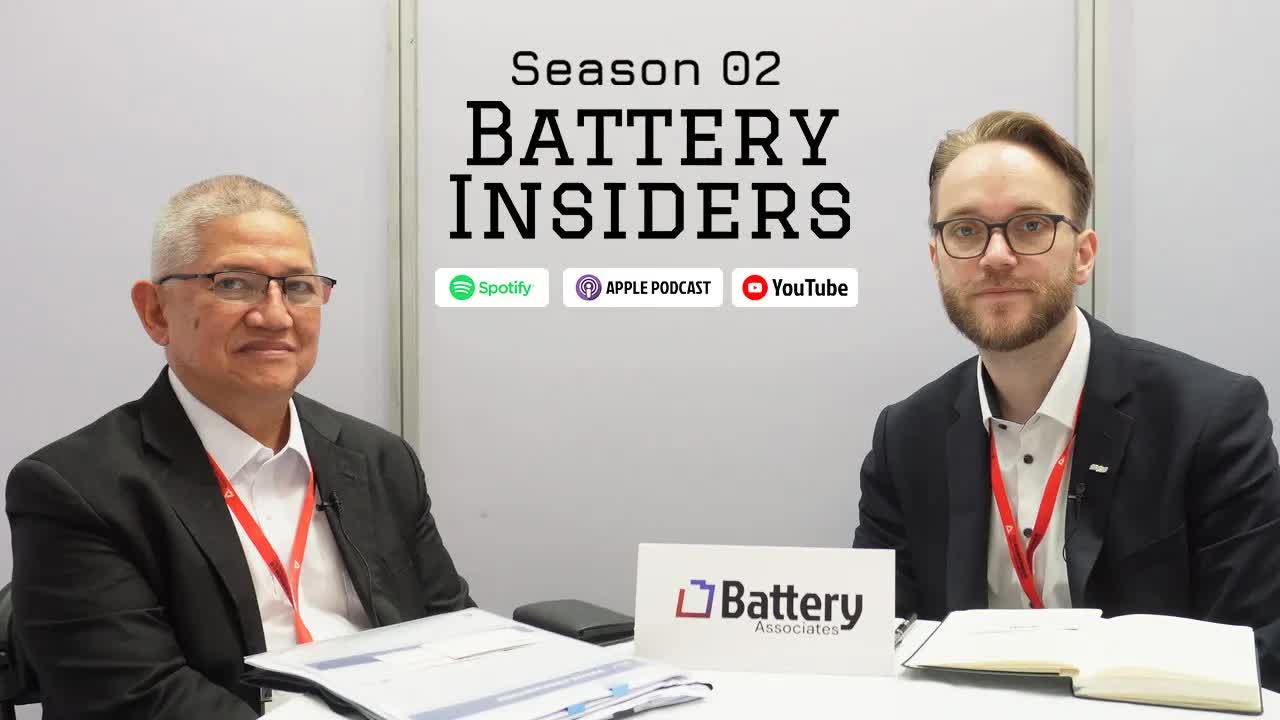
Glenn Penaranda
Commercial Counsellor, Philippine Trade and Investment Center
The Philippine Trade and Investment Centers are the overseas trade and investment offices of the Philippine government, with around 30 of them in major capitals. Penaranda's office is a first point of contact for companies looking at Philippine projects, and passes enquiries to the Board of Investments at home.
Recorded in The CLNB conference near Shanghai, China
What this episode covers
The Philippines cut tariffs on four-wheeled electric vehicles last year, and about two weeks before this recording it removed them on two- and three-wheeled vehicles as well. Charging stations are covered too. Glenn Penaranda describes the measure as a five-year window with a simple logic behind it: cheaper vehicles get people buying, a fleet builds, and volume is what would eventually make local battery manufacturing worth doing. The removal applies to imports from anywhere. Chinese manufacturers are already selling hard into the market, and he expects charging infrastructure suppliers to follow.
The offer to battery manufacturers is metal. The Philippines sits behind Indonesia as the second largest nickel producer, and Penaranda says shipments to China cover around 60% of that country's requirement. Most of it still leaves as ore. Two HPAL facilities operate locally, so some processed material is already exported, but the stated ambition is precursor material made at home. Reserves are large enough that the government wants more exploration, and it is courting partners beyond China: American, European, Australian, Canadian, Japanese and Korean companies have all been approached.
Two policy changes sit behind the pitch. Foreign equity rules for renewable energy were relaxed, particularly for solar and wind, and Penaranda says the biggest projects to arrive in the country last year came in those sectors, mostly from European companies. Chinese firms were in the conversation too, strong on equipment, with an interest in assembling near the farms and creating work for the ports that would serve them. Manufacturing has an incentive scheme allowing full foreign ownership. Mining permitting, which he concedes can drag, is being simplified so exploration can start sooner.
For a company wanting to move, the route in runs through one of roughly 30 Philippine Trade and Investment Centers in key capitals. They take the first enquiry and link it to the Board of Investments back in the Philippines, which walks companies through their due diligence. If a firm decides to go further, the overseas offices help with visas, an itinerary and the visit itself. Penaranda describes the arrangement as a front line abroad with a full support team at home. Alongside that, the government is building a minerals roadmap with the industry.
His closing argument is about added value rather than volume. The Philippines is one of the most mineralised countries in the world, he says, and the case for promoting the industry now is to keep some of the processing, and the benefit, inside the country and in the communities near the mines. The wider framing puts batteries between two other commitments: a larger renewable share in the electricity mix, where storage is what makes variable generation manageable, and a shift towards green mobility. He wants partners from anywhere in the world to work on it with them.
Questions from this episode
- Does the Philippines charge tariffs on imported electric vehicles?
- Not at the moment. Tariffs on four-wheeled EVs were reduced last year, and roughly two weeks before this recording the government removed them on two- and three-wheeled vehicles too. Charging stations are also covered. Penaranda describes it as a five-year window rather than a permanent change. It applies to imports from anywhere in the world rather than to China alone, although Chinese manufacturers are already active and aggressive in the market. The reasoning he gives is that cheaper vehicles build a domestic fleet, and a fleet is what would make local battery manufacturing a viable proposition.
- Why does the Philippines matter for battery raw materials?
- Nickel above all, with copper and cobalt alongside it. The Philippines is the second largest nickel producer after Indonesia, and Penaranda says its exports to China account for around 60% of Chinese requirements. Reserves are still large, which is why the government is pushing for more exploration. The weakness is the shape of the trade: much of the production leaves as ore rather than processed material. Two HPAL facilities do operate in the country, and the aim now is to move further along the chain, into the precursor materials that feed cell manufacturing.
- Can foreign companies own operations in the Philippines outright?
- In manufacturing, yes. Penaranda points to an incentive scheme that allows 100% foreign ownership for manufacturing. In renewable energy, the foreign equity policy was relaxed for solar and wind in particular, and he credits that change with attracting the largest projects the country saw last year, mainly from European investors. Chinese companies were also in discussions, since they are strong on equipment and see sense in assembling close to the wind and solar farms, which would give work to the port facilities serving those sites.
- How does a foreign company start an investment conversation with the Philippines?
- Through a Philippine Trade and Investment Center. There are about 30 of them in key capitals, placed in the countries where the Philippines does most of its business, and they are the first point of contact for anyone enquiring about the sector. Once interest is registered, the office links the company to the Board of Investments back in the Philippines, which handles the company through its due diligence. If the company decides to proceed, the overseas office can arrange visas, prepare an itinerary and organise the visit.
- What is being done about slow mining permits in the Philippines?
- Penaranda acknowledges the problem plainly: permitting for mining projects can take time. Initiatives are under way to simplify and streamline the procedures, and he says the government is serious about it, on the grounds that companies need to move quickly on exploration and get a mine ready in a shorter period. He gives no timeline for the reform. Running alongside it is a roadmap being developed with the industry, meant to give investors a clearer view of where the country wants exploration and processing to go.
- Which countries is the Philippines trying to attract into its minerals sector?
- China is the largest existing customer and Chinese EV companies are already in the market, but the effort is deliberately broader. Penaranda lists American, European, Australian, Canadian, Japanese and Korean companies as parties the government has been talking to about exploration, mining and processing in the country. At government level he mentions work with the US, the EU, Japan and Australia. The argument he makes is that those countries hold both the technology and the end markets for Philippine material, and that the domestic industry is open to partnering with them.
Listen to this episodeWatch on YouTube
Part of Raw materials and mining
Transcript
About this transcript. Generated automatically from the recording, then corrected against a glossary of company and guest names. It has not been checked line by line. Machine transcription mis-hears technical terms, numbers and names, so treat any figure here as a prompt to check the recording rather than a quotation of record. Spotted something wrong? Tell us.
0:00Introduction
Dr Simon Engelke
0:00And welcome everyone. Thank you so much for joining us for the Battery Insiders podcast here live not too far from Shanghai in China at the CLNB conference from Shanghai Metals Markets. I'm very delighted to have Glenn with us today. Glenn is the Consul Commercial at the Philippine Trade and Investment Center from the Philippine government. Yes. Thank you so much for joining us.
Glenn Penaranda
0:29Thank you, Simon. Thank you also for the opportunity to share information about the Philippines.
Dr Simon Engelke
0:35Brilliant. Thank you. So let's probably get right into it. What's the Philippines' vision and how does the Philippines want to grow its battery industry?
Glenn Penaranda
0:43I'd like to discuss this in the context of the nation's intent to move towards the new energy industries, starting with renewable energy. And then, of course, with the green mobility, talking about EVs. And then, of course, batteries, which will be an important part of this new ecosystem. In short, our interest is that we have something that we can offer for battery manufacturing, and that is the availability of abundant green metals such as nickel, copper, and cobalt. So, first, in new energy, we are moving towards increasing the share of renewable energy in our energy mix. And an important part of that, especially when you have renewable energy, is to have battery energy storage systems that will ensure managing this electricity.
1:57Tariff-free EVs and the market they are meant to create
Glenn Penaranda
1:59And so that's where batteries come in. On mobility, we are also committed to really promote green mobility. Right now, we are opening up the Philippine market for tax and duty-free importation of electric vehicles. And a lot of these are coming from China. As you know, Chinese electric vehicle companies are also very aggressive. And in fact, they are in the Philippines now. In supporting the creation of this market and an ecosystem, what we have done for now is to remove the tariffs on electric vehicles and also on charging stations for the next five years. We hope that once the adoption of electric vehicles increases, then there is a scale that would hopefully make battery manufacturing a viable proposition. Lastly, on green metals for batteries, you know, the Philippines is next to Indonesia, the second largest producer of nickel, for example. For now, we export to China about... And our exports of nickel to China comes for about 60% of the requirement. What we are promoting now is that we... Because there are still a lot of reserves available, we are encouraging partners not only from China, because we're talking to Americans, to Europeans, Australians, the Canadians, the Japanese, and even Koreans to partner with us as we explore more, have more mining activity, and then hopefully do processing also in the Philippines,
3:54Precursor materials, and taking tariffs off two- and three-wheelers
Glenn Penaranda
3:55especially for precursor materials that can be used for battery. So that, in essence, is our vision for batteries, supporting our transformation for green energy and also for green mobility.
Dr Simon Engelke
4:12So all the way from the raw materials to the batteries, and then also the end-use like EVs, if you don't want to have the full value chain in the country. Just one quick thing, just to double-check. So you mentioned there's no tariffs on EVs for the next five years?
Glenn Penaranda
4:25Yes. Last year, we already reduced tariff on four-wheeled vehicles. And then for charging stations, that went for five years. But for charging stations, eight years. But about two weeks ago, we also removed the tariffs for two-wheeled and three-wheeled EV vehicles. So now we're really opening up the market. Because we feel that that will make EVs more affordable to the population. And then, of course, the charging stations have to come in and so on. So that's from anywhere in the world.
Dr Simon Engelke
5:06So everyone. Yes. Yes. So anybody now listening from around the world, I know there's a lot of companies out there producing these devices. I guess Philippines could be an attractive market, especially now with this removed tariffs for the next five years. And maybe if you could share, but you already mentioned some of these recent policies. But are there any other policies we should know about, which the government released for the battery industry, or which are impacting the battery industry? Yes.
Glenn Penaranda
5:31As we implement these programs first for renewable energy, as for EVs, one of the things that the government did,
Dr Simon Engelke
5:39and it really opened up a lot of interest,
Glenn Penaranda
5:42was to relax the foreign equity policy for renewable energy, especially for solar and wind. And in fact, because of that, last year,
5:51Foreign equity in renewables, and simplifying mining permits
Glenn Penaranda
5:51the biggest projects that came to the Philippines were in these sectors. Foreign companies, especially from Europe, have come to the Philippines. There were also some, we were talking to some Chinese companies, because they're very strong also in equipment. And for the solar, for the wind farms, it makes sense for them to do some assembly near where the farms are. And it will also create opportunities for the port facilities that would service these farms. So that was, I think, a key policy that opened up the sector for foreign investors. For manufacturing, we have now in place an incentive scheme that allows 100% for manufacturing. But for policies specific for green metals, there are now ongoing initiatives to simplify and streamline the procedures, because especially in the mining projects, the permitting process can take some time. So the government is very serious in simplifying this, in streamlining this, noting that we have to enable companies to move very quickly and do exploration and prepare for the mines in a shorter time. So those are the supporting policies that we have in place now.
Dr Simon Engelke
7:22Excellent. And then if you maybe go next, because maybe now some companies are curious. So if there's a company now who wants to invest in the Philippines, like first, what should they do? Who should they contact? And also maybe if you could provide a bit of a step-by-step, you know, for our audience, how they should approach that.
Glenn Penaranda
7:39Yes. My office is one of the about 30 Philippine trade and investment centers
7:47How an investor approaches the Philippines
Glenn Penaranda
7:47in key capitals in the world, particularly in the top countries where we have business. So most of the major countries in the world, and we have an office there called the Philippine Trade and Investment Center. Usually, for example, if it is in London, we have London at DTI. It's very similar to UK DTI. DTI.gov.ph. So we have these offices all over the world, and we are the first point of contact where people may inquire about opportunities in this sector. Once we know of this interest, we will link them with our board of investments back in the Philippines who will handhold these companies as they do their due diligence. Later on, if they decide to go, our offices abroad can help them with the visas and they prepare an itinerary and help them organize a visit. We have a system in place where, with us in the front line, we have a full team back in the Philippines who will support and assist investors as they indicate interest there.
Dr Simon Engelke
9:06Excellent. So there's a lot of touch points, which is really helpful. And then maybe also if we could kind of look a bit more on the industry, right? Like from the Philippines, is it more about looking at upstream right now? Is it more downstream in the middle of it? And kind of what's the goal maybe for really creating this inclusive battery supply chain in your country?
Glenn Penaranda
9:25I think the biggest work will be on, again, on where we think our biggest value proposition is, is in the green metals. Right now, while we are able to export already some process,
9:43Ore exports, HPAL plants and a minerals roadmap
Glenn Penaranda
9:44because there are two H-PAL facilities already in the Philippines, but a lot of our nickel production is still exported as ore. So we are working with the industry to develop a roadmap that will be useful also for investors. At the moment, there's a lot of initiative on introducing potential partners to companies who have access to the resources, so that then at least there are some engagements already. And we work also with many entities, internationally with the US, with EU, with Japan and Australia, to see how we can work together. We believe that many of these countries have the technology and also the market for our products. So we are very open, and our industry is also very open to partner with them.
Dr Simon Engelke
10:45Excellent. Maybe as a final question, what are some of your final thoughts about the batch industry and how the Philippine government can support this industry?
Glenn Penaranda
10:52Yes. The Philippines is one of the most mineralized countries in the world, and I think it's about time that we really promote the development of this industry, not only for extracting the minerals, but also to really develop value-adding so that our country will benefit and that more people also will benefit, including the communities where they are. It may be our contribution to the global transformation for new energy, but we really want to be part of it. And so we would like to work with partners from all over the world who would like to, in a way, access this resource
Dr Simon Engelke
11:41Fantastic. Now, Glenn, I really want to appreciate you and for spending your time with us and sharing some insights on the Philippines' battery industry. And I also want to thank you all for listening to us, and I also want to thank Shanghai Metals Markets to have us here at this exciting event. And yeah, if you're interested in more of these episodes, please go on batteryinsiders.com or follow us on YouTube or Spotify, Apple Podcasts or anywhere you listen to your podcasts. And yeah, for now, Glenn, thank you so much.
Glenn Penaranda
12:06Thank you very much. Hopefully see you soon. All the best. Yes. Take care, bye. Thank you.