
Episode 145 · 28 September 2024 · 00:18:38
The mine takes five years, the plant takes two
Australia's Role in the Battery Supply Chain: Challenges & Future
An Australian resources specialist on tripartite offtake deals that put end users next to miners, the timing gap between building a mine and building a plant, and Benchmark's count of 74 new lithium mines needed by 2050.
Read the article: The mine takes five years, the plant takes two
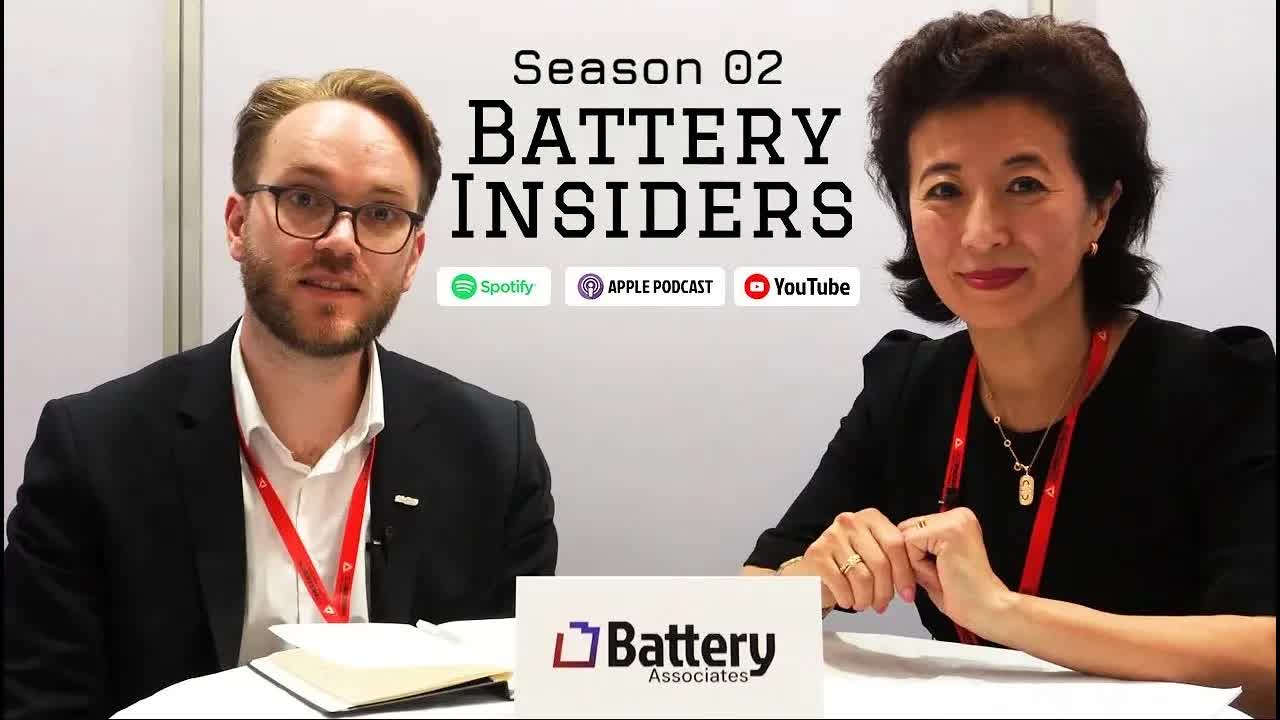
Gloria Zhang
Director, Global Resource Connect Asia
She works on the Australian upstream side, with ASX-listed exploration companies and small and mid-cap resource groups, spent years in rare earths before moving to lithium, and was in China for the first time in four or five years to see what the midstream and downstream now look like.
Recorded in The CLNB conference in China, run by Shanghai Metals Markets
What this episode covers
Developing a mine to the point where it can feed a supply chain takes about five years, and Gloria says the downstream projects she has been looking at in China get built in two to seven. That gap is what she keeps returning to. Australian explorers burn cash proving resources, every drilling programme costs real money in labour and equipment, and the capital has to be raised again and again from the ASX and from institutions in Europe and the United States. Processing capacity, meanwhile, arrives quickly and supply runs ahead of demand.
Australia has close to 380 operating mines and about 19 commodities she counts as genuinely rich, lithium, rare earths, nickel, cobalt and copper among them. Her own background is rare earths before lithium, and she is unsentimental about both price cycles. Lithium has fallen a long way, but she points to five and ten year growth rates that are still above average and argues the demand case has not changed. The market overshot because everyone rushed in at once. Rare earths, she notes, move on policy and quotas as much as on the market.
The commercial structure is changing underneath all of this. The old pattern was sequential and polite: each level of the chain sold to the level below it, and nobody skipped a step. Over the past five or six years end users have gone straight to the miners, signing offtake agreements to secure resource, often with backing from their own governments. Companies in the middle become toll processors. Some deals are now tripartite, end user, supplier and processor together, which she likes because pricing becomes visible to everyone and a spike in raw material costs does not land as a surprise.
Australia has very little downstream, and she is direct about why. The manufacturing base went away. Over the past 10 or 15 years the country became a raw material exporter, Holden stopped building cars, and she has met exactly one company in South Australia attempting EV manufacturing, at small scale. Midstream and downstream processing moved to China and elsewhere, and the finished products come back as imports. Governments are now trying to work out how to rebuild some of it at home, which she treats as an open question rather than a settled plan.
On ESG she makes an argument about record-keeping. Australian states run tenement and geological data systems she rates as the best in the world, shared with Geoscience Australia, and open enough that anyone can search online for an available tenement. Environmental management was already strict, so most of the substance was in place before the acronym arrived. What changed is that it is now audited, funds are built around it, and investors will refuse companies that have not committed. She thinks the term is overused, says so cheerfully, and defends what sits behind it anyway.
The figures she quotes come from Benchmark, presented at a conference in Singapore: reaching 2050 needs something like 74 new lithium mines, 62 cobalt mines and 72 nickel mines, and energy storage needs roughly $582 billion of investment between 2020 and 2030, around half of it upstream. That will not come from equity markets alone. She points to Australian government investment in projects including Liontown Resources, to Korean and German bank funding tied to offtake conditions and to a project benefiting the host country's economy, to export credit agencies, and to Thailand's EV 3.5 policy.
Questions from this episode
- Why does Australia have so little battery manufacturing?
- Because the manufacturing base disappeared before the battery industry arrived. Gloria says that over the past 10 or 15 years Australia stopped making things and became a raw material country. Holden, one of the big domestic carmakers, is gone. She has met one company in South Australia trying to build EVs, at small scale. Midstream and downstream processing went to China and other markets, and finished products are imported back. Governments have started thinking about rebuilding some manufacturing capacity, but she describes that as recognition of the gap rather than a solution to it.
- What critical minerals does Australia actually produce?
- Around 380 mines are operating, across roughly 19 commodities she considers Australia rich in. Lithium is the best known, mostly hard rock, and the list also covers rare earths, nickel, cobalt and copper, which she notes all end up in an EV in one form or another. Work continues on exploration and on defining the size of deposits so they can be brought to international partners. She puts Australia alongside Canada and the United States as resource countries, and mentions Vietnam as the second largest rare earth resource holder.
- Is the fall in the lithium price a problem for Australian miners?
- It hurts, but Gloria is not pessimistic. Her point is that lithium looks bad only against the peak: measured over five or ten years the growth is still above average, so the market has not fallen off a cliff. The correction came from expectations rather than from demand, with everyone jumping in at once and driving oversupply. The volume going into EVs and the role lithium plays have not changed. She draws a comparison with rare earths, another market she worked in, where prices swing high and low and policy and quotas do much of the work.
- What is a tripartite offtake arrangement, and why do they happen?
- It is a deal signed by the end user, the resource supplier and the processing company together, rather than in a chain of separate bilateral contracts. Gloria says end users started going directly to upstream companies in the past five or six years to secure supply, sometimes with funding from their own governments, which left the mid-tier businesses as toll processors. Putting all three in one agreement makes pricing transparent, so nobody is guessing what the other party paid. It also spreads risk: if raw material prices climb sharply, the pressure downstream is visible and can be negotiated.
- How much investment does the battery supply chain need?
- Gloria quotes Benchmark figures presented at a Singapore conference: to achieve the 2050 energy transition the world needs roughly 74 new lithium mines, 62 cobalt mines and 72 nickel mines. On the money side, energy storage needs around $582 billion of investment between 2020 and 2030, with about half of it going upstream. She argues that retail and institutional equity markets cannot raise that alone, which is why government money, export credit agencies and bank funding attached to offtake conditions matter more than they used to.
- How does ESG affect investment in Australian mining projects?
- Australian projects already sit inside strict environmental and tenement management, with state data systems Gloria rates as the best in the world and a permit required for water, environment, rehabilitation, plants and animals. So ESG has mostly formalised what was already practice. The change is in audit and capital: companies now run ESG audits, fund managers have set up dedicated ESG funds, and investors say plainly that they will not put money into companies without a commitment. She thinks the term has been overused to the point of parody, and still treats the underlying discipline as necessary.
Listen to this episodeWatch on YouTube
Part of Raw materials and mining
Transcript
About this transcript. Generated automatically from the recording, then corrected against a glossary of company and guest names. It has not been checked line by line. Machine transcription mis-hears technical terms, numbers and names, so treat any figure here as a prompt to check the recording rather than a quotation of record. Spotted something wrong? Tell us.
0:00Introduction
Dr Simon Engelke
0:00And welcome everyone. Thank you so much for joining us for the Battery Insiders podcast here live from China. We have the CLNB from Shanghai Metals Markets and I'm very excited to have Gloria with us. Thank you, Simon, for having me. Thank you. And now we want to talk about the Australian battery value chain and the battery market. So if you maybe could share with us, our listeners, what are we looking at? Is it more downstream, upstream, midstream? What's the Australian battery market supply chain looking
Gloria Zhang
0:34like? Well, Australian battery chain, what I'm familiar with is mostly downstream. That means the resources company listed and the exploration, junior exploration company, mid-caps, small-caps, and they're trying to find the treasure under the ground. Obviously, Australia is a very large resource country. So there's a great potential. And so for them, it's working very hard to raise capital to prove the resources that can bring it to the world, which is the upstream of supply chain. The reason I'm here in China is trying to, after four years or five years away from China, trying to come here to understand more about mid and downstream, what's happening in this part of the market.
Dr Simon Engelke
1:14Fascinating. And if you then think about vertical integration, of course, a big topic of people are talking about and the strategies, especially now from the Australian companies as well, where we know now you have strong background and upstream, what are people looking most for? Is it like foreign capital? Is it more for technology partners?
Gloria Zhang
1:31Oh, it's a bit of both, really, because renewable energy, critical mineral, and carbon zero, all the commitment is global. So every country is made that commitment, which is very exciting because normally is one country committed to something, this is actually global. But it's also a revolution. I think we're going to enter a new revolution era. So for the Australian company, we are looking at investment and looking at technology R&D. So because, for example, in terms
2:02Offtakes, toll processing and tripartite deals
Gloria Zhang
2:03of storage, there's a lot of mismatch at the moment because the technology is not in place, make it quite hard to be affordable for a lot of company and people. And in time, if you're going to R&D, government need to put a funding in there, a resource company looking for investment so they can actually drill. Each time we drill a hole in Australia, they cost a lot of money. So the ASX is helping the company to raise money. And it's all happening in the market. Does that answer your question?
Dr Simon Engelke
2:35Yeah, I think so. I mean, but on the technology partner side as well?
Gloria Zhang
2:39Yes. And they are upstream. In the old traditional pattern, there's company talking to one level down. If I'm upstream, I'm talking to my customer. And then as we go, out of respect, they don't jump the steps. But what currently happened in the last five to six years, I would say at least, is end-user companies start talking to upstream companies to secure the resources. So they sign an offtake agreement, although they are the far end EV cars and they're probably funded by government of their country and they secure the resource. They feel safe. They can sleep now. At the meantime, all the company in between, like a mid-tier, they become a toll processing or processing company. In some circumstances, they even do tri-by-tie arrangement. That means end-user, supplier, and processing company. So everyone is quite transparent. So there's no pricing secrets like what you're selling me for. Everything's quite understand. The good thing with that is a risk mitigation because if the raw material price go too high, then it put a lot of pressure in downstream. If it's a tripartite arrangement, everything's quite transparent. People understand what's happening. There might be a negotiation happening to make it happen. Technology is very important because without the technology in new R&D, we can't get the EV car affordable to the end user.
3:59What Australia has in the ground
Gloria Zhang
4:00Because if it's too expensive, what's happening in that process that you can't promote the EV car. Look at China. China is probably one of the good examples in terms of promoting the EV car amongst normal people. But pricing in the EV car in other countries is a lot higher, which has put the pressure on the EV car makers because they want to promote it and encourage people to convert from the traditional way into the new way. How you get people to convert, to educate them, and also make it
Dr Simon Engelke
4:28affordable for them. Fantastic. And Yori, maybe also I think just for our listeners, I realize maybe not everyone is so much familiar with what are the materials you can actually get from Australia. Of course, hard rock, lithium is very known for, but maybe if you can expand a bit on the upstream side, what do we get? Why is Australia so important from an upstream perspective?
Gloria Zhang
4:45Oh, that's a very good question. And Australia is a resource country. The other country I can think of is probably Canada, USA as well. And in South Asia, there's a growing number of countries identified resources. For example, Vietnam is the second largest rare earth resource country. So who would have thought, but it's amazing. Currently, we had about 380, close to 380 operating mines. And the commodity that including lithium, rare earth, nickel, cobalt, and everything goes in EV car, even down to like copper that can go into as well. So about 19 commodities that we consider resources that are very rich in Australia. We're trying to get them explored and having a definition on the size of the mine that we can engage in with the world. I think we're interesting. And of course,
Dr Simon Engelke
5:39a big mining history also with Australia. So I think that's also helpful. We see it, we might go to permitting later. So, and I think one thing also you just touched on, I think on this price transparency, because one thing we also have seen, right, the difference between price and cost. Also lithium, we have seen the crazy spikes, you know, the last years. And luckily, a lot of our customers have
5:57The lithium price cycle, and why she is not pessimistic
Dr Simon Engelke
5:58been protected because they had long agreements. So they didn't suffer from that. But now, of course, the price went down a lot again. Yes. But of course, these kind of, you know, tumultuous times have been difficult for some of the players. Yeah. They haven't been so well protected with agreements.
Gloria Zhang
6:11Yeah. Rear is a commodity I used to work in for a long time before I moved to lithium. And both markets have a similar, at once upon a time, it's very high. The other part of time is low. Lithium now is more market sort of controlled. And rear is a lot of them is policy and also the quota. But in terms of that, if you, I wouldn't be too pessimistic about lithium, because if you look at the five, 10 years of growth history, on average, we are still above average. So it's not totally fall off the cliff. And there's no opportunities. It's just because we're so used to the high. Now we see the low. We're not, we're not used to it. The good thing with low is you can only fall so far, then you go up again. When lithium price goes down, we also self-reflecting what's going wrong. Is it going to be the end of the world? But if you look at the needs and demand for lithium, what's going to the EV car, the lithium market, nothing has changed when the good time and bad time. That means it's still the future. It's just probably that supply and demand because we expectation is so high. Everyone jumping to do it. It is oversupply and drive the price down. But in terms of the lithium, the future and demand of it, and the role that lithium can play in the market, it hasn't changed.
Dr Simon Engelke
7:27I think it's a good point there. And if you kind of look also a bit more on the investment, right? And what kind of what you need in terms of investments, looking at these projects, of course, we know they're quite capex intensive, right? Like big projects. Yeah. Business payback periods can be quite long for some of them. And commissioning, right? These kind of topics, you're looking at seven to 10 years. So what are maybe some of your thoughts on this industry? Like, is it difficult to get money for this? Or is it?
Gloria Zhang
7:50Quite difficult. I'm going to say in the last, I can only say in the last three to five years,
7:54Raising capital and the upstream timing gap
Gloria Zhang
7:55in Australia, we haven't been badly impacted, especially in WA, which is a capital tip of resources. We didn't have a very bad lockdown, but it is because the capital raising for project is very high. In most of the companies, the exploration stage, that means you need to drill a lot of holes, you do a lot of activities. Each activity costs a lot of money. One is a labor cost. Another one is the equipment, everything goes into it. So every time we say, let's do a drill 10 holes, 15 holes, that's a lot of money. We're burning cash. In the meantime, raising money in the last few years, mainly from the Australian market, obviously through the institutional investors, we raise money from Europe, from USA, but because of the way it burns the cash is really quick. And so what we are facing here is to developing a proper mining industry to have a sustainable, how many nickel mines, lithium mines and cobalt mine we need to grow to keep up with the commitment we have. There's a lot of money need to put into that. I think they talk about 200 billion in there, where this money come from. Developing a mine properly to put them into a supply chain, it takes about five years, like our fuel are basically 20 years now. They could be up to 25 years. But downstream, what I'm seeing here, a lot of development happened between two to seven years. So they can go very quickly and straight away they supply over demand. But for upstream, we are struggling because our period is longer. So I feel a bit of a mismatch here. And where the most of the money, I think it could go a bit more upstream to unleash that potential for the so the material and the supply could go into the market. Then that sort of thing hasn't quite happened yet. But it's part of the growing pain, I suppose.
Dr Simon Engelke
9:42Totally. And then, but if you talk about now upstream and downstream, and of course, there's a lot of upstream happening in Australia, but there's not so much downstream happening in
9:50How Australia lost its downstream
Dr Simon Engelke
9:50Australia, right? A lot of my friends are a bit upset. There's not enough factories, kind of production. What is kind of responsible for this gap or how this could be bridged?
Gloria Zhang
9:58A very good question. We don't have a definitive answer on that. For example, we used to have manufacturing industry. But in the last 10, 15 years, sort of, we don't even have many anymore. We just become a raw material country. And they, I think EV car, I only met one company in South Australia trying to manufacture EV car very small scale. And Holden is one of our big car manufacturers. We don't have them anymore. So we do have a lot of change in the market. And that now, over the past years, many years, we are heavily depends on China and overseas to do the meat and downstream processing. We actually, that industry sort of disappeared. Now we realize, no, we have to rebuild it. So governments start thinking about, put the thinking head on, how we got to have some of the manufacturing industry of our own. Otherwise, we always have to import it from overseas. We export the material, give it to another country like China, South Asia. Then when they bring into final product, we bring it back. That means we have a big gap in the industry, in the supply chain of our own. David
Dr Simon Engelke
10:57! Fantastic. And then, I mean, we are, spoiler alert, we're both on the panel tomorrow here. And in our prep talk, we spoke a little about ESG, which is probably something we don't have enough time for tomorrow. So I'm not going to bring it into this podcast. And looking a bit more on the ESG criteria. And I know there's a lot there. And also looking at, you know, the need there, but also from an investment perspective, you know, looking at upstream project, like the role of ESG in place and the importance of it, if you could maybe expand a bit on that.
Gloria Zhang
11:30David ! Australia has the best mining and resources management industry. Each government in the States, that we have the best, how to say, tenement management, geological resource management data system, massive system. If you talk about investing in New South Wales, investing in WA, you can just go
11:49Tenement data, ESG audits and investor pressure
Gloria Zhang
11:50online. They have such comprehensive, the best in the world. And the other country I know have a very good system that's shared between the States and the federal, they call it Geoscience Australia, geoscience each state. They manage the data so well. If I want to find a tenement available, I can go online to search for it. That's how well they manage it. So when it comes to ESG, it's already been in the place, technically, because our mind management environment is so strict. It becomes set a good example for the rest of the world. David now is a lot of country because ESG, as I mentioned, has become a definition for all we've done over the years. And the company now actually start having ESG audit. That means, although we've been down, but haven't been as a proper box to tick. For that, and which is, it's a transformation for the industry because we transform the accounting system, transform the legal system. I even know a company used to do, like fund managers, they actually set up a different fund for ESG. And investors' education is amazing because investors really pushing the commitment of the company. They say, I'm not investing in companies if I heard they're not committed to ESG. I'm only investing in the company. If you're committed to the renewable energy, carbon zero, you have to be related to ESG or sustainable growth. Because the word is so overused, you even go into your dreams. That's why my husband said, oh, don't mention ESG. ESG, we overkill it in a way. But it is very important. And capacity building awareness, even down to little child, they understand what ESG means. That's how well we push it.
Dr Simon Engelke
13:23Well, and then looking also maybe more on the regulation side, of course, again, the Inflation Reduction Act has been a big topic for the last year or so. So, you know, in Europe, we also have the Critical Raw Materials Act. What do you see kind of maybe some of these impacts of these policies, regulations, also for investments in Australia?
Gloria Zhang
13:42It is a growing process, although we are very advanced in industry management, environmental
13:47Permitting, environmental rules and a learning curve
Gloria Zhang
13:48management, and permits and everything. You can't do anything without a permit. Water, environment, rehabilitation, plant, animals, everything you need a permit. So you don't sell thoroughly. But in come to renewable energy and all that, we just add another layer to it. But obviously, the commitment to carbon zero is so big. I remember one area we come into environmental protection. We used to pack the ground. So boundary, now we can't even pack it because you're damaging the environment. And you can't mark it. You can't even mark the tree. So they push to the extreme in the way. But it's still a learning process because renewable energy is new. Everyone, every country in the world are learning. So Australia is learning as well, how we manage it, how we manage the signing off process, the efficiency, the accountability, and meantime also make the project commercial and not prolong the process and causing too much more cost to the company. That's already self-funded and suffering, trying to get the money. So that's a learning curve.
Dr Simon Engelke
14:54Maybe kind of a wrap-up question, looking a bit more on the overall, what capital investments needed to go forward. You already mentioned there have been some challenges or maybe there's costs and permitting all these things. But I mean, kind of looking into the future, right? We're looking at the notification of the world. We see mobility, stationary, etc. What are some of the requirements, do you think, for looking at the future market from an investment perspective, how this is going to develop?
Gloria Zhang
15:17Well, let me quote it. There's something from Benchmark, in our March, April conference in Singapore, which is a future-facing commodity conference. We have companies from Canada, Europe, America, and the UK. And Benchmark producing a figure say to achieve 2050 energy conversion, which is a 30-year stay, we need 74 new lithium mines, 62
15:42Benchmark's mine count and where the money comes from
Gloria Zhang
15:43whole-butt mine, 72 nickel mines. And also investment, we're looking at upstream investment probably between 2020 to 2030. The industry, especially the energy storage, we need an investment about $582 billion. And half of it goes to upstream. So that's how much investment we need to go into and to unleash the potential. And for that, and that's a lot of money we're talking about, where is that coming from? Part of it comes from a government. And I understand that Australian government invest, I think, let me check the data, I think is, yeah, that's $556 million to our fuel-res, real-res project. They invest $364 million to Liontown Resources, which is a legal processing plant. So the government starts putting investment into this sort of project, but this project must be a major status project. I understand that Korean banks and a bank in Germany, they also funded projects to support the offtake arrangement on the condition that the resources will benefit the country's economic development. So countries start taking actions. I also understand Thailand's government is starting putting policy in place. It's called an EV 3.5 policy supporting the development of EV cars and resources and processing, the whole integration in the country. At the moment, they mainly rely on import from China. So, and the government funding is very, very important. There's a lot of export credit agencies to support. They're partly working with the government. When the government says these are the good projects to support, they are the forefront, basically providing the funding. Obviously, I call them the loan, which is condition attached. But those initiatives are very helpful because if you poorly rely on the company, there's just not enough money to be raised
17:38Hoping for investment from China
Gloria Zhang
17:38from the current market. And obviously, retail investor is important. I'm also coming here to hoping more investment will come in from China, from the government and from the company level, and even the retail level. People can take more interest and it's a learning process as well for the whole industry. How things unfold between now and 2030 and 2050 will be very interesting.
Dr Simon Engelke
17:59Fantastic. And this, we know there's a lot to do. So we really appreciate the work you're doing, Gloria, and we really appreciate you coming on today. And also, we want to thank Shanghai Metals Market, SMM for hosting us in this event. And then also all of you listening in from Battery Insiders podcast. You can listen to it on YouTube, Apple Podcasts, Spotify, wherever you listen to your podcasts. And if you're interested in future episodes, feel free to also subscribe on batteryinsiders.com to get notified about them as well. With this, Gloria, thank you so much.
Gloria Zhang
18:24Thank you so much. Thank you, Simon. Thank you, Battery Association. Thank you, SMM. Thank you, everyone, for the time.