
Episode 149 · 2 November 2024 · 00:18:29
Three wheelers first, cell manufacturing later
Insights into the Indian Electric Mobility Market by Uday Narang
The founder of Omega Seiki Mobility on why roughly a quarter of India's three wheelers are already electric, why he would rather import cells for now, and what the PLI scheme has failed to build.
Read the article: Three wheelers first, cell manufacturing later
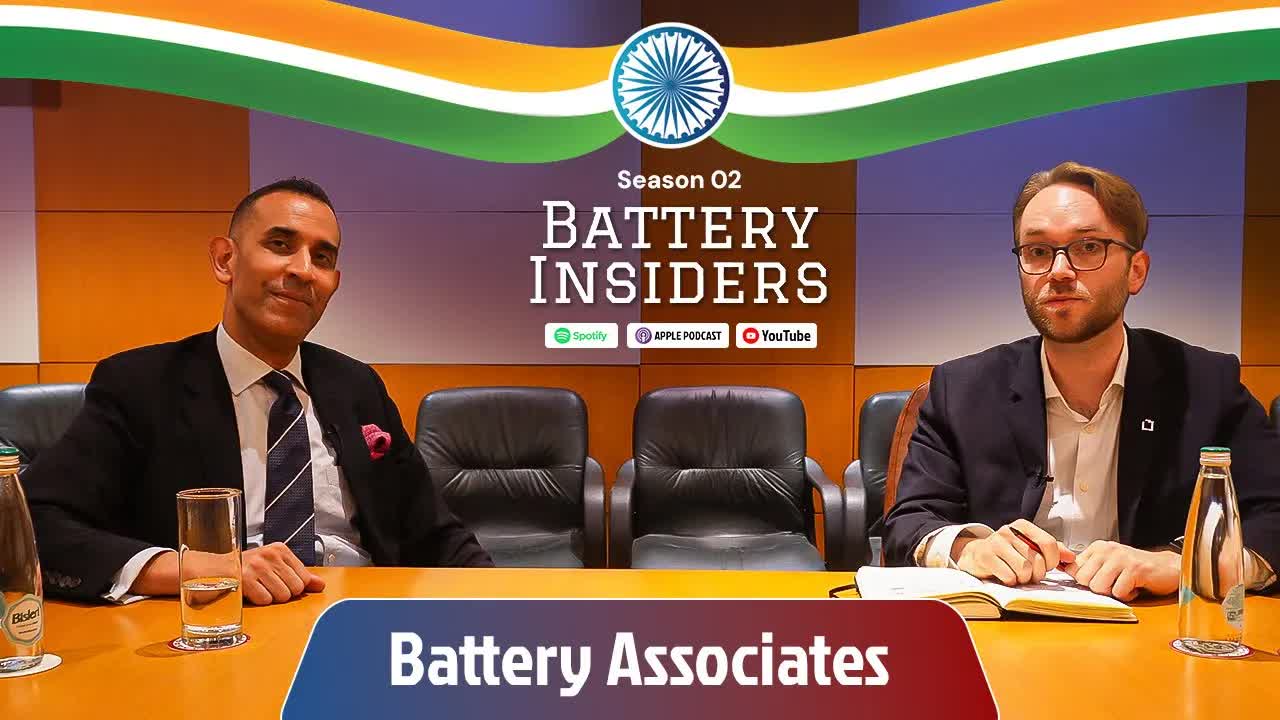
Uday Narang
Founder, Omega Seiki Mobility
Omega Seiki Mobility builds electric two and three wheelers and commercial vehicles in India, and is setting up a unit in Africa. Narang spent around thirty years in commodities and hedge funds in the US and Europe before starting the company.
Recorded in Near New Delhi, at the India Battery Show
What this episode covers
Around 24% of the three wheelers in India are now electric, and Uday Narang thinks that number holds because the arithmetic works for the driver. Two wheelers sell for roughly a thousand to twelve hundred dollars, three wheelers for under four thousand. He uses one of his own vehicles, the Stream City Qik, as the example: 15 minute fast charging, which he says supports up to 400 kilometres of driving a day and puts a driver at six and a half to eight and a half thousand kilometres a month. After the loan payment, financing, maintenance and charging, the driver is still ahead.
His position on cell manufacturing is the least fashionable thing he says. Build the vehicles first. If you put up cell capacity before the demand exists, you either sit on it or export it, and on export you will not beat Chinese cost, which carries infrastructure and government support that never shows up as a visible line. He wants the first 80% done: charging infrastructure, powertrains, motors, the rest of the ecosystem. Cells can come afterwards, funded by what he calls patient money, a ten to fifteen year view carrying a lower rate of return.
He is blunt about the production linked incentive scheme. Plenty of companies signed up, and he asks how many have actually built anything three or four years on. His answer is that the economics do not sit. What he does believe in is partnership. Mahindra working with Volkswagen would have been unthinkable ten years ago. He knows the CATL and BYD teams, says Chinese producers are always looking for another market, and is equally content with Korean or Japanese partners. Cells, in his reading, have become commoditised, so India should put its effort into the technologies where returns are better.
India is not one market. Narang, who spent three decades abroad and describes himself as something of a foreigner at home, says the customer differs between north and south, east and west, and that Omega Seiki tailors vehicles to those regions at volume. For passenger EVs the route is total cost of ownership: battery as a service, leasing, lower monthly payments, and charging that reaches tier two, three and four cities rather than stopping at the metros. He expects two and three wheelers to pass petrol and diesel within three years, and commercial four wheelers in five to seven.
The pitch to foreign investors is patience. He points to Hyundai's Indian listing, a 25,000 crore IPO valuing the business at around 18 billion dollars, and to Walmart's decade with Flipkart, as evidence of what a long view returns in India. He finds Europeans more willing to stay than Americans, who in his account come and go, and credits the Japanese and Koreans with understanding the market: Maruti Suzuki holds most of the passenger segment because it was patient about pricing and quality. He frames the whole thing as a health question too, noting that 31 of the world's most polluted cities are in India.
Questions from this episode
- How far has electric vehicle adoption actually gone in India?
- Narang puts electric at around 24% of three wheelers in the country, possibly more, with a serious move under way in two wheelers and e-trucks coming next. Commercial passenger vehicles, he expects, will follow later. He argues the shift is being carried by segments where the total cost of ownership already works rather than by policy alone, helped by improvements in battery technology, motors and powertrains. India is the largest three wheeler market and the largest exporter of three wheelers, and he expects Indian manufacturers to export EVs to Africa and Latin America the way they already export combustion vehicles.
- Does India need to manufacture its own battery cells?
- Not first, in his view. If cell plants are built before domestic demand exists, the output has to be exported, and on export Indian producers will not beat Chinese cost, which is supported by infrastructure spending and government backing that is hard to see from outside. He also thinks European or American cost structures are unaffordable. His preference is to get the first 80% done, meaning vehicles on the road, charging infrastructure, powertrains and motors, then come back to cells, with imports covering the gap in the meantime.
- Why is he critical of India's PLI scheme?
- He calls it the elephant in the room. A large number of companies signed up for the production linked incentive scheme, but he questions how many have built anything in the three or four years since, and says the reason is that the economics do not sit. He is careful to frame it as a controversial view rather than a settled one. His alternative is not more subsidy but longer money: cell investment that accepts a ten to fifteen year horizon and a lower rate of return, which he calls patient money rather than fast money.
- What makes the economics work for an electric three wheeler driver?
- Price and utilisation. Three wheelers are now under four thousand dollars, and two wheelers sit at roughly a thousand to twelve hundred. On the Stream City Qik, 15 minute fast charging supports up to 400 kilometres in a day, which he translates into six and a half to eight and a half thousand kilometres a month for a working driver. Once the monthly instalment, financing charges, maintenance and charging costs are paid, the driver is still making meaningful money. For passenger cars the same logic has to come through leasing and battery as a service instead.
- When will EVs outsell combustion vehicles in India?
- He expects two and three wheelers to get there within about three years, since the cost case is already working in those segments. For commercial four wheelers he gives five to seven years, driven by total cost of ownership and by where battery technology is heading. He is careful to say this is a dream as much as a forecast, and notes that other manufacturers, Toyota among them, are betting on hybrids instead. His broader point is that anything making transport cleaner is worth backing, hydrogen and alternative energy included.
- What does he advise foreign companies entering the Indian market?
- Take a long view and find a local partner. He describes India as a marathon rather than a sprint, and says the equity market rewards companies that show a long-term vision, pointing to Hyundai's Indian listing and Walmart's decade with Flipkart. If you bring technology or manufacturing experience, he argues, build an alliance rather than going it alone; he has done so with Korean, Japanese, European and American partners. He finds Europeans more willing to commit than Americans, and singles out Maruti Suzuki as the example of patience paying off.
Listen to this episodeWatch on YouTube
Part of India
Transcript
About this transcript. Generated automatically from the recording, then corrected against a glossary of company and guest names. It has not been checked line by line. Machine transcription mis-hears technical terms, numbers and names, so treat any figure here as a prompt to check the recording rather than a quotation of record. Spotted something wrong? Tell us.
0:00Introduction
Dr Simon Engelke
0:00Welcome everyone. Thank you so much for joining us for the Battery Insiders podcast. Here live from India, we're currently at the India Battery Show, not too far from New Delhi. And yeah, we have some really interesting conversations here. We just had a really interesting CEO conclave meeting, a lot of CEOs coming together around the battery space discussing some of the latest developments and some of the biggest questions in the field. I'm extremely delighted to have Uday Narang with me, who is the founder of Omega Seiki Mobility Mobility. I think he has a really interesting perspective, he's quite outspoken. So I think we are going to get some interesting insights, especially on the electric vehicle market, also in the commercial space, also the aspects of two and three wheelers, and also really how is it to bring, as you mentioned, about 50,000 vehicles on the road. And even beyond that, I think you have a personal interesting story as well, a bit of an interesting background moving into this field. So maybe if you could just quickly introduce yourself, what brings you to this topic, what brought you back, what brought you here to India to really push this field?
Uday Narang
1:04Sure. First of all, really great to be here. And you know, it's really amazing to be here and see all the global players. You know, India's time has arrived. What makes me feel excited is that, you know, when all the international players come here, and especially on EV, and you know, green energy sustainability. My name is Uday Narang, I'm the founder of Omega Seiki Mobility Mobility. I'm an ex-hedge fund manager. I spent 30 years in US, Europe. At one time, I was one of the larger commodity traders in the world, and on the London Metal Exchange. So I've gone from a guy who was an oil and a commodity guy about nine years ago, sitting in my headquarters in Mount Street in London, which is called Hedge Fund Alley, saying, I want to make a difference. And how do I want to make a difference? I want to make the world cleaner and greener. And how do we make a world cleaner and greener? Let's come back to the third world, come back to India, come back to Africa, come back to Asia.
1:57From a London hedge fund to India's EV market
Uday Narang
1:57This is where the future front lines of green energy sustainability are to be fought in the United States, Europe. You know, my home's in Zug in Switzerland, you know, one of the most beautiful places on the planet. And here I am now in Delhi, in Mumbai, in Chennai, in Bangalore, where green energy sustainability needs to be the number one agenda. If we want a future country, we, I'm a big, you know, I love what Prime Minister Modi is doing in this country. But if we want this country to be not just the third largest economy in the world, but to be the third largest stock market in the world, we have to make it cleaner and greener. Because the future generation of men and women, we have the youngest population in this country, in the world, if we can make this cleaner and greener, I think we've lost a lot. And I think that's where I've decided to come back and put my energies in the front lines of
Dr Simon Engelke
2:46greener and sustainability. Brilliant. And I think now we're talking about a really fascinating market, right? You mentioned India, and of course, there's many other markets also targeting. But how are you going to make this work, especially in this really cost sensitive market? I think even in Europe, US, you just mentioned it, even there, EV adoption is a big issue. It's still too expensive. People don't want to buy EVs yet, or not enough, right? Like the numbers are not where people want them to be. So how are you going to make this work in India? And also how are you going to compete with China?
Uday Narang
3:12Sure. First of all, you know, I think you're absolutely right. The total cost ownership model, the TCO model is something that all of these countries in Asia, in Africa, even more is needed. How are we going to do it? We're actually doing it now. We are now actually, if you want to know, 24%, maybe even more of the three wheelers in this country are electric. You are seeing a serious move in two wheelers. You're going to see this in e-trucks. You will see commercial passenger vehicles a little bit later. But I will tell you, what we are seeing is with the battery tech, with what's
3:54Two and three wheeler prices, and 15 minute charging
Uday Narang
3:55happening in EV technology, motors, powertrains, everything that is going around the space, the three wheelers and the two wheelers work. And I think, for example, most of the vehicles in the two wheelers are under the price of about, you know, in between thousand to twelve hundred dollars. And if that's the currency you prefer or euro, I can come in euro. But I would say on the three wheelers, we are now down to almost less than four thousand dollars. But I'll tell you what it's working. I give you an example. I come up with a new vehicle, which is in a passenger called Stream City Quick, which is 15 minute fast charging. 15 minute fast charging is giving you possibly 400 kilometers a day in 15 minute charge, right? That is giving a driver about six and a half to eight and a half thousand kilometers a month to drive. That person is making significant value for himself after paying the EMI on the vehicle and financing charges and the maintenance and the fuel, which is the charging infra. So we are working on multiple technologies on fixed fast charging swap, aligning forces with people in the US, Europe, Japan, Korea. I haven't done many alliances with China because you can understand there's a bit of attention. But I'll tell you what, I think today on the two and the three wheelers, we can compete with the Chinese on the prices and the quality. India is the largest three wheeler market, the largest exporter of three wheelers. Even in two wheeler market, we have one of the largest markets in the world. And if you look at Indian manufacturers in the ice are exporting to Africa, to Latin America, to all over the world, and you're going to see the same on EVs. I'm probably associated to say I'm setting up an African unit to set up and to build green energy sustainability to Africa. I think overall, I think in terms of two and three, we're able to compete with the Chinese. But I also
5:53Competing with China, and tailoring vehicles by region
Uday Narang
5:53say the world is big enough. India is big enough. And I think overall with what we have here in India, in terms of technology, in terms of players, I think we are definitely on the path. I'm never going to say we are at the level of the Chinese. But there's always the market is big enough for a player A, B, C, D. You know, for example, BMW and Mercedes was there. Tesla came from behind. The Chinese today, absolutely you hit the point in that EV business have the top five. But India is a very price sensitive market. It is a very culturally different market. For a person for me, I'm even a foreigner in this country. In all of these states, in the south and the north, in the west and the east, every customer is different. And we at OSM are working on custom tailoring vehicles in volume for those regions. So in England, we say different horses for different courses. And I think OSM has been doing that. But I will say the ecosystem that's being built, the government is also very supportive, but it is never going to be to the level of United States or Europe. But you are seeing a significant amount of move. And if you go around the cities of India, the number of green plates that you see are much, much. I just came back from Iceland, Norway and Sweden. I was there last week. And I'll tell you what, I can see this country continually moving, not just on EVs, on EV and alternate energy in hydrogen in the future. We have got a government who is very much understands that if we don't move towards green energy and sustainability, we have a huge problem in this nation. 31 of the most polluted cities in the world is in our country. And we have to make a change. And as I said in the CEO, you know, round table, we owe it to the future generations. We owe it to our Nari Shakti. Nari Shakti means women power, which is 48% of this population, to make this effort. And I think the leadership, the politicians,
7:49Does India need its own cell manufacturing?
Uday Narang
7:50the businessmen, the bureaucracy, everybody understands. And I'll tell you, private citizens understand that if we want to make India where we want to take it, we all have to put our two cents
Dr Simon Engelke
8:01into the pot. I really appreciate it. And I think it's definitely a shift we can see, right, I think, on the awareness. One topic you mentioned a lot of commercial, right, like, which is where I think people are more used to total cost of ownership in a commercial space. I think individuals maybe don't think this way as much. So maybe kind of from your perspective of, because you spoke a lot about how the price came down significantly, especially also in China, but also overall, right, the battery costs. So we see, you know, $60 per kilo an hour and things like that. Where do you think we have to go to kind of make this also on the personal side be attractive? And maybe the second question there also, do we need cells produced in India? Or can you keep importing? See, it's a very
Uday Narang
8:41contrary. I'll answer the second very good question. I'll answer the second question first, and I'll come to the first. Look, I think that we need to use our resources. I said before in the CEO roundtable, we don't need to reinvent the wheel. Okay, build the market, build, put in England, in America, we say boots on the ground. Let's put vehicles on the ground. If there's enough, let me ask you this, you're going to build cell manufacturing, and the demand is not there. What's the point? Then you're going to export it out. I don't think in that game, you're going to compete with anybody, specifically the Chinese, right? Their cost is already down. They put the infrastructure cost, they get government support, which is sort of intangible, you cannot see. You know, and I don't think we can afford European cost or the US cost, right? So my point is, I think we should continue. One of my colleagues, Vivek San, was in the CXO conference, was talking about it. Let's make sure, let's get the 80% done, and then we can build the 20%. I think it has to be in a mix and match. I think that overall, that we can still get cells from outside, but I think there has to be an
9:48Patient money, and what the PLI scheme did not build
Uday Narang
9:48investment, which is going to be a longer term investment, which is going to be something that will take, which I would call patient money, because I was a hedge fund manager, which is not fast money, as I said, which will take a 10 to 15 year vision, and will take a lower rate of return. And that can be done. As I said, Amirajah with Gotion has done that. But I will say, the PLI scheme, it's a very controversial statement, I'm saying, we talked about it, so many people signed up for it. Can I tell you, how many in three years, or four years of those people have built? You know why? Because it doesn't work. The economics don't sit. So I'm talking about the elephant in the room, but everybody's saying, so my answer to your question is, I think there will come a time. I think what we need to focus right now is build the EV ecosystem, build the charging infra, build the complete ecosystem of powertrains, motors, and it's been happening. The Indians have realized, and it's not just the Indians, you have seen the big players in India. When we started this journey eight, nine years ago, none of these big boys and girls were in the game. Not all of them are in here. And they realize that this is the need of the hour. So my answer to you is that the cell manufacturing can come a bit later. But the rest of the things that one of my colleagues had just spoken at the CISO, you know, the CEO round table, is extremely, then let's build that 80% and then come back to sell. While we're doing this, some of the ventures in cell manufacturing can happen. Alliances with foreign partners is going to be key. I'll be honest with you. Mahindra is aligning with Volkswagen. Did you ever, ever hear of this 10 years ago? No. So everybody has to do this. And I think in some of if we can align forces with players that have the experience that know making cells is not a kid's play, right? I have had, I know the CATL guys. I know the BYD guys. Look in China, there's all types of cell players. But I
11:44Alliances, commoditised cells and battery as a service
Uday Narang
11:44think they're always looking for an extra market. So if we can build alliance with making India, we can get that experience. We can get that knowledge. We can work with them and then build future technologies. I think cells have become commoditized. So focus on something that gives you that extra oomph. For example, AI today is valued more than what, you know, traditional players were doing. So I think if India can focus on new technologies, new development and leave a commoditization product, right, where the returns are not so great. I think I am not, I believe that if it's making India with an alliance, I'm good with it, right? And if it makes this ecosystem build faster, which is needed, there is no shadow of a doubt. The health concerns, the future generation effects is much, much bigger than the amount of money we're talking about investing in this space. And I think that that's where I think we should be there. So I think it's a different horses for different courses. We will see some of the bigger players do this, align with, at the end, I'm okay to align with the Koreans or the Japanese and people have aligned with the Chinese too. I don't mind. I think as long as it brings scale, I'm okay with that. The first question was passenger. The passenger market 100% is going to go there. But at the moment, we have to find solutions. What kind of solutions? Battery as a service. We can be leasing, right? There are multiple areas, as we say in England, skin the cat, right? It's a vegetarian country, so don't take me the wrong way. But what I'm saying is, how do you find a solution? You find a solution by bringing your total cost ownership down, by bringing your lease payments down, and by bringing enough charging infrastructure, not just in tier one, two, one city. You've got to go to tier two, three, four. I cannot tell you, I go through the length and breadth of this country, in the south, in the north, in the east, in the west. And the movement behind this is continuous. And I think in the next five to seven years, you will see a
13:45India as a long-term investment
Uday Narang
13:46significant move. This is a marathon, not a sprint. India is a long-term play. I keep telling to all of my European and American investors. You want to be here. I'll give you an example. I'll give you an example. You see our friends from Korea, Hyundai. They are going to do a 25,000 crore IPO. They're going to value the Indian company at 18 billion dollars. Now tell me, how many American and European companies have had that long-term vision? India will make you a big amount of money, right? Sorry about that. Make you a huge amount of money. You will have, I mean, Walmart bought Flipkart and over 10 years made it significant. So I keep saying to all the investors abroad, including the way I work, is that this is a marathon. Invest long-term. You're going to make a serious amount of money.
Dr Simon Engelke
14:36I appreciate it. I know we don't have much time left, so I just want to, one aspect there, right? So I think you mentioned, I mean, one, we definitely see, right? The move and this training and all of these people coming to space, battery and all these things. But I think one distinct aspect I found is, one, you just got back from Norway, and that's a country where we now have more EVs than ICEs. So do you have any thought on when we're going to have this in India? One, when there are going to be more EVs than ICEs on the roads? And the second thing is, like, by being in this market, we have a lot of listeners from around the world, but also people are very curious, for example, about the Indian market. By your journey, what has been maybe some of the biggest lessons and maybe what's kind of the biggest change you would like to happen, be it in policy, regulation, topics like that in the industry?
Uday Narang
15:17All right. I just, as I said, one of the countries that I recommend everybody to go is Iceland. It's honestly heaven on earth, right? I mean, it's something that gives you a different energy, right? We were testing vehicles up there in absolutely minus 20 conditions. We were testing on maybe closer to Arctic glaciers and stuff. I'll tell you what, I have, I'm a big Martin Luther King fan.
15:44When electric overtakes petrol and diesel
Uday Narang
15:45I study in the United States. You know, I have a dream. I have a dream and I can always love to dream. I think in the next five to seven years, you will see ICE overtake, electric overtake ICE. I think that's, the trend is towards that. In the commercial, 100% it's going to go there. I think because the TCO model was. I think with where battery tech is going, with what is, you know, with what is going on in terms of, you know, our economic development, I think you'll see it. But I think the two and the three wheelers are already going to get there in the next three years. But I will tell you, on the commercial four wheelers, I think in the next five to seven years, you will see it go electric and other, you know, if you talk to Toyota, they talk about hybrid, right? Everybody has their own. But I'll tell you, anything that makes it cleaner and greener, we will go there. I'll tell you what, over the last, over the last few years, my biggest experience and my biggest lesson has been in India, it's a marathon. Think long term, build alliances. I tell you, this market values long term players. The equity market will value your long term vision. But I will always say, all of your, I would say all of your listeners, come here. This is a market, I'm telling you not because I'm in India, I'm just as European or American as you are. This is a market if you take a long term vision, the market, the people, because, you know, it has that dynamics to make you significant money. I will also say, align with players here, if you have technology, if you have experience, come and build alliances here. I've done it in Korea, I've done it in Japan, I'm doing it in Europeans, I'm doing it with the Americans. I will tell you, I have found the Europeans and Europeans more open. I see the Americans come and go, come and go, right? The Japanese and the Koreans, they understand this market. Maruti Suzuki controls majority of the
17:44Why Maruti Suzuki's patience paid off
Uday Narang
17:44passenger market. Why? They take a long term vision, they took it pricing, they look at quality, and they make the system work. My experiences are the same. And I will say, but align with the right partner, and align with everybody that is going to make this country greener cleaner. Thank you very much. They say, Jai and Jai Bharat. I hope all of you got enough interest in listening to this. Anytime you guys want to have a question, please reach out to me. Much, much appreciate it. Thank you all for
Dr Simon Engelke
18:11listening for the Battery Insiders podcast. Please subscribe if you want to hear more of these great insights. But today, I really want to thank Udena Rang, Drush, for your time and your insights with us. Thank you very much. Thank you.