
Episode 116 · 30 October 2023 · 00:13:07
Watching a cell while it runs, not after it fails
Research & Development in Batteries
A Cambridge researcher on studying cells in operando instead of waiting years for them to fail, why companies now queue up for techniques they cannot build themselves, and where fast charging and LFP go next.
Read the article: Watching a cell while it runs, not after it fails
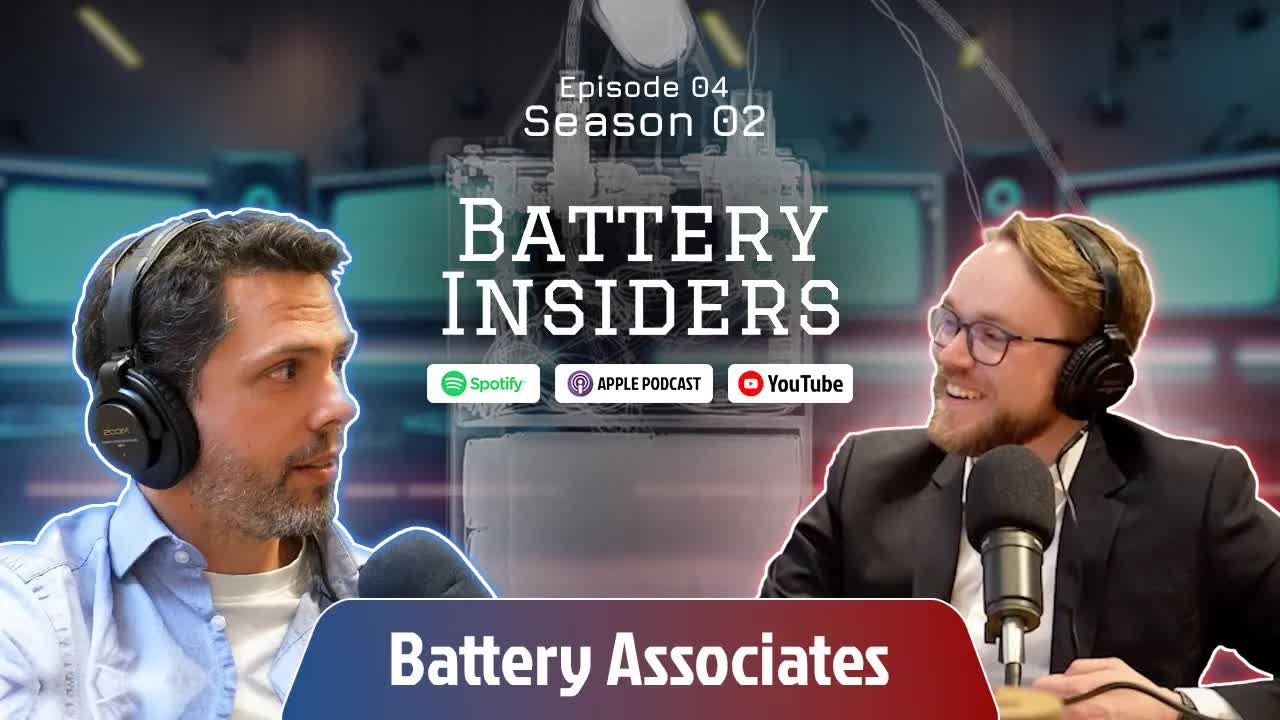
Israel Temprano
Researcher, Grey Group, University of Cambridge
Temprano came to batteries from catalysis and surface science, and works on characterisation techniques, including gas analysis, that study cells while they are running.
Recorded in Cambridge, United Kingdom
What this episode covers
The techniques Israel Temprano's group builds are designed to look at a battery in situ, or in operando, while it is running. The alternative is to wait for a cell to fail, and with the latest generation of cells that can take months, or years. Companies arrive with a material, say it works a little better than their usual one, and admit they do not know why. Often they will not say what it is. His own route in was catalysis: a postdoc at Cambridge studying how the surfaces of catalysts reacted with the products they were meant to form, then a move into batteries on the strength of physical chemistry and technique development.
The pull from industry is recent. Temprano dates it to roughly the last five years, and specifically to the point where the Faraday Institution became a significant presence in the UK. Companies do not have the money, the space or the time to develop this kind of characterisation themselves, but once the techniques exist they want the results. What the group can offer is detail they have no other route to, delivered quickly. If you can read what a cell is doing as it runs, you are not waiting out a months-long cycling programme to find out whether a change helped.
Temprano is blunt about why speed now matters commercially. Batteries have become so good that finding a differentiating factor is harder than it used to be. A chemistry that beats the standard one may only reveal itself after thousands of cycles, and that is a real problem for anyone trying to innovate on a product schedule. The pace of development in the field, he says, is neck-breaking. New products keep arriving at the lab door. The bottleneck is not ideas, it is the time it takes to tell whether an idea is actually better.
He also draws a clean line between academic and industrial work, and pushes back on the assumption that a PhD is simply early-stage research. One of the main outcomes of a PhD is the education itself: you become a leading expert in one narrow thing, which by design keeps you from being exploratory or applied. Postdoctoral work is where research moves closer to commercial setups. The field now needs many perspectives at once, which is why consortiums keep appearing: the Faraday Institution in the UK, the ALISTORE European Research Institute across Europe, and a range of groups looking at the same problem from different angles.
On what improves next, his starting position is that batteries are already extremely good and extremely durable, and that in EVs they outlast the cars. The gains he expects sit in fast charging and in cheaper materials, meaning getting rid of cobalt. A lot of near-term improvement is an engineering question rather than a chemistry one: better battery management, taking the maximum out of the chemistries already in production. On the chemistry side he points to the anode and the electrolyte, and how much lithium you can intercalate and how fast. On cathodes, he expects movement towards LFP, cutting out nickel and cobalt. Spin-outs are now coming out of the group as well.
Questions from this episode
- What does operando battery research actually mean?
- It means studying the battery while it is running rather than after it has stopped. Temprano's group at Cambridge specialises in developing techniques to look at cells in situ and in operando, from several different perspectives at once. The point is timing. If you wait for a cell to fail, you may wait months, and with the newest cells years. Reading what a cell is doing under load gives you detailed information about the mechanism much faster, which is why companies ask for it.
- Why do battery companies work with university labs?
- Because the characterisation is expensive to build and they mostly cannot justify it. Temprano says companies do not have the money, the space or the time to develop these techniques, but once the techniques exist they are very interested in the output. A typical request is a material that performs slightly better than the company's standard one, with no explanation of why. Sometimes the company will not even say what the material is. The lab can supply that detail quickly, which is the part they are buying.
- Why is it getting harder to prove a new battery chemistry is better?
- Because the baseline has improved so much. Temprano says batteries are becoming so good that finding a differentiating factor is now difficult, and that you often only notice a chemistry is better than your regular one after thousands of cycles. On a commercial timeline that is a serious constraint, since the test itself becomes the slow step. It is the main reason companies want faster diagnostic techniques: they need to compress the time between trying something and knowing whether it worked.
- How does a researcher move from catalysis into batteries?
- Temprano was already a postdoctoral researcher at Cambridge working on catalysis, doing fundamental surface science on how catalyst surfaces reacted with the products they were meant to form. Batteries were more applied than he was used to, which is part of what made the move interesting. What carried across was a strong background in physical chemistry and in technique development, and that is what opened the door. He started by developing characterisation techniques, then moved into the Grey group at Cambridge.
- What is the difference between academic and industrial battery research?
- Temprano frames a PhD as education first. Its main outcome is that you become a leading expert in one very particular field, which requires depth and, by design, keeps you from being exploratory or working on more applied problems. Postdoctoral work is where you can get involved in research closer to a commercial setup. He notes that the appetite from industry has changed markedly over roughly the last five years, particularly since the Faraday Institution became a significant force in the UK.
- Which battery improvements does he expect next?
- Fast charging and lower material cost. On cost, that means designing out cobalt, and cathodes moving towards LFP so nickel and cobalt come out of the mix. On charging, he points to the anode and electrolyte, and specifically to how much lithium you can intercalate and how quickly. He also expects a large share of near-term gains to come from engineering rather than chemistry: better battery management, extracting the maximum from the current generation of cells, which he thinks will improve them a lot on its own.
Listen to this episodeWatch on YouTube
Part of The next chemistry
Transcript
About this transcript. Generated automatically from the recording, then corrected against a glossary of company and guest names. It has not been checked line by line. Machine transcription mis-hears technical terms, numbers and names, so treat any figure here as a prompt to check the recording rather than a quotation of record. Spotted something wrong? Tell us.
0:00Introduction
Dr Simon Engelke
0:00The battery field, I mean, it's exploding. It has been exploding, right, for a number of years now. But a lot of people want to learn more about the batteries. And the more we learn about the batteries, the more we realize that we need to look more detailed. One of the main outcomes of that is your education. So you have to become one of the leading experts in a very particular field. So you need to go deeper in detail. A lot of companies have become very interested in the kind of research that we do. Here at Cambridge, in the great group, what we tend to do, or we tend to specialize in, is in developing the techniques to look at the battery in situ, or in operando, as we call it. We can provide a lot of detailed information that they don't have access to. There's always innovation, and there is so much improvement that has been made in batteries, that is in the chemistry. For the innovation, they need to speed it up. And that's where we come in.
Israel Temprano
0:59Hi Israel, good to see you. How are you? Good to see you too. Very good. Thank you very much. Thanks for coming and visiting. Absolutely. It's a pleasure to be back in Cambridge. Even just a short visit, but good to see you. Good familiar faces. It's good to see you here. And today we want to just have a bit of a conversation from maybe also a research perspective. I know we spend a lot of time in the labs, so it's good to see they still exist and they're still kicking and they're still running. Still do. So maybe you just want to quickly introduce yourself a bit, your background, so people have a bit of an idea where you're coming from. Then we go from there.
Dr Simon Engelke
1:43Yeah, okay. Well, I came to the battery field after being a postdoc, a postdoctoral researcher here at Cambridge already. I came from a catalytic background, so very fundamental research looking at surface science,
2:05From catalysis to studying cells as they run
Dr Simon Engelke
2:06so very fundamental science looking at how surfaces of catalysts really reacted with the products that we wanted to form. So when the opportunity came to kind of jump to the battery field, that was quite interesting because that was a lot more applied to what was used to. But because I had a strong background in physical chemistry and technique development, so that's what kind of opened my door to the battery field. And initially I started developing characterization techniques. So we're trying to study the batteries as they are running instead of waiting for them to fail, which may take months and months and the latest iterations of batteries that are so good years. So we're trying to look at them as they are running. So we need very specialized techniques. And because I had a strong background there, then I moved to the great group here in Cambridge. And that's a little bit how I got involved in this battery research.
Israel Temprano
3:21Brilliant. And I think one thing, because you just said it, right, is that I think in academia also and research I've seen, like a lot of people come from different fields and kind of bring their own perspective. And I know you bring your own, maybe, you know, you can also talk a bit about the speciality with the gas analysis and things like this, which maybe a lot of battery people would never really think about. That's how I introduced. But I'm just wondering, like, yeah, because I'm now seeing it maybe different a bit than also industry, right? You bring different people, but it's you want people to execute on things, right? You want to get outcomes. And I think research is often like, let's throw something very different into the room and see what happens.
Dr Simon Engelke
3:55Yeah, that is true. And the battery field, I mean, it's exploding. It has been exploding, right, for a number of years now.
4:04Money, complexity and the rise of research consortiums
Dr Simon Engelke
4:04But because of the high demand due to the EV market growing so much, now all of a sudden there is a huge amount of money thrown at it. And that reflects to us researchers in that a lot of people want to learn more about the batteries. And the more we learn about the batteries, the more we realize that we need to look more detailed, sort of finer details to understand, because they're far more complex than we realized at the beginning. So we need to get, like, deeper and deeper and deeper. So get novel techniques and novel development in that area is really important in the field. And that's why, for example, big consortiums for researchers are popping up a bit everywhere. And here in the UK, we have the Faraday Institution. In Europe, we have the ALISTORE European Research Institute. We have, you know, a lot of different groups of people, because you need to look at the problem from very different perspectives. So the technique development side of it, which is what brought me into it, is really important and it's booming at the moment, because you need more and more techniques being applied to back to study with a battery.
Israel Temprano
5:21And I think that's also interesting, because we had a conversation about this as well, right? And I've seen also elsewhere that some companies that are reaching out, right, and want to get access to these really advanced techniques. And for me, I remember in a PhD that I was thinking, the moment you get out of, you know, this research, like, you know, feel that nobody would ever care about the video. Sometimes obscure, it feels like techniques and things you're doing, because it just feels so, you know, like, researchy, right? Like, so deep and like, and I think one thing I definitely appreciate my PhD, also with Clare Grey, right? Like, that she has this really detailed view on things. And, you know, you go down the rabbit hole, but often you have to do it to really understand things. So I think I can appreciate that.
6:00What a PhD is for, and what industry now wants
Israel Temprano
6:00But I think still, it's fascinating that, you know, that there's, I think, you know, companies that are actually have the interest for these kind of topics. So maybe just you're like, because I know one thing also maybe slightly has changed, you know, since I've been here and we've worked together, is that you also, I think, do more commercial products, and you see different, like, work, right? And I think you see, I was just curious, what's the differences you have seen, like maybe between the industrial side and the academic side?
Dr Simon Engelke
6:23Yeah, that's a really interesting question. I think you have a perspective that is a bit skewed by your trajectory. So you left academia as you finished your PhD. And when you're doing your PhD, you have to think that one of the main outcomes of that is your education. So you have to become one of a leading expert in a very particular field. So you need to go deeper in detail. So that prevents you from being more exploratory and trying to be more applied staff. You really need to become an expert on a particular thing. When you then work as a postdoctoral researcher and stuff, you can get involved in more closer to commercial setup research. And it is certain that in the last five or so years, especially since the Faraday Institution became a big thing in the UK, a lot of companies have become very interested in the kind of research that we do. Here at Cambridge, in the great group, what we tend to do or we tend to specialize at is in developing the techniques to look at the battery in situ or in operando, as we call it, as the battery is running. We look at the battery from many different perspectives and we develop techniques to do that. So companies become very interested because they don't have the money and the space and the time to develop these techniques. But once they're out there, they're very interested in them.
7:56Techniques companies cannot build for themselves
Dr Simon Engelke
7:57So yes, we provide like very detailed information about it, but it's information that is very valid for the companies. And they reach to us. It's like, oh, can you look at this material? We know it works a little bit better, but we don't know why and that kind of stuff. And we can provide a lot of detailed information that they don't have access to fairly quickly. As I said, if you know what the battery is doing as it's running and you don't want to wait, you don't need to wait for months, then you can provide that very detailed information much, much quicker. So they're becoming, a lot of companies are becoming very, very interested in using this techniques that we develop here for the commercial systems.
Israel Temprano
8:45Yeah. And I think it's interesting, right? Because I definitely have also seen more companies kind of thinking about it from an innovation topic, right? To see what's the differentiator and how they can actually bring, because I think one thing is, that's also, of course, some of the challenges in the UK, right? To scale up, of course, is one topic. And I think a lot of companies now are really like grappling with that and trying to just make sure that they can manage scale up, right? But I think then the next evolution, as we're already seeing it, is that then sort of thinking about, okay, now if we have something running, we're actually producing something, we're allowed to scale, actually now we want to bring something more special into the play so we can be one step ahead of the others. Because if we just keep commercializing what's kind of outdated, maybe I'd say in a few years, then you're not staying ahead. So I think kind of internalizing these capabilities to innovative work in the industry, but at the same time, yeah, I'm curious also kind of, I guess you still have to be close with academia to see what potential could be next and how you can maybe incorporate that as well.
Dr Simon Engelke
9:40Yeah, the pace of development in the field is just ridiculous. It's really neck-breaking. They come to us all the time with new products and new things.
9:55Why differentiation takes thousands of cycles
Dr Simon Engelke
9:57Often enough, they don't tell us what it is, but there's always innovation and there is so much improvement that has been made in batteries that is in the chemistry. But the problem for them now is that batteries are becoming so good that to find a differentiating factor becomes harder, right? And you only notice that a particular chemistry in the battery is better than your regular one after thousands of cycles. And that becomes a problem for the innovation. They need to speed it up. And that's where we come in.
Israel Temprano
10:32Where do you think, like, maybe also to kind of wrap it up, like, where do you think things can go? I know you work on a lot of really exciting and sometimes a bit futuristic chemistries and things, and that's what you have to do, right? And you look at different things. Like, you know, where do you think things could go? Again, you know, it's very hard to tell. I'm just curious, like, your thoughts.
Dr Simon Engelke
10:49Yeah, I mean, the first thing that we'd like to say is that batteries are already extremely good and extremely durable. And, you know, batteries in EVs last longer than the cars and so on. So they're already at a really good level for what we need them. I think a lot of spaces where they're going to be developed even more is in the fast charging and the lower cost associated to the materials themselves. So getting rid of cobalt and that kind of stuff. So in terms of fast charging, I'm talking just about the chemistry, but I think the battery management is, from an engineering point of view, something that is going to make the current generation of chemistries improve a lot. So how we take the maximum out of the batteries, which is more of an engineering problem, is going to improve already a lot, the batteries. But from the chemistry point of view, I think things like super fast charging, especially from the anode side, right?
11:53Fast charging, LFP cathodes and spin-outs
Dr Simon Engelke
11:54How much can you lithiate? How much can you intercalate the lithium? How fast can you do that? It's going to improve massively, both from the electrolyte point of view and the anode. And then on the cost side, I think cathodes are going to be more moving towards the LFP side. So the phosphate, lithium phosphate side, so you get rid of all of the nickel, all of the cobalt and so on. So that's going to be a big thing, I think.
Israel Temprano
12:26Cool. And I know, of course, you're also involved in a few of the initiatives, like you mentioned Faraday and Alistar, and also spin-outs, right? Which is also exciting. There's now spin-outs from this group as well, and that's, of course, always exciting to see too.
Dr Simon Engelke
12:36Yeah, indeed. Again, there is a lot of innovation coming, and there's a lot of companies that come in and are very interested in looking at what's going to happen next.
Israel Temprano
12:48Brian Israel, such a pleasure. Thanks for coming on. Indeed. Good to hear, good to see you again.
Dr Simon Engelke
12:54Thank you very much, and always a pleasure. Until next time. Bye-bye. Bye-bye. And good to see you again.