
Episode 117 · 7 December 2023 · 00:09:11
Four stages of black mass pricing, and where Europe sits
Trends in Battery Materials and Regulatory Perspectives
SMM's Shirley Wang on why the worry is demand rather than supply, the four stages Chinese black mass pricing has moved through, and what the EU Battery Regulation opens up for Chinese producers.
Read the article: Four stages of black mass pricing, and where Europe sits
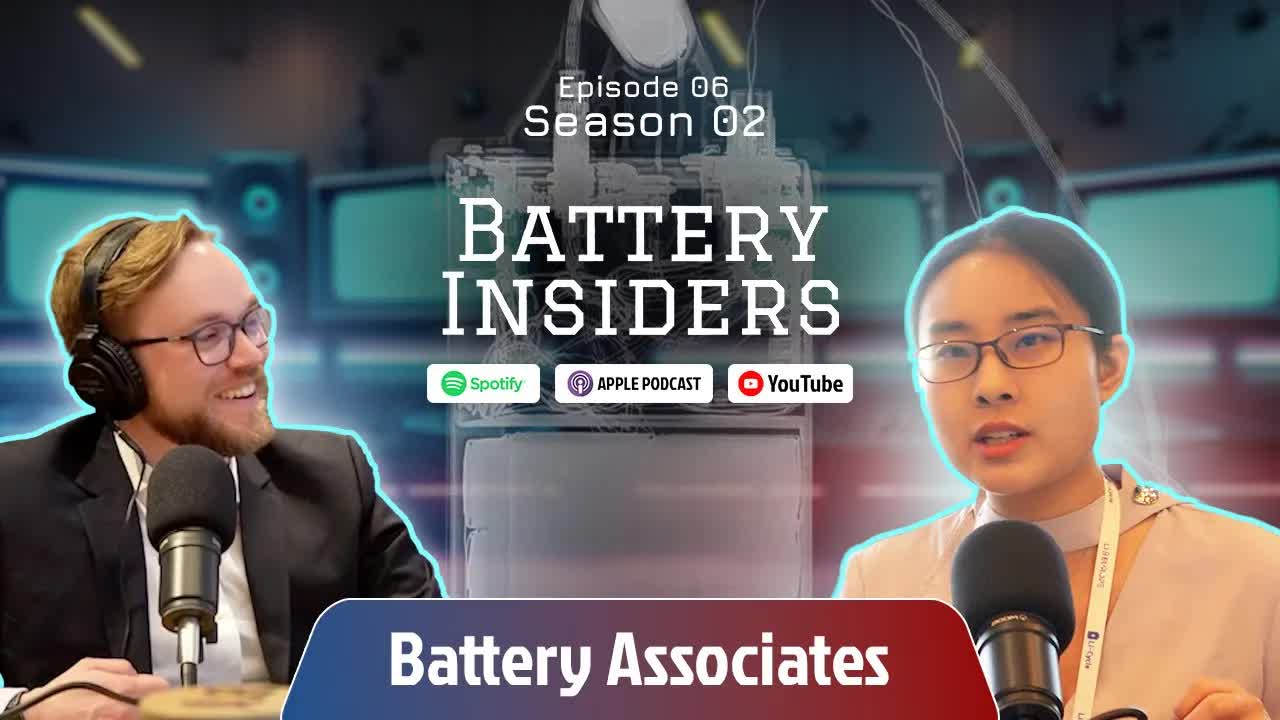
Shirley Wang
General Manager, New Energy Research, Shanghai Metals Market (SMM)
Wang runs pricing and industry research on nickel, cobalt and lithium, and on battery materials for EVs and energy storage. Her team tracks the Chinese market and the storage channel day to day.
Recorded in Budapest, Hungary
What this episode covers
Shirley Wang's read on lithium carbonate, nickel sulphate and cobalt sulphate starts on the side people talk about least. Supply, she says, is not the problem: all of these chemicals have enough capacity and enough resource behind them. What her team watches is demand, because that is what sets the growth rate. Her expectation is that demand growth comes in below supply growth, leaving all three in surplus and pushing prices lower. The floor is set by cost. Once the price reaches the level at which most producers are working, she expects it to bounce back.
The demand picture splits in two. Global EV sales went through a fast expansion in the early years, 2021 and 2022 among them, but the expected rate of increase is slowing for a range of reasons. Energy storage runs the other way. Driven by carbon neutrality targets and by national policy, storage demand has climbed sharply and Wang expects it to keep growing quickly. Put together, that still leaves her forecasting surplus. On specific room to fall, she puts lithium carbonate at roughly 30%, helped by the raw materials behind it, spodumene and lepidolite, and cobalt sulphate at around 10%.
The most useful part of the conversation is her account of how black mass gets priced, a question the conference panels could not settle because every company uses its own definition. China has been through four stages. In the first, buyers and sellers benchmarked against metal prices. In the second, they moved to nickel and cobalt sulphate prices. The third added lithium carbonate, valued separately. The fourth, which some companies are now trying, counts the anode material, aluminium and other components as well, which becomes possible as the market grows more transparent.
Asked where the two markets sit on that scale, Wang puts China between phase three and phase four, and Europe at phase one. That gap has not made life comfortable in China. Competition is intense, and small and mid-sized companies in particular have little room to make a profit. Feedstock is the other pressure. Producers of nickel sulphate and cobalt sulphate are not permitted to import black mass from overseas markets, which leaves raw material genuinely short at home. Wang confirmed the effect the host had noticed at the conference: buyers walking the floor looking for black mass.
On regulation, she frames the EU Battery Regulation and the IRA as pressure and opportunity at the same time. Chinese companies face real pressure from both, but Wang expects the effect to be an acceleration in the globalisation of the battery supply chain, because battery materials and battery chemicals are still distributed unevenly. The practical response is to build capacity closer to the demand: new plants in Europe, including Hungary, or in North America. She expects new recycling capacity in different countries to borrow from each other's strengths rather than each starting from scratch.
Questions from this episode
- Will lithium carbonate prices keep falling?
- Wang expects further downside, with roughly 30% of room left before lithium carbonate reaches its lowest level. Part of that comes from the raw materials behind it, spodumene and lepidolite, which she also sees room to fall. The mechanism she describes is straightforward: demand growth running below supply growth leaves the market in surplus, and surplus pushes prices down. The floor is producer cost. Once the price hits the level most producers are operating at, she expects it to bounce back rather than keep sliding.
- Is there enough nickel, cobalt and lithium supply?
- Yes, in Wang's view. She says that on the supply side all of these chemicals have enough capacity as well as enough resource, which is why her team's attention sits on demand instead. Demand is what decides the growth rate, and it depends on EVs and on energy storage. Because she expects demand growth to come in under supply growth, her conclusion is surplus across lithium carbonate, nickel sulphate and cobalt sulphate, and prices moving to a lower level before they find support at cost.
- How is black mass priced?
- There is no single answer, which is part of why the definition gets argued over. Wang describes four stages in the Chinese market. First, buyers and sellers benchmark against metal prices. Second, they price off nickel and cobalt sulphate. Third, they add lithium carbonate and value it separately. Fourth, some companies now count the anode material, aluminium and other components towards the total value as well, which becomes workable as the market becomes more transparent.
- How far ahead is China on black mass compared with Europe?
- Wang places China between the third and fourth stages of her pricing framework, and Europe at the first. That is a wide gap. It has not translated into easy conditions in China, though. She describes intense competition, with small and mid-sized companies in particular finding little room to make a profit, and calls it a hard time for them. The European market, by her reading, is at the point China started from, still working out what black mass is worth and how to benchmark it.
- Why can't Chinese producers import black mass?
- The government does not permit producers of nickel sulphate and cobalt sulphate to import black mass from overseas markets. The result inside China is a shortage of raw material for recycling, which Wang describes plainly as a real lack of feedstock. It also shows up at industry events, where the host had noticed companies walking the floor looking for black mass. Combined with intense domestic competition, it leaves smaller recyclers squeezed on both input supply and margin.
- What does the EU Battery Regulation mean for Chinese companies?
- Pressure first. Wang says Chinese enterprises face significant pressure from both the European battery rules and the IRA. The opportunity comes from what that pressure does to the supply chain: she expects globalisation of the battery supply chain to accelerate, because battery materials and chemicals are still unevenly distributed. For companies with the capability, that means building new capacity closer to the market, in Europe, in Hungary specifically, or in North America. She also expects new recycling capacity in different countries to learn from each other.
Listen to this episodeWatch on YouTube
Part of Recycling and second life
Transcript
About this transcript. Generated automatically from the recording, then corrected against a glossary of company and guest names. It has not been checked line by line. Machine transcription mis-hears technical terms, numbers and names, so treat any figure here as a prompt to check the recording rather than a quotation of record. Spotted something wrong? Tell us.
0:00Introduction
Dr Simon Engelke
0:00Hello everyone, thank you so much for joining. We're currently sitting here in Budapest at the lithium-ion battery Europe Print Mini 3 conference, which is hosted by SMM, the Shanghai Metals Market. I'm very excited to have Shirley with me today from SMM. Thanks for joining us. You're welcome. Thank you. And we have a couple of topics we want to talk about today. Of course, we want to use this opportunity to talk about China and some developments also related to batteries and battery materials. So you've been in this space for quite some time. So it would be fantastic if you maybe can start a bit on some of the trends you have seen over the past decade or so you have been working in this space.
Shirley Wang
0:48Okay. Hello everyone. This is Shirley Wong from Shanghai Metals Market. I'm the general manager of the New Energy Research Team. I'm in charge of pricing and industry research of nickel-cobalt leasing as well as battery materials of EVs and energy storage systems, etc. My members daily track the market in China and the EPS channel so we have better understanding of the market dynamics. For the future prices of lithium carbonate, nickel sulfate and copper sulfate, we think from the supply side all of the chemicals have enough capacities as well as many resources. We are more concerned on the demand side. We think it depends on the EV and the ESS, etc. since it decides the growth of demand. For EV markets, we think the global EV has gone through a vast development boost through early years like 2021 and 2022.
2:06Slowing EV sales, growing storage, and a surplus
Shirley Wang
2:06But when we are taking a further look through the future, the expected increase in sales of EVs is slowed down based on different reasons. For energy storage systems, with the driving force of carbon neutralization and the policies in different countries, we think the demand will significantly increase in 2022. And in the future, the demand will still grow rapidly. So overall, we think the demand growth will be lower than the supply growth in the future. So we think the lithium carbonate, nickel sulfate and copper sulfate will be in surplus. And to extend, we think the price will hit a lower level. But we think when the price hits the cost for the most producers, the price will be bounced back. For specific details, for nickel sulfate, we think the price will be about 2,000% to hit the lowest price. And for leasing carbonate, there will be about 30% to hit the lowest price. Since the supply and the price of the raw materials include spodumene and lepidolite, we have room to decrease. But for cobalt sulfate, we think there will be 10% room to decrease. Yes, that's my view about the price.
Dr Simon Engelke
3:44Thanks so much for sharing. I was also sharing some numbers then. I think it's quite interesting because also thinking about from a demand perspective rather than just the supply. Because I think there's been a lot of discussion about, you know, not sufficient supply. So good to hear that you see that there's room there to increase in the future. Another topic I would also like to touch on is black mass.
4:03Black mass, and the four stages of Chinese pricing
Dr Simon Engelke
4:03Also here at the conference, I want some interesting panels and talking about recycling. There were questions about what even is black mass? What is the definition? Because all kinds of people and companies have their own. And I know you have been tracking black mass also with SMM, which is exciting. And actually I've looked at some of your data there before. Yeah, just to understand maybe what's black mass and of course, any pricing you can share, any developments in that regard.
Shirley Wang
4:27Okay, and of course maybe I want to share the pricing method for the black mass since the China is a more mature market. So as we can see that China has undergone four stages. And we think the European market is at the first phase in China. So we can introduce the four stages of China first. In the first phase, we think the black mass, the cellars and the bells, they are using nickel and the copper metal and press as their benchmark to calculate their value. And in the phase two, the bells and the cellars are using nickel sulfate and the copper sulfate press as their benchmark. But in the phase three, it based on the phase two, they add the leasing carbonate separately to calculate their value. And in the first phase, it is now some companies are trying to use the anode as well as aluminum and et cetera, the materials to calculate their total value since the market is more transparent. Yes, this is a pressing method.
Dr Simon Engelke
5:44That's fascinating. Thank you for sharing that. One question, I'm not sure if you're able to share something. Where is China? In these stages, where would you say China is today? In one of the stages?
Shirley Wang
5:57We think China is at the stage of phase three and phase four.
6:01Where China sits, and why imports are blocked
Dr Simon Engelke
6:01Wow, okay. So there's quite a bit to catch up in Europe. Yes. That's exciting to hear.
Shirley Wang
6:07But we think it is in intense competition. So some companies, especially some small and mid-sized companies, they have little room to get their profit. So it's their hard time. Yeah, it makes more challenge.
Dr Simon Engelke
6:21I heard like companies walking around here looking for more black mass. Yes, yes, yes.
Shirley Wang
6:26Since in Chinese market, the government inhabit the producers of nickel sulfate and copper sulfate to import the black mass from the overseas market. So there is a very lack of raw materials. Yes, wow.
Dr Simon Engelke
6:52So that's interesting to see as well that there's a push for importing rather than exporting. Great. And then another topic of course, something which also keeps us quite busy here is in Europe is regulation. There's a new EU better regulation just passed this year, which keeps quite a lot of us quite busy. There's a lot of requirements there, for example, recycling, but also traceability, etc. So it would be just great to also have your perspective, maybe also what you have seen in China and some of the perspective on regulation there as well.
Shirley Wang
7:22Okay, we think the opportunities come from the Chinese enterprises are facing big pressures. But especially under the leasing ion battery, especially under the European Battery Act and the IRIA, the globalization of battery supply chain is expected to accelerate. Since the distribution of battery materials as well as battery chemicals are still uneven. So we think for the OEC enterprises, maybe they have opportunities to construct new capacities in Europe or in North America, etc.
8:06EU regulation, the IRA and building capacity abroad
Shirley Wang
8:06Yes, and we think the increasing transparent recycling policies in China compared with relatively well established legislation in the China market poses their own advantages. And the construction of new recycling capacity in various countries needs to learn from each other's strengths. So we think maybe for some Chinese enterprises as well as European enterprises, they have opportunities to construct new capacities in Europe or maybe Hungary or some other countries.
Dr Simon Engelke
8:44Fantastic. Now, I definitely, you mentioned learning things, I definitely learned things today from you. So really appreciate that. Thank you. Hearing about also these different stages of recycling and you know, it's quite exciting to hear that you're already in stage three to four. So I think that's really good to hear and yeah, wonderful to speak to you. Thanks for taking the time. You're welcome.