
Episode 128 · 8 April 2024 · 00:14:49
Black mass is not a standardised product
Towards a Greener Future: HydroVolt's Sustainable Battery Recycling Approach
HydroVolt's commercial chief on why pre-treatment belongs next to the scrapyard, what separates good black mass from bad, and why LFP may turn out simpler to recycle than NMC.
Read the article: Black mass is not a standardised product
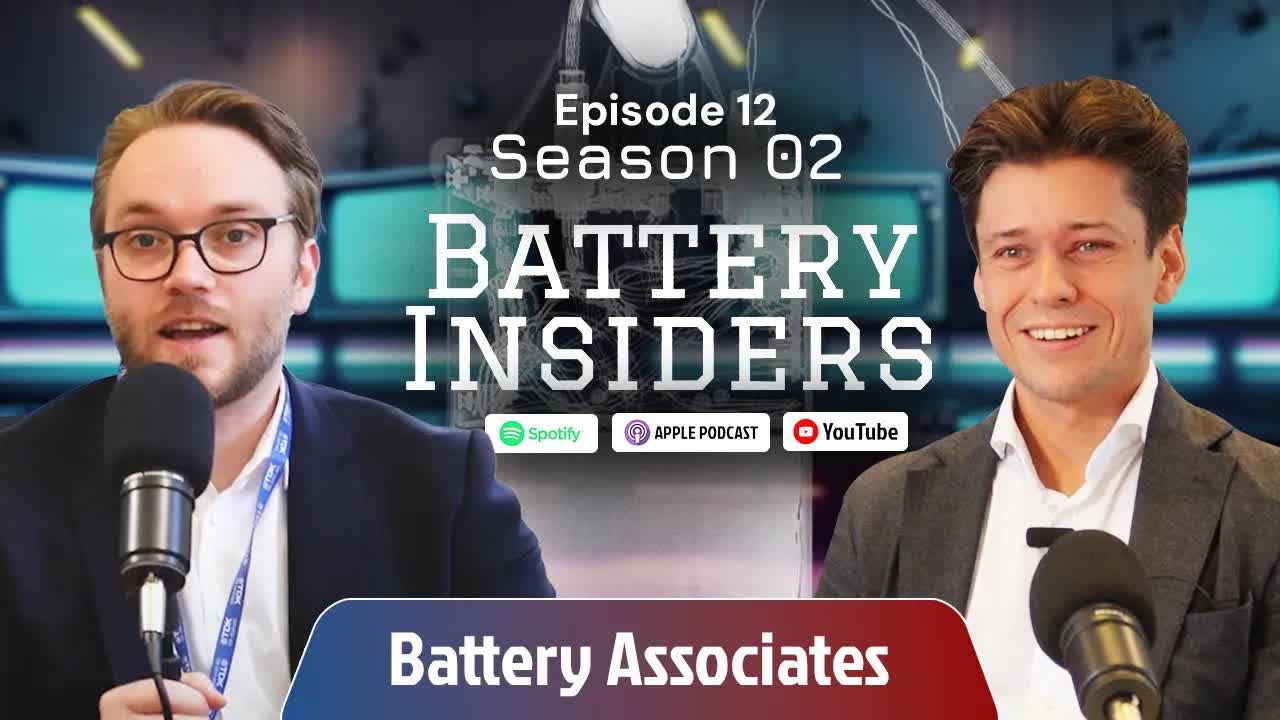
Andreas Frydensvang
Chief Commercial and Digital Officer, HydroVolt
HydroVolt is a joint venture between Northvolt and Norsk Hydro. Its first plant, at Fredrikstad, has a capacity of around 12,000 tonnes, which Frydensvang puts at the equivalent of 25,000 electric vehicles.
Recorded in Berlin, at the Future Battery Forum
What this episode covers
Andreas Frydensvang starts the recycling problem somewhere other than chemistry. Cars end their lives where they end their lives, and a recycler has to go and get them. Move whole packs, still charged, over long distances to one big central plant and the logistics become expensive and difficult. So HydroVolt breaks the process into steps that can sit in different places. Pre-treatment happens close to where the vehicles die, at small facilities near large scrapyards, where the electricity comes out and the pack is dismantled. Only discharged, short-circuited modules travel on to central processing.
That split does two things at once. It takes cost out of the logistics, and it makes the transport itself safer, which matters to more people than HydroVolt. The next step, and the one the company concentrates on hardest, is crushing and sorting. The feedstock arriving is unusually varied: different chemistries, different OEMs, different car models, all going into the same process. Getting the highest possible recovery rates out of that mixture, as sustainably as possible, is how Frydensvang describes the core mission. HydroVolt then partners with refineries that process the black mass into critical raw materials for new cells.
Black mass itself is the pinch point. It is not a standardised product, and it arrives in a wide range of qualities. HydroVolt produces it but does not process it, so the definition of good has to be settled in conversation with the companies that do. That is why Frydensvang keeps the door open: to the large processors, and to the small startups he says are changing how recycling is done. Anyone looking for black mass, he says, should get in touch. New chemistries and new pack designs keep changing what the right answer looks like.
On regulation and geography he is unambiguous. Europe should be able to close the loop on the continent, with every step present: cell manufacturing, the first, second and third life applications, recycling, refining, pCAM. Northvolt is an important partner and will take black mass from HydroVolt, but other customers will too, and some OEMs will ask for a closed loop of their own. What that phrase means is itself unsettled. Do you want your exact atoms back, or the same quantity at the same quality? Those are two very different systems to build, and clients ask for both.
Pack design decides how much a recycler can recover. Glued assemblies are safe and hold together well, which is precisely the problem when someone else has to take them apart. Frydensvang's answer is to start the conversation early, with cell manufacturers and with the companies assembling packs, so that recycling experience feeds into design decisions rather than arriving after them. He is careful not to make it a one-way demand. Recyclers also have to adapt their own processes so that a pack can be handled regardless of how it was put together.
LFP is the live question. Take out the nickel and the cobalt and the value in the black mass falls, which is why some recyclers say they can absorb a share of LFP feedstock but not much more. Frydensvang is more relaxed. Processing capability for LFP black mass is maturing, the research is early but active, and the recycling process itself can be considerably simpler than for NMC, which helps the business case. His conclusion is that different chemistries will need different business models, because a process that is not profitable will not get built.
Questions from this episode
- Why does HydroVolt use a modular recycling process instead of one large plant?
- Because the hardest part is collection and logistics, not processing. Vehicles reach end of life wherever they happen to be, and moving large charged packs long distances to a single central facility is costly and difficult. HydroVolt instead puts pre-treatment close to the feedstock, in small facilities near big scrapyards, where the pack is discharged and dismantled. Only discharged, short-circuited modules are shipped to central processing. That lowers logistics cost for HydroVolt and makes the transport safer for everyone else.
- What is black mass and why is its quality such a problem?
- Black mass is the output of crushing and sorting used batteries, and it is the input refineries turn back into critical raw materials. Frydensvang is blunt that it is not a standardised product: it comes in many different qualities. HydroVolt's feedstock is highly varied, with different chemistries, different OEMs and different car models going through the same line, so getting consistently high recovery rates out of that mixture is the technical challenge. Since HydroVolt does not refine, it works out what good looks like in dialogue with the processors that do.
- How big is HydroVolt's Fredrikstad plant?
- Around 12,000 tonnes of capacity, which Frydensvang says equates to about 25,000 electric vehicles on average. He credits the speed and quality of the build to the two owners, Northvolt and Norsk Hydro, who sent qualified people from both organisations to help set the facility up rather than acting purely as shareholders. HydroVolt handles collection, discharging and dismantling, then crushing and sorting, and partners with refineries for the chemical processing that follows.
- What does a closed loop actually mean in battery recycling?
- It has not been settled, and Frydensvang thinks the industry needs to define it together. One reading is closure at the atom level, where you get your exact same raw materials back. The other is that you get the same quantity of the same quality back. Those are two very different things to set up, and different customers and prospective customers are asking for different versions. Northvolt is an important partner and will receive black mass from HydroVolt, but some OEMs may demand a loop of their own.
- How does battery pack design affect recyclability?
- Considerably. Frydensvang points to well-glued systems, which are safe and hold together, and are also very difficult for anyone else to take apart. How a pack is assembled has a real effect on the recovery rates a recycler can reach. HydroVolt's response is to start conversations early with cell manufacturers and pack assemblers, feeding back its own experience so recyclability is weighed alongside performance and safety in the design. At the same time, recyclers have to keep adjusting their processes to handle packs however they are built.
- Is LFP bad news for battery recyclers?
- It removes the nickel and cobalt that carry much of the value, and some recyclers say they can handle a limited share of LFP before the economics stop working. Frydensvang sees active innovation in the space: processors of LFP black mass are maturing, and the research, while still early stage, is promising. The recycling process for LFP can be much simpler than for NMC, which helps the business case. His view is that different chemistries will need different business models, but the material still has to be recycled and it has to be done profitably.
Listen to this episodeWatch on YouTube
Part of Recycling and second life
Transcript
About this transcript. Generated automatically from the recording, then corrected against a glossary of company and guest names. It has not been checked line by line. Machine transcription mis-hears technical terms, numbers and names, so treat any figure here as a prompt to check the recording rather than a quotation of record. Spotted something wrong? Tell us.
0:00Introduction
Dr Simon Engelke
0:00Welcome everyone. Thank you so much for listening in or watching in to our Battery Insiders podcast. We're here live in Berlin at the Future Battery Forum, which we're super delighted to be at. I'm very excited to have Andreas with us, who is the Chief Commercial Officer and Digital Officer at HydroVolt. And today we're going to talk about this really important topic of recycling. We know it comes back and people keep mentioning it and always this big question about recycling. And we want to explore a bit your approach with HydroVolt and some of the things you have learned on this journey. Thanks for being here.
Andreas Frydensvang
0:40Yeah. First of all, thank you so much for the invitation. It's really exciting to have the opportunity to join your podcast and talk about recycling, something that I'm extremely passionate about. So thank you for that. And well, my name is Andreas. I am the Chief Commercial and Digital Officer of HydroVolt. HydroVolt is a joint venture between Northvolt and Norsk Hydro. And having those owners, they are not only owners, they have also been extremely important contributors in the establishment of our first plant in Fredrikstad. So we had extremely qualified people from both the owner organizations who were part of setting up that facility. And that is why we were able to do it so quickly and so good. And today we have a capacity in Fredrikstad of approximately 12,000 tons that would equate to 25,000 EVs on average. And what we do is basically we have a very modular approach to how we want to solve recycling because we saw that the key
2:00Pre-treatment near the scrapyard, processing in the centre
Andreas Frydensvang
2:00challenges is actually the collection and logistics of the feedstock. Because the cars, they end their lives where they end their lives. And the recyclers need to get a hold of them and basically transport them to where they will be processed. And if you have one central big processing facility, that logistics will be extremely complicated because you will need to move big packs with charge long distances. And that is both extremely costly and challenging. So what we do is we break the process up into different steps. So we can do pre-treatment very close to where the materials end their lives. And that is really key. Because we will then establish small facilities close to, say, big scrapyards, for instance, who could receive these end-of-life vehicles so that we can actually take out the electricity and dismantle the pack very locally. And then we will just transport discharged short-circuited modules to central processing. And that is good for HydroVolt in terms of optimizing the cost of logistics. It's good for the society because it is much safer to transport discharged packs and has a lot of benefits. And after we have collected and done the discharging and dismantling, the next step in HydroVolt is crushing and sorting. And that is what we focus extremely heavily on, to be able to optimize the black mass coming out of crushing and sorting EV batteries. And that feedstock is so diverse. It's so many different types of batteries coming from different OEMs and different car models.
3:58Mixed feedstock, recovery rates and refinery partners
Andreas Frydensvang
3:59So to be able to mix that and really get the highest recovery rates possible in the most sustainable way possible is basically our key mission. And we then will partner up with refineries who can process the black mass and turn that into new critical raw materials. And the great thing about batteries is that when they reach end of the first life, you know, you recycle it and then it can become a new battery again and again in eternity. So recycling will be an extremely important source of critical raw materials for production of new batteries in Europe and further electrification on the continent.
Dr Simon Engelke
4:43Fantastic. Thank you. And I think it's really interesting your approach right there. I think there's a lot of talk at the moment about later and in the process, right? So kind of, you know, the pyro and the hydro and different, you know, approaches. But as you say, first you have to get your black mass. And I know it's a hot commodity. I just spent a bit of time at a few conferences where everyone was looking for black mass because there's also some capacity, especially also in China and others.
Andreas Frydensvang
5:07And black mass is not a standardized product, right? Not at all. It can come in all different qualities. So just to be able to produce the best black mass possible is a big challenge in itself.
Dr Simon Engelke
5:20Is this something you see maybe just a quick follow-up one, right? Because you mentioned that. Because I think that's a big issue right now, right, that we don't. And I think it's similar, like, even if you then recycle, right? Like, later on, I know some of the recyclers and they maybe get some lithium out of it. And then the question is, what is battery-grade lithium? And then every, you know, manufacturer has different requirements and OEM, et cetera. And I think if you said a bit earlier, you said just on the black mass, right? So I think what could be done there potentially? Like, are there any, do you see any approaches, people trying to kind of standardize a bit more? Or is it more from you, the industry-led, that you said we want to provide the best black mass possible?
5:54Defining good black mass, and who HydroVolt wants to hear from
Dr Simon Engelke
5:55And that's how we define best in this space.
Andreas Frydensvang
5:57That's a very important question. And we see, I mean, we are all sitting in the same boat. We need to decarbonize as much as possible, as quick as possible. And the way to do that is by being open, collaborative in the value chain and ensure that everyone play each other good. And we produce black mass, but we don't process it. So by having good dialogues with the different processors, we can figure out what do we need to do to actually be able to supply the best black mass possible for the HydroMet facilities.
Dr Simon Engelke
6:36And is there some, just quickly for our listeners, because I'm sure some here are curious, like, if people are looking for black mass, should they contact you right now? Or are you saying, oh, we're done. We have all of our relationships, we have sufficient demand, or are you always open to talk?
Andreas Frydensvang
6:49We are always open to talk. And it's so much innovation going on in this value chain right now. So I think it's extremely important to be open and to talk to both the big players, but also the small startups that are really disrupting the way recycling is being done. And we see that, you know, with all the innovation throughout the entire value chain, from pack assembly to cell manufacturing, all these things have huge impact for what is the best way to recycle that material. And we see, you know, new chemistry is coming, like LFP, has been big in China, is becoming more and more relevant in Europe as well. And it needs to be recycled in Europe at a certain point, right? So just to come up with the best solutions possible there, it's very important to be open and to have dialogues with the different players.
7:52EU regulation and closing the loop in Europe
Andreas Frydensvang
7:53So, yes, we are absolutely interested in talking to as many players as possible in the value chain.
Dr Simon Engelke
8:02That's great to hear, I think. Some listeners might be curious. You might get some outreach. But another thing is, because also we had this topic yesterday, right, like European, do we need a European supply chain, comprehensive, how well established? So we had some great panels and discussion on this yesterday. And I think similar here from a recycling topic, right, we have the EU battery regulation, which mandates, right, you have recycling quota, you also have to use your recycling material again in new batteries. So that's really exciting. You have to get to this high grade. Now there's a lot of questions I see about, are we going to process everything in Europe? Are we actually going to ship it to China and then it's going to be refined there and then, you know, brought back? I mean, you already have a cell maker in your joint venture. So that's exciting. I'm sure they want material at some point. So how do you envision it? Is it now more about open market? Anybody can buy our, you know, black mass, you know, that's a business, and then they, you know, supply the materials to whoever they want to? Or is the idea that it should be in the loop, it should come back, for example, to Northvolt so they get, you know, these materials for their factories?
Andreas Frydensvang
9:03Yes. Northvolt, first of all, is a very important partner for Hydrovolt. So we will supply them with black mass. We will also have other partners because certain OEMs could demand a closed loop. And closed loop is also something, a relevant thing to define together in the industry. What does that actually mean? Is it on an atom level? Do you want your exact same raw materials back? Or do you want the same quantity of the same quality back? Because that's two very different things to set up. And here there are different requests from different clients and potential clients.
9:51A complete value chain in Europe, and cell format standardisation
Andreas Frydensvang
9:51But going back to your question on closing the loop, I think it's extremely important that Europe are able to close the loop on the continent, that we can actually have a complete value chain in Europe with all the steps required, from cell manufacturing to the applications where the cells are having their first or second or third life, to the recycling and also to the refineries and P-CAM, all the steps needed to have a complete value chain in Europe.
Dr Simon Engelke
10:34Great. And I think, Dennis, another thing, right? You know, you touched on this a bit. And yesterday another topic came up is this discussion about having a standardized cell format. This was, I think, a few years back, there was all the rage, right? What of these OEM topics should there be? And, of course, we have some approaches by some OEMs, like Volkswagen, you know, approached, et cetera. But overall, we know it's quite complex. There's a lot of different things going on, and I'm sure you see it in your daily life. So I guess maybe some of the things maybe what could help, you know, also from a recyclability standpoint, because we hear a lot about glued, you know, which really they're well-glued systems, but then they're really safe. But again, very difficult for anybody else to take apart. So some of your thoughts on that, maybe.
Andreas Frydensvang
11:12Yeah, that's a very relevant topic for the recyclers. And, of course, there's always the, you know, how do you balance performance, safety, recyclability, and all these different things. And what we very proactively initiate is talks with cell manufacturers, but also with assemblers of, say, battery packs, so that we at least can feed back the knowledge and experience we have so far, and ensure that that is part of the design that it is taken account for,
11:48Design for recycling, and adapting the process to the pack
Andreas Frydensvang
11:48and it is part of the decision in terms of how you actually assemble the pack. Because, you know, certain ways of doing it will have a great impact on how much recovery rates or how high recovery rates you can achieve. But then also, we as recyclers, we also need to adapt and ensure that we adjust the processes. So we are able to recycle regardless of how they are basically assembled.
Dr Simon Engelke
12:19Great. And I guess another last topic on this one will be, because you already brought up LFP. Yeah. It's one of these. For me personally, a really fascinating story as well. For many people, it came quite sudden, in a way. And, of course, there are a lot of capacity to build up also in China, a lot of advancement blade, and lots of great developments on the pack level. But, of course, it's a big topic for recycling, because of the raw materials in there. You don't have your nickel anymore. You don't have your cobalt. Maybe at some point, you even go to a sodium mine, so then you don't even have lithium anymore. So how does this affect maybe how you see us develop, maybe how attractive your black mask? Because I know some recycling companies, they're like, okay, 10%, 20% we can deal with LFP right now, but don't make it much more. It won't be as attractive anymore. So maybe some of your learnings there, especially because you want to sell yours to the next step. And, of course, there, from you, it's processing. You don't really care probably too much in your process, but then the people after you, who are fine, they care a lot what's in there.
Andreas Frydensvang
13:17They care a lot. And that is also a space where there is a lot of exciting innovation these days. Processors of black masks coming from LFP are maturing. There is a lot of exciting research. This is still early stage, but we see that the process for recycling LFP can be much simpler
13:44Why LFP recycling could be simpler than NMC
Andreas Frydensvang
13:44than the one for NMC, which, of course, helps the business case. And different chemistries will need different business models for them to become just economically viable. But we still need to recycle the content and ensure that we get processes in place that can do that in a profitable way. Otherwise, it won't make any sense, especially for the recycler. But it's a lot of promising projects on LFP recycling. And we see that we can find partners and have good solutions for that as well.
Dr Simon Engelke
14:23Fantastic. With this, Andreas, I want to thank you a lot for coming on today on the Battery Insiders Podcast. My name is Dr. Simon Engelke. I'm founder and chair of Battery Associates. And we appreciate you taking the time and you all taking the time to listen in. And we're looking forward to another conversation very soon. Thank you so much for having me. Thank you.