
Episode 131 · 10 May 2024 · 00:11:22
The batteries in cars today are too good
Navigating EU Battery Regulations & the Future of BESS
The CEO of Nidec Energy on why she is glad to be regulated, why sodium-ion takes over stationary storage within a decade, and why second life does not add up.
Read the article: The batteries in cars today are too good
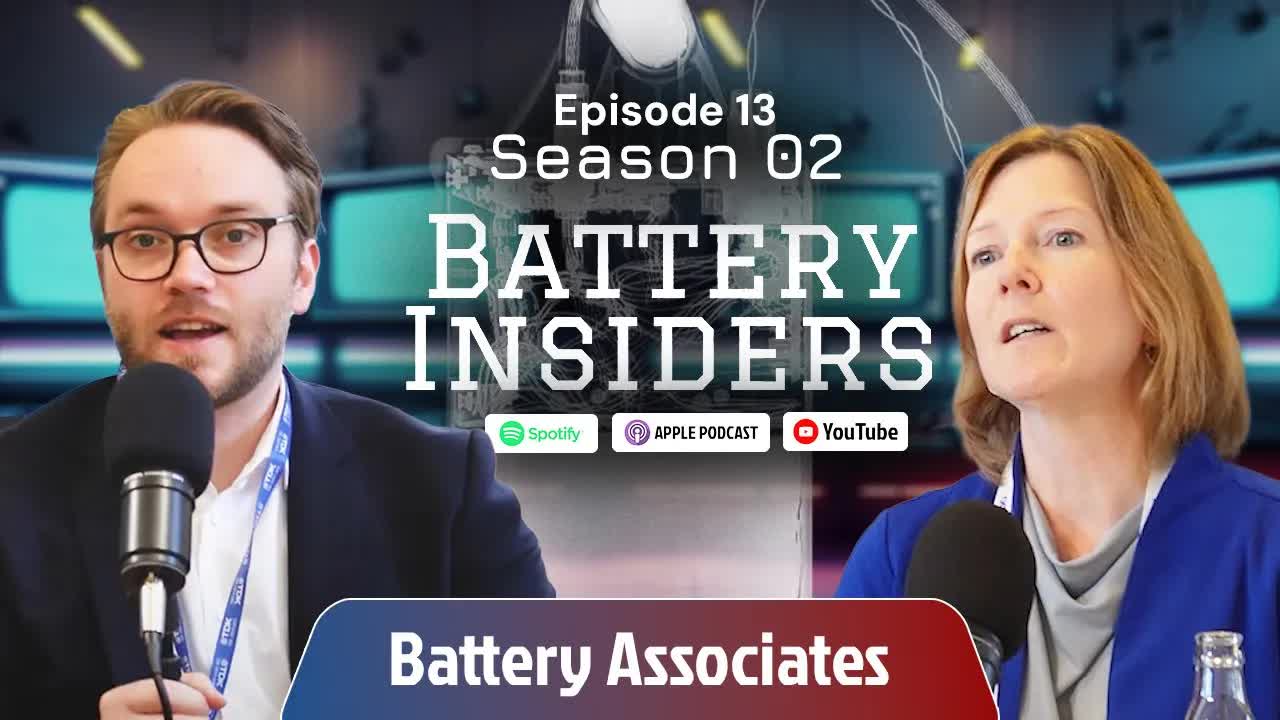
Lina Emilsson
Chief Operating Officer, Nidec Energy
Nidec Energy is a joint venture between Nidec, a Japanese-owned group active in motors and inverters, and FREYR, which is where the cell supply comes from. The company builds modules and DC blocks in Europe and sells to system integrators. Simon introduces Emilsson as CEO of Nidec Energy in the recording; the episode's on-screen credit says Chief Operating Officer, which is used here.
Recorded in Berlin, at the Future Battery Forum
What this episode covers
Asked about second-life batteries, Lina does not hedge. She does not think it makes sense, and the reason is that the batteries in cars today are too good. They last a very long time, and may outlast the car itself, which is exactly why recyclers are short of feedstock: the packs are still out on the roads. A cell built for a vehicle also wants different characteristics from a cell built for storage. And she cannot see the arithmetic in taking a cell at 70% state of health and expecting another 25 years of service out of it.
Her alternative is to keep the battery in the car as long as possible, through repair strategies or something like Tesla's approach of extending the state of charge range over time, and then to recycle efficiently at the end. She is candid that the current position is uncomfortable, with the industry mining materials for new batteries while recycling capacity is still building. Her hope is that as the recycling industry matures, the share of recycled material in new cells climbs, which is also what the European rules will require of anyone selling here.
On the EU battery regulation she is unusually cheerful. She is in favour of it, particularly the passport, and proud that Europe is taking the lead on ethics in the battery industry. Yes, it is hard, and nobody knows exactly what compliance looks like yet, but that is something to explore rather than complain about. She had visited a Chinese cell supplier the week before who was preparing for the same rules, because they want to sell into Europe. That, to her, is a level playing field: the rules apply to whoever supplies the market.
Nidec Energy sits in the middle of the chain, buying cells, building modules and DC blocks, and selling to integrators, which makes the compliance question a negotiation rather than a solo exercise. How much take-back does the company handle itself, and how much moves to the cell supplier under a collaborative agreement? Her answer is that you have to look at the whole supply chain instead of solving for your own box, and that transparent data handling between companies is what makes it workable. She expects the rules to spread: global suppliers will comply once and make it their standard.
The chemistry view is blunt too. She expects NMC to be out of BESS in the near future, with most of the industry moving to LFP now, and sodium-ion becoming the dominating chemistry within about ten years, depending on how fast industrialisation and commercialisation move. What makes LFP attractive goes beyond the cell price. It is stable, and the safer the cell, the easier the permitting for the whole storage park, with less need for active cooling, which takes cost out again. Systems being sold today are being built for 20 to 25 years of life, and 15-year warranties are already not uncommon.
On cost she separates three elements in manufacturing: the CapEx and its depreciation, the raw materials, which good agreements can influence to some extent, and the OPEX, which is entirely within your own control and therefore deserves real effort. The same logic follows the product into the field. What decides whether a storage asset works is what it costs the customer to run, and the customer should be making money on it rather than losing it to poor efficiency or oversized cooling. She closes on a shift she sees coming: Europe has concentrated on EVs, and storage is arriving now on the back of renewables.
Questions from this episode
- What does Nidec Energy actually make?
- Modules and DC blocks, all based in Europe, sold on to system integrators. The company is a joint venture between Nidec, a large Japanese-owned group long active in motors and inverters and more recently in storage, and FREYR, which is where the cell supply comes from. That position matters for how Lina thinks about regulation: sitting between the cell supplier and the integrator, the company has to decide how much compliance work it takes on itself and how much is handled through agreements further up the chain.
- Is the EU battery regulation a burden for European manufacturers?
- Lina argues it is closer to an opportunity, and says she is proud that Europe is taking the lead here, especially on the battery passport. She accepts it feels hard, and that nobody yet knows exactly what is required, but treats that as something to learn rather than avoid. She also points out that it applies to anyone supplying the European market: she had visited a Chinese cell supplier the week before who was preparing for the same requirements. Her advice is to understand it and turn it into something profitable rather than a loss-making exercise.
- Will battery regulation like the EU's spread to other regions?
- Lina expects it to. Suppliers who want to be global will most likely comply across the board, because doing it once and making it the company standard is easier than running two systems. Companies that intend to stay local may avoid it for a while. But in the long run she thinks the effect propagates outwards, comparing it to rings on the water. She also sees compliance as a collective problem: everyone in the battery supply chain will have to meet it, so transparent data handling between companies is how the industry gets through it.
- Which chemistry will dominate stationary storage?
- Sodium-ion, in her view, though not immediately. She expects NMC to be out of BESS in the near future, with most of the industry moving to LFP at this stage, and sodium-ion becoming the dominating chemistry perhaps not five years from now but certainly within ten. The timing depends on how quickly industrialisation and commercialisation progress. She notes that the pace of change extends past chemistry, to solid state and to new materials.
- Why has LFP taken over from NMC in energy storage?
- Stability and safety, and the costs that follow from them. Storage assets need very high cycle counts, and systems being sold today are being built for 20 to 25 years of life, with 15-year warranties already fairly common. LFP holds up to that. The safety benefit then runs through the rest of the project: the safer the cell, the easier the permitting process for the whole storage park, and the lower the requirement for active cooling inside the system, which takes cost out. Lina describes the advantages over NMC as enormous already today.
- How should a storage manufacturer think about cost?
- Lina splits manufacturing cost into three parts. There is the CapEx paid up front and depreciated, the raw materials cost, which good agreements can influence to some extent, and the OPEX, which the company controls completely and should therefore put serious effort into. The same question follows the product to site. What matters for an energy storage solution in the field is what it costs the customer to operate it, because the customer should be making money from the asset rather than losing it to poor efficiency or large cooling systems.
Listen to this episodeWatch on YouTube
Part of The next chemistry
Transcript
About this transcript. Generated automatically from the recording, then corrected against a glossary of company and guest names. It has not been checked line by line. Machine transcription mis-hears technical terms, numbers and names, so treat any figure here as a prompt to check the recording rather than a quotation of record. Spotted something wrong? Tell us.
0:00Introduction
Dr Simon Engelke
0:00And welcome everyone. Thank you so much for joining the Battery Insiders podcast. Today, live from Berlin, from the Future Battery Forum. And I'm delighted to have Lina with me, the CEO of Nidec Energy.
0:21Nidec Energy, a joint venture with FREYR
Dr Simon Engelke
0:21And maybe we can start with that. Tell us about this joint venture.
Lina Emilsson
0:24Yeah, thanks, Simon. Yes, so Nidec Energy is a joint venture between Nidec and Nidec Industries, which is a really big global player, Japanese-owned company. Very, very active in motors, inverters, but also recently within the best industry. And then our second shareholder is Freyr. So obviously that is where the cell supply will come from. And we in Nidec Energy are aiming to manufacture modules and DC blocks, all based in Europe.
Dr Simon Engelke
0:55Great. Thanks for sharing that. And I know you already have done quite a few things from Northvolt and other players, so you have quite a stint there in the cell makers as well.
1:01Why she welcomes the battery passport
Dr Simon Engelke
1:06If we now look at this, you know, at Europe and the European battery regulation, there's a lot of buzz about that. We had some conversations here as well. It's something which has happened since the last Future Battery Forum as well. But maybe if you could share a bit on the PEC architecture, also connection of deregulation.
Lina Emilsson
1:21Yeah. Yeah, so we are actually also exploring this in terms of what do we have to do from a legislation and what we expect it to do. And also, are there any ways to create a business model around this that actually don't make it a loss game, right? If you see what I mean. I'm really, really in favor of this legislation, especially the passport, etc. And I'm really proud that Europe is actually taking the lead here and they're pushing the ethics in battery industry. So I'm quite delighted that we are going to have to comply with this. You may be, you know, feeling that it's hard, it's difficult, nobody knows exactly what you have to do. But this is the bits that we just have to learn, have to explore.
2:07Compliance when you sit in the middle of the chain
Lina Emilsson
2:08And for us, of course, being the middle part of this, doing the modules and the DC blocks, selling to integrators and then actually procuring the cells, that puts us in the middle of this chain in terms of do we take back and do everything? Or how much do we push on to the cell supplier and actually having collaborative agreements on how we do this? So it's really, really important that you take into account your whole supply chain here and not just try to figure out your own solution.
Dr Simon Engelke
2:39Well, that's good to hear. I remember the panel yesterday. There was also quite some sentiment from the industry side, right? There's a lot to comply with. But as you say, it could also become an opportunity. And I guess also kind of as a rather newer player, even though you have a big history there, right? Through your partnership or like through the companies who came together. But how can you really adapt to this regulation? And maybe how can you embrace that as one of these newer players?
Lina Emilsson
3:02Yeah, for me, it's really just about understanding it and making it as profitable as you can for you and trying to turn it into something positive. And also, I visited a Chinese cell supplier last week.
3:13A Chinese supplier preparing for the same rules
Lina Emilsson
3:17And they are also preparing for this because they obviously want to sell their product in Europe. So in one way, we are actually competing in level playing fields here because it does apply to those who want to supply into Europe. So I don't think, you know, this is not something you should swear about or try to avoid or agonize about. It's really about embracing it and making the best you can. And if we do have a collaborative approach of this, because we're all in the same boat here, you know, everybody in the cell supply chain or battery supply chain will have to comply. So if we get transparent data, transparent data handling between companies through and through the whole supply chain, I think that is the way that we can conquer this.
Dr Simon Engelke
3:59It will be interesting also to see how this can maybe come to other countries or other regions, right?
4:03Will the rules spread beyond Europe?
Dr Simon Engelke
4:03Because now you mentioned if you come to the European market, you have to comply. And, you know, actors like in China and others are preparing for that. But of course, there's some markets where you don't have to do it yet. So the question is how quick will this maybe adapt or will it be a topic of if you have to do it once, why do it differently for another use case?
Lina Emilsson
4:20No, exactly. And I think exactly that, right? For those players who want to be global, they are probably just going to do it blankage, right? It's easier. I do it once and then I have my standard. But of course, there are players who want to stay local and avoid it. Absolutely. But in the long run, I think this will really, really propagate, you know, it's the rings on the water here.
Dr Simon Engelke
4:45Good. And if you then talk a bit about ESS, right, as an application stationary, you know, energy storage.
4:51NMC out, LFP now, sodium-ion next
Dr Simon Engelke
4:51And of course, we spoke also in other podcast sessions about different chemistries and, you know, the rise of LFP, for example. So maybe you can share a bit of your perspective on the chemistry you tried, NMC, LFP, etc.
Lina Emilsson
5:02Yeah, and it's quite interesting how fast this development is now. And it's not just the chemistry. It's also on the solid-state. And then it's all of the new materials as well that could be for future, right? But I think the NMC, I mean, just idealizing, I think NMC will be out of BESS in the near future. And, you know, most are moving towards LFP at this stage. And I think within not too distant future, we will be seeing the sodium-ion. And I think definitely sodium-ion will be the dominating chemistry. Maybe not five years from now, but certainly 10 years from now. It all depends on how quickly that industrialization and commercialization can progress. Yes.
Dr Simon Engelke
5:48That's interesting. And I think also probably also from a stability, right? Because that's one thing I've seen so far at least, the test results, that wouldn't be as stable. And of course, for ESS, that's one of the things you really want, right? These really high numbers of cycles.
Lina Emilsson
6:00Absolutely. And, you know, we're already seeing 20, 25 years of life of many of the ESS systems that are out there now that are being sold today.
6:04Twenty-year lifetimes and storage warranties
Dr Simon Engelke
6:12And I think that's also a requirement. I've seen 20 years plus, right? Like warranties, which is a bit longer than maybe eight years or so on automotive. So that's, I think, also one of the why LFP was raised so quick because it's just so stable. Definitely.
Lina Emilsson
6:24And the safety as well. The safer the cell, the easier your permit process for your whole ESS park.
6:30How LFP safety changes permitting and cooling
Lina Emilsson
6:32You also have less requirements for active cooling systems within your best, which takes a lot of the cost out. So there are so enormous benefits with LFP versus NMC already today.
Dr Simon Engelke
6:46And something maybe not addressed much for now, but also, of course, from a recycling topic. It's another challenge to make a cost work. There's also another topic, maybe not recycling, but second life applications.
6:57The case against second-life batteries
Dr Simon Engelke
6:58It's something people talk about, especially in stationary contexts. But also, no, it's not that easy, let's say it this way. So what are your thoughts on that?
Lina Emilsson
7:07I actually don't think it makes sense, if I'm completely honest. The batteries in the cars today, they're too good. They last very, very long. They may even outlast the car itself. That's the whole challenge in the recycling business now, right? That the batteries in the car, they're still out there on the roads. So they're not actually coming back. And also, if you're looking at the cells, you want quite different characteristics, quite different requirements on the performance for a cell for an EV or for energy storage. So it doesn't really make sense from that perspective either. And lastly, it's also about the life, right? Why would you put a cell at 70% state of health and expect it to live another 25 years in an energy storage? I'm not sure that will actually compute. So no, I think it's better to really, really push the batteries in the cars for as long as you can and retain the life of the battery in the car.
8:07Repair, recycling and recycled content
Lina Emilsson
8:08Perhaps it's better to do repair strategies or what Tesla is doing in terms of how they actually extend the state of charge range over time. And then actually have very, very efficient recycling instead.
Dr Simon Engelke
8:22That's a real point. I had one podcast episode a while, while back now where there was actually a company who was using Second Life. And they could actually sell them pretty much at the premium because it's more environmentally friendly. This was one curious thing and for the same cost. But I think, as you said, also the challenge was they couldn't give necessarily the same lifetime or the same warranties, which I think in the end is really what the industry is looking for, right? Having security. We do a lot from the bankers, from the financing. You want to have these warranties as long as you can get them to have the security that you will get your money back.
Lina Emilsson
8:56Yeah, exactly. Exactly. And now in the best we see, we see warranties being 15 years, which is not super uncommon already today. So that's a push. And for sure, I mean, obviously now the big dilemma is that we are mining all of these materials for the batteries rather than having efficient recycling in place currently. But my hope is, of course, that with the emerging recycling industry, that we will actually see higher and higher recycled percentage materials in the new cells.
Dr Simon Engelke
9:26Yeah. And I mean, it's also part of your regulation, where you touched on earlier, right? That it has to come through. Maybe one, we spoke about, I guess, CapEx in some way of, you know, using potentially cheaper sources, which maybe don't last as long.
9:36CapEx, raw materials and the OPEX you control
Dr Simon Engelke
9:38So maybe if you look a bit more on the OpEx, what can be done about OpEx and our management, of course, a very important topic. Maybe what are some of your thoughts on that?
Lina Emilsson
9:46Yeah. I mean, in the manufacturing side, of course, you know, you have three elements of your costing, right? You have your whole CapEx up front and the depreciation there. Then you have your raw materials cost. You can influence to some extent with good agreements, right? But then you completely control your own OpEx. So you need to put a lot of effort into that. And then also when you're thinking about your energy storage solutions out there in the field, it's all around the OpEx. What does it cost your customer to actually operate it? And they should be making money from it, not losing it in poor efficiency or large cooling systems or whatever it might be, right? So it's all about making sure that your OpEx is as low as possible. And you need a lot of effort in that space. Fantastic.
Dr Simon Engelke
10:33Now with this, I think we're going to close it for today. I really appreciate, Lina, your thoughts and also on the stationary and the best topic. It's, I think, a very important one. We also heard at this conference we need a lot of more renewable energies. We need a lot more storage. So I wish you all the best with your exciting venture there.
Lina Emilsson
10:50Yeah, great. Thank you. And I think, I mean, Europe's been so focused on the EV and e-mobility. And actually the best is coming now because of the renewable energy, just as you say.
Dr Simon Engelke
11:01Fantastic.
Lina Emilsson
11:01Thank you for having me.
Dr Simon Engelke
11:03Thanks for being here. And yeah, with this, thanks everyone for listening and watching. My name is Dr. Simon Engelke. I'm the founder and chair of Battery Associates. And with this, hopefully here to you. Talk to you very soon. Bye-bye.
Lina Emilsson
11:13Thank you. And good good good good good good good good good good good good good good good good good good good good good good good good good good good good good good good good good good good good good good good good good good good good good good good good good good good good good good good good good good good good good good good good good good good good good good good good good good good good good good good good good good good good good good good good good good good good good good good good good good good good good good good good good good good good good good good good good good good good good good good good good good good good good good good good good good good good good good good good good good good good good good good good good good good good good good good good good good good good good good good good good good good good good good good good good good good good good good good good good good good good good good good good good good good good good good good good good good good good good good good good good good good good good good good good good good good good good good good good good good good good